The best looper pedals with XLR input make it easier to layer vocals, acoustic guitar, instruments, and effects without relying on a full computer-based setup. They can be especially useful for solo performers who need hands-free control and reliable live playback.
This roundup includes dedicated loop stations, drum-and-loop pedals, and multi-effects units. Use the guide below to compare connection options, track flexibility, recording time, and the features that matter most onstage.
Best 10 Looper Pedals with Xlr Input Picks for 2026
Best Dual-Track Looper

- Dual-track looping with 13 hours of stereo recording
- 57 rhythms, 16 drum kits, and Loop FX
- 99 phrase memories with USB WAV management
Best For: Performers needing deep, dedicated loop control
Best for Vocal Looping

- Microphone input plus stereo instrument inputs
- Four looping modes and over three hours of storage
- USB audio interface for recording and streaming
Best For: Vocalists and portable live-looping performers
Best Compact Option

- Compact single-track looper with 13 hours of recording
- 57 rhythms, seven drum kits, and reverse function
- MIDI, USB, and battery-powered operation
Best For: Pedalboard-conscious guitarists needing extended loop storage
Feature-Rich Pick
MOOER GL100 Looper and Drum Machine

- 300 minutes across 100 memory slots
- 220 drum patterns with DrumMatch
- Auto record, quantization, and split drum output
Best For: Musicians wanting looping and rhythm accompaniment in one pedal
Simple Stompbox Pick

- Straightforward record and overdub controls
- 12 minutes of stereo recording
- 24-segment LED loop-mode indicator
Best For: Players seeking a simple pedal for basic phrase layering
MIDI-Controlled Pick

- Up to six hours of recording time
- 99 memory slots and 50 rhythm patterns
- External MIDI control with color LCD display
Best For: Players needing extended stereo looping and MIDI integration
Best Professional XLR Looper
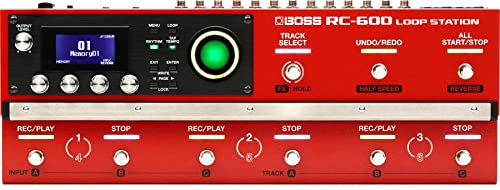
- Two XLR microphone inputs with phantom power
- Six stereo phrase tracks and 99 phrase presets
- Rhythm guide, effects, and USB connectivity
Best For: Advanced performers layering vocals and instruments live
Best Looper and Drum Machine Combo

- 140 minutes of stereo recording across 14 save slots
- 121 drum grooves in 11 musical genres
- Includes time stretch, tap tempo, and editor software
Best For: Instrumentalists wanting stereo loops with built-in rhythms
Best Simple Multi-Loop Pedal

- Three loop slots with 90 minutes total recording time
- Bright screen and one-foots witch control
- Unlimited overdubs and true-bypass signal path
Best For: Accessible guitar and bass looping for practice or live use
Best All-in-One Rig – Donner Arena 2000
For shoppers seeking looper pedals with xlr input, the Donner Arena 2000 is a versatile multi-effects floor unit that combines looping with amp modeling, cabinet simulation, drums, and extensive tone-shaping options. Its 60-second looper and XLR L/R connectivity make it suitable for both practice and live setups.
Best For: Guitarists who want looping, multi-effects, amp modeling, and direct XLR connectivity in one unit.
Pros:
- Includes a 60-second looper and 40 drum rhythms for solo practice or performance.
- Offers 278 effect types, 80 amp simulations, 50 cabinet simulations, and 100 IR slots.
- Provides XLR L/R, MIDI, USB-C, Aux In, headphone, and expression-pedal connectivity.
Cons:
- Its broad feature set may take more time to learn than a dedicated looper.
- It does not include a battery compartment.
- Headphone use is recommended within a 32–64 ohm impedance range.
The Arena 2000 is the strongest fit here for players who need more than looping. Choose it when integrated effects and XLR-ready live connectivity matter as much as loop creation.
Best Dual-Track Looper – BOSS RC-500
The BOSS RC-500 is a dedicated dual-track looper for players who prioritize detailed loop control, onboard rhythms, and reliable phrase storage. It does not list an XLR input, so it is better suited to users whose setup can handle standard pedal connections or who value deep looping features over direct microphone connectivity.
Best For: Performers who need dual-track looping, extensive phrase memory, rhythms, and external control options.
Pros:
- Provides professional 32-bit AD/DA conversion and 32-bit floating-point processing.
- Offers 13 hours of stereo recording, 99 phrase memories, and USB WAV file management.
- Includes 57 preset rhythms, 16 drum kits, reverse, and multiple Loop FX.
Cons:
- No XLR input is listed in the supplied specifications.
- Mini-TRS MIDI connections require an adaptor cable for expanded MIDI control.
- Its extensive controls may be more than casual loopers need.
The RC-500 is a compelling dedicated looping choice, especially for structured performances with separate tracks and saved phrases. However, shoppers specifically searching for looper pedals with xlr input should verify their microphone or mixer-routing needs before choosing it.
Best for Vocal Looping – HeadRush LOOPER +
The HeadRush LOOPER + is designed for performance-oriented looping with microphone input, instrument inputs, a color display, and four looping modes. While its supplied connectivity does not specify an XLR input, the dedicated microphone input makes it a practical option for vocalists and multi-instrumentalists comparing looper pedals with xlr input.
Best For: Vocalists, guitarists, and street or stage performers who want flexible looping with portable operation.
Pros:
- Includes microphone input, stereo 1/4-inch instrument inputs, and stereo main outputs.
- Offers single, multi, sync, and song looping modes with a full-color display.
- Stores up to 128 loops with more than three hours of total audio.
- Functions as a 2-in/2-out USB audio interface for recording and streaming.
Cons:
- An XLR input is not listed; the microphone connection type should be confirmed before purchase.
- Its larger footprint may require more pedalboard space.
- Battery operation uses four AA batteries, which may require regular replacements.
With its microphone input, robust storage, and performance-focused workflow, the LOOPER + stands out for vocal looping. Confirm the microphone connector requirements if a true XLR socket is essential to your setup.
Best Compact Option – BOSS RC-5
The BOSS RC-5 packs professional looping features into a compact, pedalboard-friendly format. It is not specified with an XLR input, but its long recording time, onboard rhythms, MIDI, USB, and optional battery operation make it a useful dedicated looper for players comparing compact alternatives.
Best For: Guitarists who want a small, capable looper with long recording capacity and straightforward expansion options.
Pros:
- Delivers 32-bit AD/DA conversion and 32-bit floating-point processing.
- Provides 13 hours of stereo recording and storage for 99 phrase memories.
- Includes 57 rhythms with A/B variations, seven drum kits, reverse, MIDI, and USB.
Cons:
- No XLR input is listed in the supplied specifications.
- It is a single-track looper rather than a dual-track model.
- Its optional PSA adapter is separate from the battery-powered operation.
The RC-5 is a strong space-saving choice for guitarists who want substantial looping capacity without a larger floor unit. For looper pedals with xlr input specifically, look elsewhere or plan for an external microphone interface.
Feature-Rich Pick – MOOER GL100 Looper and Drum Machine
The MOOER GL100 is a strong option for shoppers comparing looper pedals with xlr input, although its supplied specifications list 1/4-inch and 3.5mm audio connections rather than an XLR input. It combines looping with a built-in drum machine, extensive storage, automatic recording, and editing software.
Best For: Musicians who want drum patterns, automatic timing tools, and substantial loop storage in one pedal.
Pros:
- Stores up to 300 minutes across 100 memory slots.
- Includes 220 drum patterns and DrumMatch for automatic groove and BPM matching.
- Offers auto record, count-in, quantized alignment, time stretch, and split drum output.
- MOOER Studio supports importing, exporting, batch management, and audio extraction from video files.
Cons:
- Does not list an XLR input; connections are specified as 1/4-inch, 3.5mm, and USB-C.
- The broader feature set and touchscreen may involve more setup than a basic looper.
Choose the GL100 if rhythm accompaniment and flexible loop management matter more than a simple stompbox layout. Its dual footswitches, touchscreen, and editor software make it particularly capable for practice, arranging, and performance workflows.
Simple Stompbox Pick – BOSS RC-1 Loop Station
The BOSS RC-1 is a straightforward choice for shoppers researching looper pedals with xlr input, but its supplied details specify stereo inputs and outputs rather than an XLR connection. Its focus is uncomplicated recording, overdubbing, playback, and phrase control.
Best For: Guitar, bass, and keyboard players who want an easy-to-use loop pedal for layering phrases.
Pros:
- Simple record, playback, overdub, undo, and redo operation.
- Provides 12 minutes of stereo recording time.
- 24-segment LED indicator shows the current loop mode.
- Retains the recorded phrase after the pedal is turned off and includes a 9V battery.
Cons:
- Does not list an XLR input; the supplied information identifies stereo connectivity and USB.
- Offers fewer storage and rhythm features than the other listed options.
- The AC adapter is optional rather than included.
The RC-1 is best when reliability and a minimal learning curve are priorities. It lacks built-in rhythm patterns and large phrase libraries, but its clear indicator and familiar stompbox operation suit basic live layering and practice.
MIDI-Controlled Pick – NUX Loop Core Stereo
The NUX Loop Core Stereo offers a versatile feature set for shoppers comparing looper pedals with xlr input, though the supplied specifications do not identify an XLR input. It adds stereo looping, rhythm patterns, MIDI control, a color display, and six hours of recording capacity.
Best For: Players who need extended phrase storage, stereo operation, and hands-free control through MIDI.
Pros:
- Provides up to six hours of recording time across 99 memory slots.
- Includes 50 rhythm patterns and stereo audio support.
- MIDI control can manage tap tempo, stop, start, record, and other parameters.
- HD color LCD display supports clearer parameter viewing and editing.
Cons:
- Does not list an XLR input; the supplied details mention USB and a 5-pin DIN MIDI connector.
- Its advanced MIDI and editing functions may be more than beginners need.
- The supplied notes describe the signal format as analog despite the pedal’s extensive digital-style features.
The Loop Core Stereo makes sense for players building more elaborate rigs or controlling looping from external MIDI hardware. Its long recording time and stereo output are useful for practice and live setups, while the LCD helps with navigation.
Best Professional XLR Looper – Boss RC-600
For performers comparing looper pedals with XLR input, the Boss RC-600 is a feature-rich station built for microphone and instrument setups. It combines two XLR microphone inputs with phantom power, multiple stereo inputs, six stereo phrase tracks, effects, and rhythm support.
Best For: Solo performers and advanced live looping setups using microphones, instruments, and layered arrangements.
Pros:
- Two XLR microphone inputs with phantom power.
- Six stereo phrase tracks for complex layered performances.
- Includes 99 phrase memory presets and a rhythm guide.
- Provides input and track effects plus USB connectivity.
Cons:
- Larger and heavier than compact loop pedals.
- Its extensive feature set may be more than beginners need.
The RC-600 stands out when XLR microphone connectivity is a priority and you want extensive control over vocals, instruments, effects, and saved phrases in one pedal.
Best Looper and Drum Machine Combo – MOOER Groove Loop X2
The MOOER Groove Loop X2 is worth considering alongside looper pedals with XLR input if your priority is rhythm-based stereo looping rather than microphone connectivity. It combines a stereo looper with a drum machine, offering long recording capacity, multiple save slots, and editor software.
Best For: Guitarists and instrumentalists who want stereo loops with built-in drum grooves for practice, songwriting, or performance.
Pros:
- Stores up to 140 minutes of stereo loops across 14 save slots.
- Includes 121 drum grooves across 11 genres.
- Supports count-in, automatic, and normal recording modes.
- Offers time stretch, tap tempo, and separate routing for loop and drum audio.
Cons:
- Uses stereo 1/4-inch inputs rather than XLR microphone inputs.
- Its feature set is focused on instruments and rhythm tracks, not direct vocal XLR use.
Choose the Groove Loop X2 for extensive stereo recording and integrated rhythms. It is a strong alternative for instrument-focused setups, but it does not meet the specific XLR-input requirement.
Best Simple Multi-Loop Pedal – Donner Triple Looper
The Donner Triple Looper is a straightforward option for players browsing looper pedals with XLR input but primarily using electric guitar or bass. Its bright screen, three loop slots, unlimited overdubs, and single-footswitch control keep the focus on accessible looping.
Best For: Beginners, guitarists, bassists, buskers, and creators who need simple multi-loop recording.
Pros:
- Three independent loop slots with up to 90 minutes total recording time.
- Bright screen shows loop status, progress, and timing.
- Supports unlimited overdubs plus undo and redo functions.
- True bypass preserves the guitar signal when disengaged.
Cons:
- Uses 1/4-inch audio connections, not an XLR input.
- Power supply requirements should be checked because the listing notes that an adapter is not included.
- Designed for simpler looping rather than microphone-focused setups.
The Triple Looper is a practical, compact choice for layered guitar parts and quick live control. If an XLR microphone input is essential, however, the Boss RC-600 is the better match among these options.
How We Picked the Best Looper Pedals with Xlr Input
We focused on loopers and related performance pedals that support live layering, with particular attention to models offering XLR connectivity or a broader feature set that may suit performers using microphones. We also considered loop capacity, phrase storage, overdub and undo controls, stereo operation, drum patterns, MIDI support, displays, and ease of use.
Not every pedal in this selection is a dedicated vocal looper or includes the same type of XLR input. Check each product’s current specifications before buying, especially if you need microphone preamplification, phantom power, balanced output, or independent vocal and instrument paths.
Quick Comparison
| Feature | Why It Matters | Best For |
|---|---|---|
| XLR and microphone support | Connects a vocal microphone directly when the pedal provides the required input and gain controls. | Singers and solo performers |
| Multiple tracks | Lets you separate rhythm, harmony, and lead layers for more controlled arrangements. | Complex live sets |
| Drum machine | Adds a beat without carrying separate backing equipment. | Practice and solo shows |
| MIDI and memory | Helps synchronize gear and save repeatable songs or performances. | Stage rigs and electronic setups |
| Stereo operation | Preserves left-right effects and supports wider signal chains. | Effects-heavy guitarists |
Key Buying Factors for Looper Pedals with Xlr Input
Input Type and Microphone Compatibility
Confirm whether the XLR connection is an input, output, or part of a separate audio interface. Vocalists should also check microphone gain, phantom-power requirements, balanced signal handling, and whether guitar and microphone channels remain independent.
Loop Structure and Timing
Simple one-track loopers are fast to learn, while multi-track models provide greater control over verses, choruses, harmonies, and song sections. Quantization, auto-start, undo, redo, and stop modes can make a major difference during a live performance.
Recording Time and Storage
Consider total recording time, the number of saved phrases, overdub limits, and whether storage is internal or expandable. Longer memory is useful for complete arrangements, but a clear display and quick preset access may matter more for short live loops.
Controls, Footswitches, and Connectivity
Look for footswitches that support hands-free recording, overdubbing, stopping, and undo. MIDI, USB, auxiliary input, headphone output, and stereo in/out can help integrate the pedal with drum machines, mixers, backing tracks, and other effects.
Who Should Buy Which Looper Pedals with Xlr Input?
Choose a compact single-track looper if you want straightforward practice, quick songwriting, or a minimal pedalboard. A stereo model with drum patterns is a better fit for guitarists who want fuller accompaniment without adding another device.
Singers and multi-instrumentalists should prioritize genuine XLR microphone support, channel control, and suitable input gain rather than assuming every pedal marketed for vocals accepts a mic directly. Performers building complete arrangements should look for multiple tracks, extensive phrase memory, MIDI, and dependable foot control. If you want one unit to handle looping, amp modeling, effects, and rhythm tools, a multi-effects pedal may offer the best value, provided its workflow is easy to operate onstage.