Ribbon microphones reward a clean, stable gain stage. The right preamp can bring out detail without adding hiss, harshness, or unwanted color.
Below, we focus on microphone preamps for ribbon microphones that deliver practical gain, low noise, and easy integration with modern recording setups.
Best 10 Microphone Preamps for Ribbon Microphones Picks for 2026
Inline Gain Booster
Triton Audio FetHead In-Line Preamp
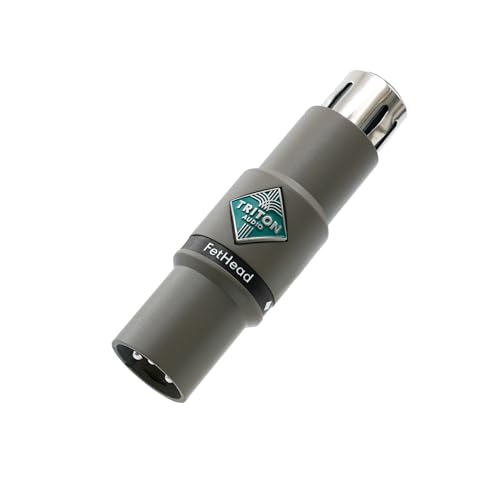
- Low-noise Class-A JFET amplifier
- Shielded metal enclosure
- Compact plug-in format
Best For: Ribbon and dynamic mic users needing a simple clean gain boost
Mini Mic Activator
Cloudlifter CL-25 Mini Mic Activator
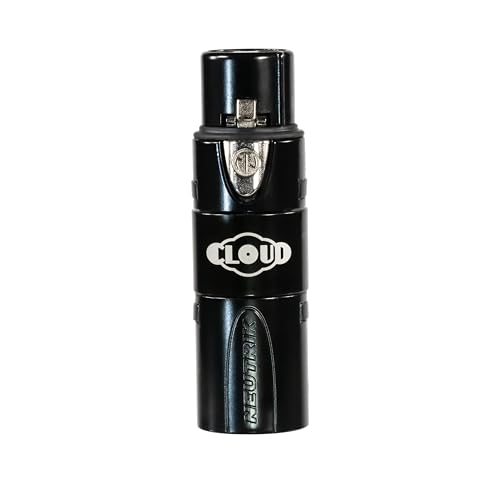
- Up to +25 dB clean gain
- Safe for passive ribbons
- Compact XLR metal design
Best For: Home studios and broadcasts needing clean phantom-powered gain
Germanium Gain Booster
Triton Audio FetHead Germanium Preamp

- 29 dB amplification
- Made for ribbon and dynamic microphones
- Simple inline installation
Best For: Users wanting a ribbon-friendly inline preamp with a Germanium transistor
Brass-Shield Booster
Borenbuir DM3 Inline Mic Preamp
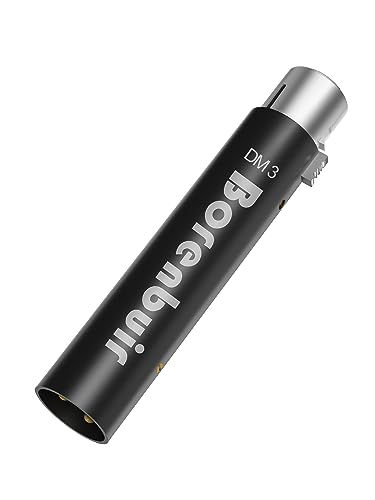
- 28 dB of clean gain
- Brass metal shielding design
- Works with ribbon and dynamic mics
Best For: Users wanting a compact phantom-powered booster with simple setup
Best for Easy Setup
TRITON AUDIO FetHead for Ribbon and Dynamic Mics

- Low-noise Class-A JFET amplifier
- 24 to 48V phantom power support
- Shielded metal XLR in-line design
Best For: Ribbon and dynamic mic users who want a compact gain boost
Dual-Input Clean Gain
MIC-1 2-Channel Mic Preamp with 75dB Gain

- Up to +75dB transparent gain
- 48V phantom power and 2 inputs
- Balanced XLR plus 6.35mm outputs
Best For: Home studios and streaming setups needing clean multi-channel gain
Colorful Transformer Boost
Soyuz Launcher Inline Mic Preamp

- Hand-wound transformer for added color
- 26dB gain boost for ribbon and dynamic mics
- Analog circuit designed for warmth and clarity
Best For: Engineers who want colored inline gain for ribbon mics
Studio-Style Multi-Input Option
VBESTLIFE 3-Input Mic Gain Booster
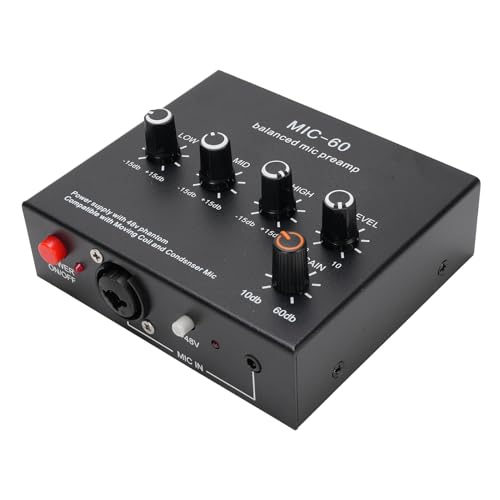
- Up to +60dB gain for low-output mics
- 48V power with dynamic and condenser compatibility
- XLR, 3.5mm, and 6.35mm outputs
Best For: Flexible home studio and streaming setups
Ribbon-Mic Inline Booster
Coda MB-Stealth 28 dB Clean Gain
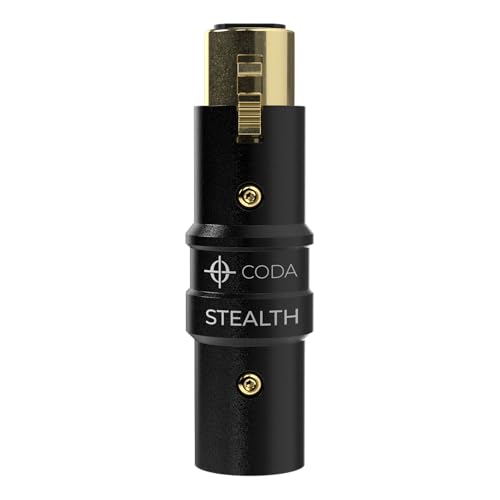
- Made for dynamic and ribbon microphones
- Adds 28dB of clean gain via 48V phantom power
- Compact inline XLR design with low noise
Best For: Ribbon and dynamic mic users wanting simple clean gain
Low-Noise Portable Pick

- Supports ribbon, dynamic, condenser, and instrument use
- -120dB EIN and 19 to 66dB gain range
- Type-C powered for portable recording
Best For: Portable low-noise setups with mixed mic sources
Inline Gain Booster – Triton Audio FetHead In-Line Preamp
If you need microphone preamps for ribbon microphones, the Triton Audio FetHead is a compact in-line option built around a low-noise Class-A JFET design. Its shielded metal enclosure and simple plug-in format make it a practical way to add clean gain before your main preamp, especially when working with quiet mics that need extra level.
Best For: Ribbon and dynamic mic users who want a small, low-noise gain booster for studio or live setups.
Pros:
- Low-noise Class-A JFET amplifier design
- Shielded metal enclosure for added protection
- Compact in-line format with easy surface-mount construction
- Uses a double single-ended amplifier topology
Cons:
- Only listed as a 2-channel device in the specs, so it may not match every workflow
- No detailed gain figure is provided in the notes
Overall, this is a straightforward choice if you want a discreet gain stage between a ribbon microphone and your interface. The emphasis on low-noise amplification and shielding makes it well suited to clean signal boosting without adding much bulk.
Mini Mic Activator – Cloudlifter CL-25 Mini Mic Activator
Among microphone preamps for ribbon microphones, the Cloud Microphones Cloudlifter CL-25 is designed to add up to +25 dB of clean gain while keeping phantom power away from the mic itself. It’s aimed at quiet sources and is built for a wide range of recording and broadcast uses, making it a solid pick when you want extra signal strength without losing the natural character of the mic.
Best For: Home studio, podcast, broadcast, and live-sound users who want a clean, phantom-powered booster for passive mics.
Pros:
- Provides up to +25 dB of gain
- Uses phantom power without passing it to the microphone
- Compatible with passive ribbons, tube mics, battery mics, and power-supply-driven mics
- Metal enclosure and compact XLR format
Cons:
- Requires standard +48V phantom power from the interface or mixer
- Single-channel design may limit larger multi-mic setups
If you want a simple way to wake up a low-output mic, the CL-25 focuses on clean gain and compatibility. Its “safe for all passive ribbons” positioning and noise-reduction emphasis make it a practical studio helper.
Germanium Gain Booster – Triton Audio FetHead Germanium Preamp
For microphone preamps for ribbon microphones, the Triton Audio FetHead Germanium is aimed directly at ribbon and dynamic mics that need extra level before the main preamp. It delivers 29 dB of amplification and uses a Germanium transistor, so it’s a niche option for users who want an inline boost with a distinct component choice.
Best For: Ribbon and dynamic mic owners who want a compact inline preamp with higher gain and Germanium circuitry.
Pros:
- Built specifically for ribbon and dynamic microphones
- Provides 29 dB of amplification
- Easy plug-in setup with “2 clicks and done” installation
- Shielded metal construction with a compact inline form factor
Cons:
- Requires 48V phantom power
- Single-channel design only
This model stands out if you want a little more gain than many inline boosters provide. Its targeted ribbon-mic support and simple install make it a strong fit for users who want a quick, no-fuss solution.
Brass-Shield Booster – Borenbuir DM3 Inline Mic Preamp
If you’re shopping for microphone preamps for ribbon microphones, the Borenbuir DM3 is a clean-gain inline booster that adds 28 dB using 48V phantom power. It’s positioned as a simple plug-and-play solution for dynamic and ribbon mics, with a brass shield design intended to improve shielding while keeping the signal path straightforward.
Best For: Budget-minded users who want a compact phantom-powered gain booster for ribbon and dynamic mics.
Pros:
- Adds 28 dB of clean gain
- Designed for dynamic and ribbon microphones
- Brass metal design for better shielding
- Simple XLR plug-and-play setup
Cons:
- Requires phantom power from an interface or external 48V source
- Not compatible with condenser microphones
The DM3 is a practical, no-frills option if you mainly need more level from a passive ribbon or dynamic mic. Its shielding-focused metal case and clean-gain spec make it a sensible utility piece for studio, broadcast, or field use.
Best for Easy Setup – TRITON AUDIO FetHead for Ribbon and Dynamic Mics
If you’re shopping for microphone preamps for ribbon microphones, the TritonAudio FetHead is built around a low-noise Class-A JFET amplifier and a shielded metal enclosure. It’s designed to add clean gain while using 24 to 48V phantom power, with the phantom protection ribbon users need when paired correctly.
Best For: Ribbon and dynamic mic users who want a compact in-line gain boost with a warm, balanced sound.
Pros:
- Low-noise Class-A JFET amplifier design
- Uses 24 to 48V phantom power for ribbon-safe operation
- Balanced XLR input and output for simple inline use
- Shielded metal enclosure helps with durability
Cons:
- Only one count in the bundle
- In-line design may not suit users wanting multi-input routing
- Focused on gain boosting rather than extra features
The FetHead is a straightforward pick if you want a compact gain stage that stays practical for ribbon and dynamic microphones. Its warm, balanced profile and simple XLR layout make it easy to place in a recording chain without adding complexity.
Dual-Input Clean Gain – MIC-1 2-Channel Mic Preamp with 75dB Gain
For buyers comparing microphone preamps for ribbon microphones, the MIC-1 stands out more as a flexible clean-gain box than a specialized ribbon tool. It offers up to 75dB of transparent gain, 48V phantom power, and balanced XLR output, which makes it practical for setups that also use dynamic or condenser mics.
Best For: Home studios and streaming setups that need a clean, multi-channel preamp for dynamic and condenser mics alongside other gear.
Pros:
- Up to +75dB clean, transparent gain
- 48V phantom power with 2-channel inputs
- XLR balanced output plus 6.35mm stereo mic and line output
- Full balanced circuit design helps keep noise low
Cons:
- Not specifically positioned as a ribbon-mic-focused inline preamp
- More feature-heavy than a simple one-mic solution
- May be more preamp than needed for basic single-mic use
The MIC-1 is a versatile choice if you want clean gain and multiple connection options in one unit. It’s less specialized than ribbon-focused boosters, but its low-noise design and dual inputs make it useful in mixed-mic recording workflows.
Colorful Transformer Boost – Soyuz Launcher Inline Mic Preamp
Among microphone preamps for ribbon microphones, the Soyuz Launcher is the most character-driven option here. It uses a custom hand-wound transformer and analog circuitry to add warmth, texture, and a more three-dimensional sound while boosting gain by 26dB for dynamic and ribbon mics.
Best For: Engineers and creators who want an inline preamp that adds color, not just clean gain, to ribbon and dynamic microphones.
Pros:
- Custom hand-wound transformer adds warm texture and clarity
- Boosts gain by 26dB for dynamic and ribbon mics
- Designed to lower audible noise in the signal chain
- Handcrafted construction with a distinctive analog circuit
Cons:
- Not intended to be transparent or neutral
- Higher-character sound may not suit every recording chain
- Single-purpose design instead of a feature-rich preamp
If you want your ribbon mic to sound more open and colored, the Launcher is built for that job. It’s a strong fit when you value personality and texture as much as gain.
Studio-Style Multi-Input Option – VBESTLIFE 3-Input Mic Gain Booster
If you want one of the more flexible microphone preamps for ribbon microphones, this VBESTLIFE unit is built around gain, routing, and practical compatibility. It offers up to +60dB of gain, 48V power, and a balanced circuit design that aims to keep noise low and the signal clean for recording, podcasting, or live streaming.
Best For: Home studios, streamers, and vocal setups that need a compact preamp with multiple output options.
Pros:
- Up to +60dB gain for boosting low-output mics
- 48V power and compatibility with dynamic and condenser microphones
- XLR balanced, 3.5mm, and 6.35mm outputs for wider system hookup options
- Black metal housing with a compact, easy-to-carry design
Cons:
- Not specifically tuned for ribbon mics the way an inline ribbon booster is
- Feature set may be broader than needed if you only want simple mic gain
- Requires external DC power supply
This is a good fit if you need a versatile preamp rather than a ribbon-only solution. Its balanced circuit and multiple outputs make it appealing for users who want one box to cover several recording scenarios.
Ribbon-Mic Inline Booster – Coda MB-Stealth 28 dB Clean Gain
The Coda MB-Stealth is the most directly targeted choice here for microphone preamps for ribbon microphones. It uses your interface’s 48V phantom power to add 28dB of ultra-clean gain, and it is specifically designed for dynamic and ribbon mics while keeping noise low.
Best For: Ribbon and dynamic microphone users who want a simple inline gain boost with a minimal signal chain.
Pros:
- Designed specifically for dynamic and ribbon microphones
- 28dB of clean gain powered by 48V phantom power from your interface
- Low-noise design with a -70dB noise rating
- Compact XLR inline format with a matte black finish
Cons:
- Does not work with condenser microphones
- Gain boost is fixed at 28dB
- Depends on phantom power from the connected interface
If your main goal is to bring a ribbon mic up to a healthier recording level without adding extra complexity, this is the cleanest purpose-built option in the group. It focuses on straightforward gain and low noise rather than extra connectivity features.
Low-Noise Portable Pick – RO03 120dB EIN Mic Preamp
For buyers comparing microphone preamps for ribbon microphones, the RO03 stands out for its noise-focused design and portable power setup. It supports dynamic, condenser, and ribbon microphones, offers a gain range of 19 to 66dB, and is powered by Type-C for easier use in mobile recording setups.
Best For: Users who want a portable, low-noise preamp for ribbon mics, instruments, and mixed recording setups.
Pros:
- Updated to -120dB EIN for improved noise performance
- Supports ribbon microphones along with dynamic, condenser, and instrument sources
- Gain range of 19 to 66dB with no obvious noise at maximum gain, per the notes
- Type-C power adds portability and wider compatibility
Cons:
- Two input ports cannot be used at the same time
- Best results depend on using the recommended TRS line input connection
- More complex than a simple inline booster for basic ribbon-only use
This is a strong choice if you want one preamp that can cover ribbon microphones and other sources without being tied to a studio-only power setup. Its value comes from the updated noise performance and flexible input/output design.
How We Picked These Microphone Preamps for Ribbon Microphones
We prioritized clean gain, low self-noise, reliable phantom-power handling, and compatibility with passive ribbon mics. We also considered form factor, since many ribbon users prefer compact in-line boosters that sit close to the microphone and reduce noise over long cable runs.
Quick Comparison
In-line boosters are usually the best fit for passive ribbons when you need 20 dB to 30 dB of extra gain. Desktop or rack-style preamps can make sense for multi-mic studios, but they are less portable and not always as convenient for live use. If you already have a quiet interface preamp, a clean booster may be enough; if your front end is weak, a dedicated preamp can be the better long-term solution.
Key Buying Factors for Microphone Preamps for Ribbon Microphones
Clean Gain and Noise Floor
Ribbon mics often need significant gain, so look for low-noise designs with enough headroom to avoid pumping up hiss. Specs such as equivalent input noise and published gain range can help, but real-world clean gain matters most.
Phantom Power Compatibility
Many in-line boosters require 48V phantom power from the mixer or interface to operate, even though the ribbon itself should not receive phantom power directly. Make sure the preamp is designed to pass phantom safely and is explicitly compatible with passive ribbon microphones.
Gain Amount
For close-miked vocals, guitar cabinets, and drum overheads, moderate gain may be enough. For quieter sources or distant miking, choose a unit with more boost so your interface does not need to run near its noise limit.
Connection Type and Workflow
XLR in-line units are the most common and easiest to deploy. If you record multiple sources or want a permanent studio solution, a standalone preamp may offer more flexibility than a simple booster.
Who Should Buy Which Microphone Preamps for Ribbon Microphones?
If you use a passive ribbon microphone with a noisy interface, start with a clean in-line booster. If you track several microphones at once, a multi-input preamp may be more efficient. If you want the simplest upgrade for better vocals or guitar capture, choose a compact low-noise model with proven ribbon-mic compatibility.
For most buyers shopping Microphone Preamps for Ribbon Microphones, the best choice is the one that adds enough clean gain without changing the ribbon mic’s natural character.