Choosing the right amplifier can transform a good surround system into a truly cinematic one. The best power amplifiers for home theater add headroom, clarity, and control so your speakers can perform at their best.
Whether you’re building a compact 5.1 room or a larger multi-channel setup, this roundup focuses on practical options that match different channel needs, power levels, and system layouts.
Best 10 Power Amplifiers for Home Theater Picks for 2026
Reference 5-Channel Power
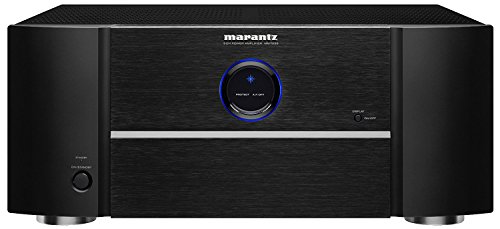
- 140W per channel into 8 ohms
- XLR and RCA inputs for each channel
- Current feedback design with HDAM circuit
Best For: Dedicated 5-channel home theater systems
Rack-Mount Multi-Zone Sound Hub

- 8 channels with 100W per channel
- Speaker selectors with volume control
- Bridgeable channels and low-impedance protection
Best For: Multi-room wired audio systems with zone control
High-Output 7-Channel Theater Amp

- 150W per channel across 7 channels
- XLR and RCA inputs for flexible setup
- High-current toroidal transformer for headroom
Best For: Large surround systems needing consistent multichannel power
Compact Streaming Theater Amplifier

- 100W stereo or 80W in 3-channel LCR mode
- HDMI eARC plus BluOS streaming
- Dirac Live ready and wireless expansion support
Best For: Compact TV and music systems with streaming built in
Multi-Input Rackmount Pick
Pyle 6-Channel 2000W Hybrid Home Amp
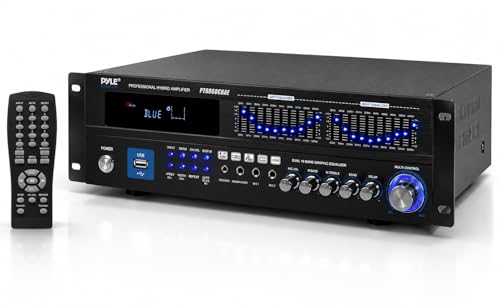
- 2000W peak power for multi-speaker use
- Bluetooth, HDMI, optical, coaxial, USB, and DVD inputs
- Rack-mount design with mic and EQ controls
Best For: Home theater users wanting broad connectivity and karaoke support
High-Output 7-Channel Choice

- 7-channel Class AB design with all channels driven
- Balanced XLR, RCA, and 12V trigger support
- Status LEDs plus 5-year warranty
Best For: Dedicated theater installs needing seven amplified channels
Feature-Packed Media Hub
Pyle 4000W Bluetooth Home Theater Amp

- 4000W peak power for multi-speaker setups
- Bluetooth streaming with built-in CD/DVD playback
- HDMI, USB, RCA, and optical connectivity
Best For: Buyers who want disc playback and broad source compatibility
Budget-Friendly Multi-Channel Flexibility
Monolith M2100X 2x90W Multi-Channel Amp

- 2x90 watts per channel output
- RCA and XLR inputs included
- Simple black finish for AV racks
Best For: Compact home theater systems needing a basic 2-channel amp with flexible inputs
High-Power Customizable Zone Amp
OSD Audio Nero 8-Channel Class D Amplifier
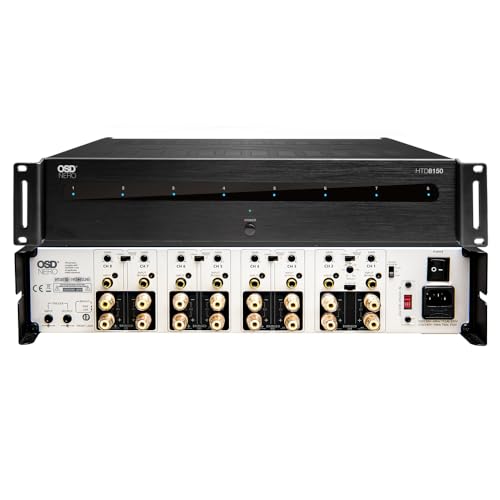
- 8 channels with 100W/175W ratings
- Multiple bridging options up to 400W
- 12V trigger and channel LEDs
Best For: Larger home theater or multi-room setups that need flexible multi-channel power
Feature-Rich Budget Receiver
Donner MAMP6 6-Channel Bluetooth Amplifier

- Six channels with independent control
- Bluetooth 5.3 plus optical and coaxial inputs
- Dual mic jacks with Talk Over
Best For: Users who want a versatile 6-channel receiver for home audio and karaoke
Reference 5-Channel Power – Marantz MM7055 5-Channel Amp
If you want power amplifiers for home theater that focus on clean multichannel performance, the Marantz MM7055 is built for a dedicated 5-channel setup. It delivers 140W per channel into 8 ohms, uses Marantz HDAM circuitry with current feedback design, and offers both XLR and RCA inputs for flexible system integration.
Best For: Home theater owners who want a straightforward 5-channel amplifier with balanced and unbalanced input options.
Pros:
- 140W x 5 output at 8 ohms for five-speaker home theater systems
- Current feedback design with Marantz HDAM circuit
- XLR and RCA inputs on all five channels
- Detachable power cord and gold-plated terminals
Cons:
- Limited to 5 channels, so it is not for larger surround layouts
- Best suited to systems that already have a separate preamp/processor
The MM7055 is a practical pick if you want a well-defined external amp to drive a five-channel theater without unnecessary extras. Its clean feature set and balanced input support make it easy to slot into a serious home audio rack.
Rack-Mount Multi-Zone Sound Hub – Pyle PT8000CH 8-Channel Amp
If you need power amplifiers for home theater that also handle multi-room audio, the Pyle PT8000CH is designed for distributed sound. It combines an 8-channel, rack-mountable layout with speaker selectors, volume control, bridgeable channels, and built-in low-impedance protection for larger wired systems.
Best For: Multi-room installs where one amplifier needs to power several speakers and give zone-by-zone control.
Pros:
- 8-channel architecture with 100W per channel output
- Speaker selectors with volume control for multiple rooms
- Bridgeable switches for higher-powered output options
- Built-in low-impedance protection for safer operation
Cons:
- Bulky 19-inch rack format requires a dedicated install space
- Feature set is geared toward distributed audio more than pure theater use
The PT8000CH makes sense when flexibility matters more than minimalist setup. For larger wired homes, it gives you centralized control and the ability to keep music moving across multiple zones.
High-Output 7-Channel Theater Amp – Marantz MM8077 7-Channel Amp
Among power amplifiers for home theater, the Marantz MM8077 is aimed at larger surround systems that need consistent output across all channels. It delivers 150W per channel into 8 ohms, uses a current feedback topology, and includes balanced XLR plus RCA inputs for each channel.
Best For: Big home theater setups that need a seven-channel amplifier with strong headroom and matching output across channels.
Pros:
- Seven channels with 150W per channel into 8 ohms
- Uniform output stage topology across all channels
- XLR balanced and RCA unbalanced inputs
- High-current toroidal transformer for dynamic peak handling
Cons:
- Heavier and larger than compact alternatives
- Requires a separate preamp or processor for use
The MM8077 is a strong fit when you want a serious external amplifier to anchor a larger theater system. Its feature set leans toward reliable, high-quality multichannel performance rather than convenience extras.
Compact Streaming Theater Amplifier – Bluesound POWERNODE 2025
If you want power amplifiers for home theater in a smaller all-in-one package, the Bluesound POWERNODE (2025) combines amplification, streaming, and TV connectivity in one unit. It delivers 100W per channel in stereo or 80W per channel in 3-channel LCR mode, connects through HDMI eARC, and adds BluOS multi-room streaming with Dirac Live room correction readiness.
Best For: Buyers who want a compact amplifier that can serve both music streaming and a simplified TV-based home theater.
Pros:
- 100W per channel in stereo, or 80W per channel in 3-channel LCR mode
- HDMI eARC support for direct TV connection
- BluOS platform with broad streaming service support
- Dirac Live Room Correction ready for system tuning
Cons:
- Only 3 channels, so it is not a full traditional surround amp
- Best suited to users comfortable with app-based control and streaming integration
The POWERNODE stands out when space-saving design matters and you still want real theater capability. It is especially appealing if your setup mixes TV, music, wireless speakers, and a subwoofer in one streamlined system.
Multi-Input Rackmount Pick – Pyle 6-Channel 2000W Hybrid Home Amp
If you’re comparing power amplifiers for home theater and want a budget-friendly unit with lots of connections, this Pyle hybrid amplifier is built for flexible setups. It combines Bluetooth streaming, FM radio, USB, RCA, optical/coaxial digital inputs, HDMI, and DVD support, so it can act as a central hub for mixed media use.
Best For: Home theater users who want a rack-mount amplifier with broad input compatibility and karaoke features.
Pros:
- 2000W peak power for multi-speaker setups with 4-ohm impedance
- 9 input options, including Bluetooth, USB, HDMI, optical, coaxial, and DVD
- Front-panel controls for mic volume, treble, bass, echo, and master volume
- Rack-mount design with built-in cooling fan, remote, and FM antenna
Cons:
- Peak power rating may be less relevant than continuous output for some buyers
- Feature-heavy layout may be more than needed for simple theater setups
This model stands out when input variety matters more than minimalism. It is a practical pick for users who want home theater amplification plus karaoke and legacy media support in one rack-friendly unit.
High-Output 7-Channel Choice – OSD Audio Nero HTA7200
For shoppers focused on power amplifiers for home theater, this OSD Audio model is aimed at serious multi-channel performance. It delivers 7-channel Class AB amplification with all channels driven, plus balanced XLR and RCA inputs for more installation flexibility.
Best For: Dedicated home theater systems that need seven amplified channels, low-noise inputs, and trigger integration.
Pros:
- 7x210W at 4 ohms or 145W at 8 ohms, all channels driven
- Balanced XLR and RCA inputs for wider compatibility and lower-noise connections
- 12V trigger support for streamlined system power control
- Channel status LEDs show ON, Standby, or Protection mode
Cons:
- Heavier and larger than compact consumer amplifiers
- More specialized for dedicated theater installs than casual listening
This is the most installation-minded option in the group, with specs that suit a more serious theater build. If you want a robust multi-channel amplifier and value balanced inputs, it deserves a close look.
Feature-Packed Media Hub – Pyle 4000W Bluetooth Home Theater Amp
This Pyle unit is a flexible option for shoppers comparing power amplifiers for home theater with built-in playback features. It combines Bluetooth streaming, a front-loading CD/DVD player, AM/FM radio, HDMI, USB, RCA, and optical output, making it useful when you want one receiver to handle several sources.
Best For: Users who want a home theater amplifier with built-in disc playback and broad media connectivity.
Pros:
- 4000W peak power for multi-speaker home audio setups
- Bluetooth streaming plus CD/DVD playback in one receiver
- HDMI, RCA, USB, and optical output for broad connectivity
- Mic, echo, treble, bass, and volume controls for tuning sound
Cons:
- Peak wattage is not the same as continuous real-world output
- Feature-rich design may be more complex than a basic amp-only setup
As a media-focused amplifier, it is best suited to users who want convenience and versatility more than a stripped-down design. The built-in disc player and wide input selection make it especially practical for mixed entertainment systems.
Budget-Friendly Multi-Channel Flexibility – Monolith M2100X 2x90W Multi-Channel Amp
For shoppers comparing power amplifiers for home theater, the Monolith M2100X is a straightforward option when you want multi-channel amplification with both RCA and XLR inputs. Its 2×90 watts per channel output makes it a practical match for modest home theater upgrades where simple connectivity and clean integration matter more than flashy extras.
Best For: Compact home theater setups that need a basic 2-channel power amp with RCA and XLR input options.
Pros:
- 2×90 watts per channel output for driving a pair of speakers.
- Includes both RCA and XLR inputs for flexible hookup options.
- Simple black finish that fits into most AV racks.
Cons:
- Only two channels, so it is not built for larger speaker layouts.
- No extra system features are listed beyond the core amplification and inputs.
Overall, the M2100X is best viewed as a clean, no-frills amplifier choice for buyers who mainly want reliable two-channel power in a home theater system. If your setup is centered on front speakers or a focused stereo zone, it gives you the essential connections without unnecessary complexity.
High-Power Customizable Zone Amp – OSD Audio Nero 8-Channel Class D Amplifier
If you need power amplifiers for home theater that can scale beyond a basic setup, the OSD Audio Nero HTX-8150 stands out for its 8-channel design and highly flexible bridging options. With 100W at 8 ohms, 175W at 4 ohms, and bridging configurations up to 400W, it is aimed at systems that need both channel count and configuration freedom.
Best For: Larger home theater or multi-room systems that need an 8-channel amplifier with advanced bridging options.
Pros:
- Eight channels with 100W at 8 ohms and 175W at 4 ohms.
- Flexible bridging setups, including 400W output configurations.
- Dedicated subwoofer bridging support with crossover and level control.
- RCA inputs, 12V trigger, and individual channel LEDs for easier integration and status checks.
Cons:
- More complex than a simple stereo amp, so setup may take more planning.
- Best suited to systems that can actually use its many channels and bridging modes.
In practice, the HTX-8150 is a strong fit when you want one amplifier to handle a more ambitious theater or distributed audio layout. Its real advantage is flexibility: you can allocate power in multiple ways instead of being locked into one fixed channel configuration.
Feature-Rich Budget Receiver – Donner MAMP6 6-Channel Bluetooth Amplifier
For buyers browsing power amplifiers for home theater, the Donner MAMP6 is less of a pure power amp and more of a feature-packed stereo receiver with six channels and broad input support. It offers Bluetooth 5.3, USB, FM, RCA, optical, and coaxial inputs, making it a versatile all-in-one option for casual home audio, TV, and karaoke use.
Best For: Users who want a versatile 6-channel receiver for home audio, karaoke, and TV speaker setups.
Pros:
- Six independent channels with support for multiple speaker groups.
- Wide input selection, including Bluetooth 5.3, USB, RCA, optical, coaxial, and FM.
- Built-in EQ controls for treble, midrange, bass, and echo.
- Dual mic inputs and Talk Over function for karaoke or hosting.
Cons:
- 25W RMS per channel is modest for users seeking a true high-power theater amp.
- No HDMI input is listed.
The MAMP6 makes sense if convenience and connectivity matter more than raw amplifier output. It is a flexible, feature-heavy choice for rooms where you want music, TV audio, and microphone use from one compact unit.
How We Picked These Power Amplifiers for Home Theater
We focused on amplifier type, channel count, output ratings, connectivity, and overall fit for home theater use. For most buyers, the right choice depends less on raw wattage claims and more on whether the amp can comfortably drive your speakers, match your receiver or processor, and support the surround format you want.
We also favored models with useful input options such as RCA or XLR, flexible multi-channel layouts, and designs that make sense for real living rooms, media rooms, and rack-mounted installs.
Quick Comparison
If you need a simple rule of thumb: 5-channel amps are a strong match for standard 5.1 systems, 7-channel models work well for 7.1 or Atmos-style layouts, and multi-zone or hybrid amps are better suited to mixed-use spaces, whole-home audio, or setups that need more than pure theater performance.
Power ratings should be viewed alongside speaker sensitivity and room size. A modestly rated amplifier with clean delivery can outperform a flashy spec sheet in a real system.
Key Buying Factors for Power Amplifiers for Home Theater
Channel Count and System Layout
Choose an amp that matches your speaker configuration. Buying a 7-channel unit for a 5.1 system can be useful if you plan to upgrade later, but it is not necessary if your setup will stay small.
Power and Headroom
Look for enough continuous power to drive your speakers without strain. Headroom matters because movie soundtracks can have sudden peaks that demand more from the amplifier than average listening does.
Inputs and Integration
For most home theaters, RCA inputs are common, while XLR can be helpful in higher-end or longer-cable installations. Make sure the amplifier integrates cleanly with your AV receiver or preamp processor.
Form Factor and Cooling
Rack-mountable designs, efficient Class D topologies, and good ventilation can make installation easier and reduce heat buildup, especially in enclosed cabinets or equipment racks.
Who Should Buy Which Power Amplifiers for Home Theater?
If you want a straightforward upgrade for a standard surround system, a 5-channel or 7-channel model is usually the best place to start. If you need flexible distribution across multiple rooms, a multi-zone amplifier may be the better fit. If your priorities include wireless playback, streaming, or casual media-room use alongside theater audio, a hybrid receiver-amplifier can make more sense than a pure power amp.
For the best results, match the amplifier to your speakers, listening distance, and expansion plans. In home theater, the right amp is the one that delivers stable power, clean dynamics, and the connectivity your system actually needs.