Choosing the right monitoring rig can make every rehearsal and performance feel more controlled. The best professional in ear monitoring systems help reduce stage noise, improve clarity, and keep musicians locked in with the mix.
Below, we focus on practical options for bands, worship teams, and studio players who want dependable wireless performance without unnecessary complexity.
Best 10 Professional in Ear Monitoring Systems Picks for 2026
Compact 2.4GHz Performer Link

- 2.4GHz wireless with under-5ms latency
- Mono XLR or TS input support
- About 5 hours of rechargeable battery life
Best For: Solo performers and small bands needing portable wireless monitoring
Tour-Ready Starter Set
Xvive U4 Wireless IEM System Set
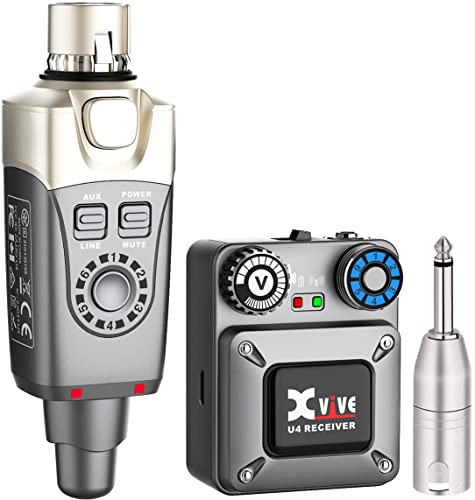
- 2.4GHz wireless with under-5ms latency
- Over 90 feet of working range
- Includes receiver, transmitter, adapter, and bag
Best For: Musicians and small teams wanting an all-in-one IEM bundle
Talkback Stereo Monitor Rig

- 5.8GHz wireless with 4 channels
- Built-in cue mic and stereo/mono switching
- Charging case extends transmitter runtime to about 10 hours
Best For: Bands and studios needing talkback and flexible monitoring
Multi-Mix UHF Stage System

- 4-channel UHF system with 4 personal mixes
- Includes 4 bodypacks and 4 earphones
- Rackmount-friendly design with loop outputs
Best For: Four-member bands and worship teams needing multiple mixes
Easy-Setup Stereo Pick
Auto-Pairing 2.4GHz Stereo IEM
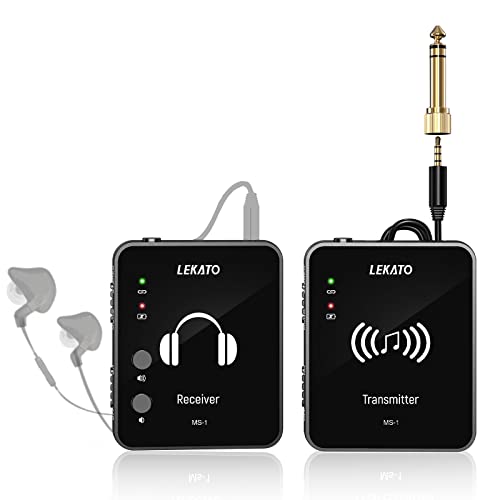
- One TX can pair with multiple receivers
- Auto-pairing reduces setup time
- True stereo with low-latency 2.4GHz audio
Best For: Small bands, churches, and rehearsal rigs
Flexible Stereo Monitor System
True Stereo 5.8GHz Monitor System

- Four modes for stereo, L, R, or mix monitoring
- Dual XLR inputs for true left/right signal paths
- Less than 5 ms latency for live use
Best For: Musicians and worship teams needing stereo flexibility
Durable Mono Wireless Pick

- 100 selectable UHF frequencies for cleaner operation
- Metal transmitter and sturdy bodypack receivers
- Includes rack kit, case, batteries, and antennas
Best For: Bands and churches needing reliable mono monitoring
Compact RF Monitoring
Xvive U45 Wireless in Ear Monitor System 5.8ghz

- 5.8 GHz true diversity wireless design
- Channel Scan mode helps find a clean channel
- 24-bit/48kHz audio with USB-C charging
Best For: Small-stage and home performers who want simple, reliable wireless monitoring
Feature-Rich Stereo Rack System
Phenyx Pro PTM-10 UHF Wireless IEM

- Stereo/mono monitoring with EQ, balance, limiter, and lock functions
- 900MHz band with 89 tunable frequencies
- Rack-mountable design with carrying case included
Best For: Stage and venue users who want a control-rich rack system
Portable Digital Monitor Pack
Phenyx Pro PDP-M Compact UHF Stereo IEM
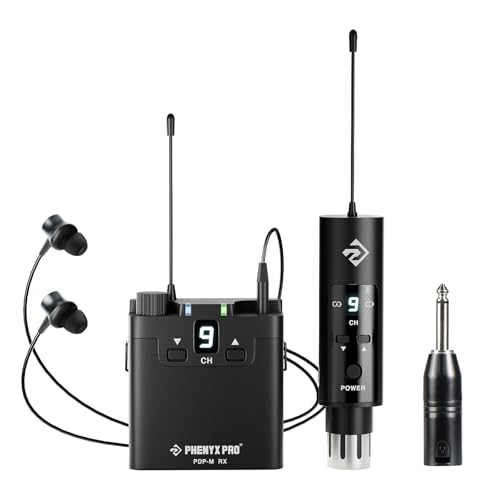
- 24-bit/48kHz digital signal path
- UHF 900MHz frequency-hopping with 30mW power
- Compact kit includes adapters, earphones, and pouch
Best For: Travel-friendly rehearsals, worship sets, and small stages
Compact 2.4GHz Performer Link – Xvive U4 Wireless IEM
If you want professional in ear monitoring systems that are simple to set up and easy to carry, the Xvive U4 is built for fast use with studio gear, rehearsal rigs, and live stages. Its 2.4GHz wireless design, low-latency transmission, and metal housing make it a practical choice when you need reliable personal monitoring without a complicated rack.
Best For: Solo performers, small bands, and mobile setups that need quick wireless monitoring.
Pros:
- 2.4GHz wireless transmission with less than 5ms latency
- Supports mono balanced XLR or mono unbalanced TS input
- Rechargeable battery with about 5 hours of use
- Built-in limiter and up to 107 dB signal-to-noise ratio
Cons:
- Battery life is limited to about 5 hours per charge
- Mono monitoring only
- Not water resistant
Overall, the U4 is a streamlined monitoring solution for players who value portability and low-latency performance over advanced routing features. It fits especially well when you want a dependable wireless feed and straightforward operation.
Tour-Ready Starter Set – Xvive U4 Wireless IEM System Set
This Xvive U4 set is a practical pick for professional in ear monitoring systems when you need a ready-to-go bundle for rehearsals, clubs, or touring. It uses 2.4GHz wireless, keeps latency under 5ms, and includes the essentials for quick setup without extra accessory hunting.
Best For: Musicians and small teams who want a complete wireless IEM starter kit.
Pros:
- 2.4GHz wireless operation with less than 5ms latency
- Over 90 feet of working range
- Up to 5 hours of battery life on transmitter and receiver
- Includes receiver, transmitter, adapter, and carry bag
Cons:
- Designed around a single receiver in the box
- Mono-oriented monitoring use case
- Not water resistant
For performers who want a compact, dependable system with enough range for small venues, the U4 set delivers the core features that matter most. It is especially appealing if you want simple wireless monitoring with minimal setup friction.
Talkback Stereo Monitor Rig – SWIFF AUDIO WX520 IEM
The SWIFF AUDIO WX520 stands out among professional in ear monitoring systems because it combines stereo/mono switching with a built-in cue talkback function. Its 5.8GHz wireless platform, low latency, and flexible input options make it a strong fit for players who need more communication and routing options on stage.
Best For: Bands, worship teams, and studios that need cue talkback plus flexible monitoring modes.
Pros:
- 5.8GHz wireless transmission with 4 selectable channels
- Built-in cue mic support for talkback communication
- Stereo/mono switching and AUX/LINE mode options
- Receiver battery lasts up to 5 hours, with about 10 hours from the transmitter charging case
Cons:
- Receiver runtime is still limited to about 5 hours
- Latency is under 9.2ms, but not as low as some alternatives
- Best suited to in-ear monitoring use rather than broader audio routing
For teams that need communication as well as monitoring, the WX520 offers a more versatile feature set than basic wireless IEM units. It is a sensible choice when stage coordination and signal flexibility matter as much as clean audio.
Multi-Mix UHF Stage System – Phenyx Pro PTM-33-4B
If you need professional in ear monitoring systems for a full band, the Phenyx Pro PTM-33-4B is built around multi-user monitoring and multiple mixes. Its 4-channel UHF design, rack-friendly format, and included bodypacks make it a practical stage solution for worship teams, musicians, and live production.
Best For: Four-member bands, church teams, and stage crews that need multiple personal mixes.
Pros:
- 4-channel system with 4 groups of left/right inputs and loop outputs
- Up to 4 standalone mixes with no delay in sound
- 4×25 UHF frequencies and 140-164 ft line-of-sight range
- Includes 4 bodypack receivers, 4 earphones, and rackmount accessories
Cons:
- Mono monitoring only
- Needs four auxiliary jacks on the mixer for full use
- Line-of-sight range can be reduced by thick walls, glass, or metal blocks
This system is most compelling when you need several performers monitoring at once from a single transmitter. It prioritizes practical stage workflow and multiple personal mixes over compact, minimalist design.
Easy-Setup Stereo Pick – Auto-Pairing 2.4GHz Stereo IEM
The LEKATO MS-1 is a practical pick for professional in ear monitoring systems when you want a simple wireless setup for rehearsals, small gigs, or church use. Its 2.4GHz design focuses on low-latency stereo monitoring, and the one-to-many pairing makes it easier to share a monitor mix across multiple performers.
Best For: Small bands, church teams, and rehearsal setups that need easy stereo monitoring.
Pros:
- Supports one transmitter to multiple receivers for shared monitor mixes.
- Auto-pairing simplifies setup with no manual channel selection.
- True stereo transmission with a one-key stereo/mono input option.
- Low-latency 2.4GHz operation with up to 100 ft range in open areas.
Cons:
- Battery life is listed at a little over 5 hours, so longer events may need recharging.
- Open-area range is specified, so crowded venues may reduce performance.
- Works best when the audio source is actually stereo and a stereo cable is used.
Overall, the MS-1 is a straightforward wireless IEM system for users who value quick setup and stereo monitoring over advanced routing. It is well suited to smaller professional environments where simplicity matters.
Flexible Stereo Monitor System – True Stereo 5.8GHz Monitor System
The Xvive U45D is built for professional in ear monitoring systems where stereo detail and quick setup matter. With dual XLR inputs, four monitoring modes, and less than 5 ms latency, it gives musicians and worship teams a flexible way to monitor vocals, instruments, and click tracks clearly.
Best For: Performers and teams that want true stereo monitoring with flexible routing options.
Pros:
- Four monitoring modes cover stereo, left, right, and mixed workflows.
- Dual XLR inputs support a true left/right monitor feed.
- Less than 5 ms latency helps keep performance timing immediate.
- Five 8GHz wireless with up to 100 ft range and same-channel sharing.
Cons:
- Battery life is listed at up to 5 hours, which may be short for longer sessions.
- Setup still requires selecting channels, even though it is simplified.
- It is designed around one monitor mix sharing on the same channel, not complex multi-mix routing.
In practice, the U45D stands out as a flexible wireless IEM system for players who need stereo separation and low delay. It is a strong fit when you want professional monitoring without rack-heavy complexity.
Durable Mono Wireless Pick – Rugged UHF Mono IEM
The Phenyx Pro PTM-22 is a solid option for professional in ear monitoring systems when reliability and interference control are priorities. It uses UHF mono monitoring with 100 selectable frequencies, a metal transmitter, and bodypack receivers made for band, studio, and worship applications.
Best For: Bands, churches, and studios that want a durable mono wireless monitor system.
Pros:
- 100 selectable frequencies help reduce interference in busy RF environments.
- Rugged metal transmitter and sturdy bodypack receivers add durability.
- Designed for live performance, rehearsal, studio, and worship use.
- Includes two receivers, rackmount kit, antennas, batteries, and carry case.
Cons:
- Monophonic monitoring only, so it is not the choice for stereo IEM users.
- Uses AA batteries in the receiver pack, so ongoing battery management is required.
- Audio response is listed to 16 kHz, which may matter to users seeking wider specs.
The PTM-22 is aimed at users who want dependable stage monitoring with simpler mono operation and strong build quality. If your priority is stable wireless performance over stereo imaging, it is a practical professional choice.
Compact RF Monitoring – Xvive U45 Wireless in Ear Monitor System 5.8ghz
If you need professional in ear monitoring systems for rehearsals, studio work, or live gigs, the Xvive U45 is built around simple setup and dependable wireless performance. Its 5.8 GHz true diversity design is meant to keep the monitor feed stable while avoiding interference with other wireless devices, and the Channel Scan mode helps you find a usable channel quickly.
Best For: Musicians and small teams wanting a straightforward, low-interference wireless IEM setup for stage or home use.
Pros:
- 5.8 GHz true diversity wireless design helps reduce interference.
- Channel Scan mode simplifies finding a clean channel.
- 20Hz–20kHz range with 24-bit/48kHz audio for detailed monitoring.
- USB-C charging with up to 5 hours of battery life.
Cons:
- Range is listed at 100 ft / 30.5 m, which may suit smaller setups better.
- Requires manual transmitter channel matching after scanning.
- Battery life is shorter than some larger-stage systems.
The U45 is a practical option if you value clean audio, easy channel finding, and a compact wireless system. It keeps the feature set focused on reliable monitoring rather than extra onboard controls.
Feature-Rich Stereo Rack System – Phenyx Pro PTM-10 UHF Wireless IEM
For buyers comparing professional in ear monitoring systems, the Phenyx Pro PTM-10 stands out as a more fully featured UHF stereo setup. It supports stereo or mono monitoring, offers tunable frequencies for multiset use, and adds tools like EQ, balance, limiter, and lock functions for more controlled stage monitoring.
Best For: Bands, presenters, and venues that want a rack-mountable wireless IEM with flexible controls and wider operating range.
Pros:
- True stereo monitoring with mono/stereo mode selection.
- 900MHz band with 89 tunable frequencies for multiset operation.
- Up to 160 ft / 50 m coverage for stage, studio, and speaking uses.
- Includes rack-mount kit, carrying case, and hybrid XLR/6.3mm inputs.
Cons:
- More complex than a basic plug-and-play monitor system.
- Uses AA batteries for the receiver instead of an all-rechargeable setup.
- Best suited to users who can take advantage of the extra controls and rack design.
The PTM-10 is a strong fit if you want more routing flexibility and monitoring control in a single wireless package. Its rack-ready design and broader feature set make it especially useful in organized live or installed setups.
Portable Digital Monitor Pack – Phenyx Pro PDP-M Compact UHF Stereo IEM
The Phenyx Pro PDP-M is aimed at users who want a compact wireless monitor solution without giving up stereo capability. It offers a 24-bit/48kHz digital signal path, UHF 900MHz frequency-hopping transmission, and enough portability to move easily between rehearsals, worship sets, and small live stages.
Best For: Performers who want a portable, easy-to-carry wireless IEM with flexible mono/stereo operation.
Pros:
- 24-bit/48kHz digital audio path for cleaner monitoring.
- UHF 900MHz frequency-hopping design for stable transmission.
- Up to 160–200 ft range with 30mW transmission power.
- Includes adapters, dual Type-C charging cable, earphones, and storage pouch.
Cons:
- Runtime is listed at up to 4 hours, so longer events may need charging breaks.
- Only 16 selectable frequencies, which is less flexible than some larger systems.
- Best for smaller to mid-size setups rather than heavy-duty touring use.
The PDP-M is a smart choice when portability and quick setup matter more than a large feature set. It combines practical monitoring features with a compact bundle that is easy to travel with and deploy fast.
How We Picked These Professional in Ear Monitoring Systems
We looked for systems that balance audio stability, usable wireless range, clear monitoring modes, and setup simplicity. Because Professional in Ear Monitoring Systems are used in live environments, we also prioritized battery life, build quality, frequency flexibility, and whether the system fits solo performers, small groups, or full stage crews.
Quick Comparison: What Matters Most
Some buyers need a simple one-to-one setup for rehearsals, while others need multi-user solutions with multiple bodypacks or channel options. Stereo support, mono mode, and mix control can significantly change how natural the monitoring feels. If you perform in crowded RF spaces, stronger frequency management and more robust hardware are worth paying for.
Key Buying Factors for Professional in Ear Monitoring Systems
Wireless Band and Interference Resistance
Check whether the system uses 2.4GHz, 5.8GHz, or UHF. Each has tradeoffs in range, congestion, and venue compatibility. In busy wireless environments, frequency flexibility and channel selection matter more than headline range alone.
Mono, Stereo, and Mix Control
Mono systems are often simpler and more affordable, while stereo and true stereo systems can improve instrument separation and spatial awareness. If you rely on click tracks or detailed backing mixes, stereo support is especially useful.
Range, Latency, and Reliability
For live performance, a stable connection is more important than a long spec sheet. Look for low-latency transmission, enough range for your stage size, and consistent performance when moving around.
Power, Battery, and Portability
Rechargeable receivers, charging cases, and decent runtime reduce downtime before soundcheck. Portable systems are a strong fit for traveling musicians, but rack-mountable options can be better for installed rigs or larger teams.
Who Should Buy Which Professional in Ear Monitoring Systems?
If you are a solo musician, small band member, or rehearsal regular, a straightforward wireless setup is usually the best value. Worship teams and touring acts should lean toward systems with better frequency management, multiple bodypacks, and stronger interference handling. Studios and engineers may prefer models that offer more precise stereo monitoring and dependable signal consistency. In short, choose the system that matches your stage size, wireless environment, and the amount of control you need from your Professional in Ear Monitoring Systems.