Choosing the best rotary tools for PCB drilling means balancing precision, speed control, bit compatibility, and the stability needed for clean holes in delicate circuit boards.
This roundup includes compact powered tools, carbide micro-bit sets, and manual pin vises so you can match your setup to prototype work, repairs, or occasional hobby use.
Best 10 Rotary Tools for Pcb Drilling Picks for 2026
Best Cordless Starter Kit

- Five speeds from 5,000–18,000 RPM
- 69-piece accessory kit with three collets
- Cordless, lightweight design with LED and USB-C charging
Best For: Beginners handling light PCB drilling and general DIY crafts
Best Micro Bit Variety
Lothee Tungsten Carbide PCB Bits
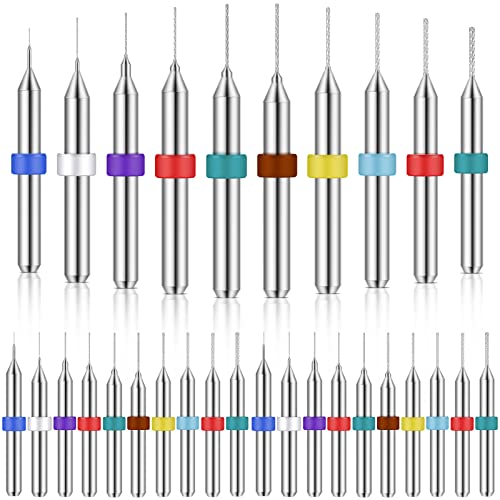
- 30 bits covering 0.1–1.0 mm sizes
- Tungsten steel construction
- Three storage boxes included
Best For: Precision PCB drilling with a compatible rotary tool
Best Two-Speed Precision Drill
Fanttik K2 Nano Precision Drill

- 250 and 1,300 RPM speed modes
- 0.6 N·m maximum torque
- 20 HSS bits and USB-C rechargeable battery
Best For: Mixed PCB, resin, jewelry, and craft drilling
Best Manual Control

- Battery-free manual operation
- Adjustable 0.3–3.4 mm chuck
- 25 HSS bits with case and tweezers
Best For: Slow, controlled PCB and miniature craft drilling
Best Micro-Size Range
Tungsten Carbide PCB Drill Bit Set

- 10 diameters from 0.3mm to 1.2mm
- Tungsten steel carbide construction
- Includes a protective plastic case
Best For: Fine PCB holes and miniature DIY work
Best All-in-One Hand Kit

- 61 pieces including pin vise and two bit ranges
- Manual chuck adjusts from 0.3mm to 3.4mm
- Portable kit for PCB and craft projects
Best For: Portable PCB repair and model-making
Best for 2.5mm Holes

- Ten matching 2.5mm drill bits
- Tungsten carbide construction
- 1/8-inch shanks with spiral flutes
Best For: Repeat 2.5mm holes in PCBs and plastics
Best Versatile Size Range

- Ten diameters from 0.3mm to 1.2mm
- Tungsten-carbide spiral-flute design
- 1/8-inch shanks for compatible tools
Best For: Makers needing several PCB hole sizes
Best for Standard 1mm Holes

- Ten bits with 1mm cutting diameters
- Tungsten-carbide construction
- Spiral flutes and 1/8-inch shanks
Best For: Repeated drilling of consistent 1mm PCB holes
Best for Micro Holes

- Thirty bits with 0.1mm cutting diameters
- Tungsten-carbide spiral-point design
- 1/8-inch shanks for compatible equipment
Best For: Fine PCB drilling with replacement bits on hand
Best Cordless Starter Kit – HARDELL Mini Rotary Tool
For light-duty rotary tools for PCB drilling and general DIY work, the HARDELL Mini Cordless Rotary Tool offers a compact, pen-like design, variable speed control, and a broad accessory selection. Its 5,000–18,000 RPM range can help with careful drilling, sanding, grinding, and finishing, though it is not intended for heavy-duty projects.
Best For: Beginners and crafters who want a lightweight cordless tool for occasional small-hole drilling, resin work, and finishing tasks.
Pros:
- Five speed settings from 5,000 to 18,000 RPM
- Includes 69 accessories and three collets for varied small projects
- Lightweight 0.14 kg design with LED lighting and USB-C charging
- Up to 200 minutes of continuous use on a charge
Cons:
- Not suitable for heavy-duty projects
- The included accessory assortment may be broader than needed for dedicated PCB drilling
This is a flexible entry-level option when PCB drilling is only one part of your project list. Its cordless portability and low-speed settings are useful for controlled work, but dedicated micro bits may still be needed for precise circuit-board holes.
Best Micro Bit Variety – Lothee Tungsten Carbide PCB Bits
When choosing rotary tools for PCB drilling, the bit matters as much as the tool. This Lothee set provides 30 tungsten carbide micro drill bits in sizes from 0.1 to 1.0 mm, giving electronics hobbyists a broad range for precision holes and other miniature work.
Best For: Users who already own a compatible rotary tool or CNC-style holder and need multiple very small PCB drilling sizes.
Pros:
- Includes three pieces each of eleven listed sizes from 0.1 to 1.0 mm
- Tungsten steel construction is designed to resist wear and bending
- Spiral flutes and pointed cutting edges are intended to reduce cutting force and debris
- Comes in three boxes for organized storage
Cons:
- This is a drill-bit set, not a complete rotary tool
- Ultra-small bits require careful handling and appropriate speed control
For dedicated circuit-board drilling, this set offers more relevant size coverage than a general-purpose accessory kit. Confirm that your tool or chuck can securely hold these straight-shank bits before buying.
Best Two-Speed Precision Drill – Fanttik K2 Nano Precision Drill
The Fanttik K2 Nano is a compact choice among rotary tools for PCB drilling, combining two speed modes with a 6 mm maximum chuck size. Its 250 RPM high-torque setting is aimed at tougher materials, while the 1,300 RPM mode suits plastics, thin metals, and 3D-printed parts.
Best For: DIY users who want a small rechargeable drill with simple two-speed control for PCB, resin, jewelry, and craft projects.
Pros:
- Offers 0.6 N·m maximum torque and two selectable speeds
- Includes 20 HSS bits ranging from 0.6 to 3.2 mm
- 800 mAh rechargeable battery with USB-C charging
- Mechanical knob and LED feedback support straightforward operation
Cons:
- Its 1,300 RPM maximum speed is lower than many high-speed rotary tools
- Included bits start at 0.6 mm, so finer PCB holes require additional bits
This model favors controlled drilling over high-speed material removal. It is a practical middle ground for mixed craft and electronics work, particularly if your PCB holes fall within its included bit range or you plan to add compatible micro bits.
Best Manual Control – AUTOTOOLHOME Pin Vise
For hands-on rotary tools for PCB drilling, the AUTOTOOLHOME pin vise provides a battery-free alternative. This manual drill includes 25 HSS twist bits and an adjustable three-jaw chuck that accepts bits from approximately 0.3 to 3.4 mm, allowing slow, deliberate hole placement.
Best For: Hobbyists who prioritize maximum control, portability, and low-cost manual drilling for small PCB and craft holes.
Pros:
- Requires no battery or power source
- Adjustable chuck accommodates a broad 0.3–3.4 mm bit range
- Includes 25 HSS bits, a storage case, and tweezers
- Lightweight aluminum body with an ergonomic non-slip handle
Cons:
- Manual drilling is slower and more labor-intensive than powered tools
- Best suited to small holes and softer materials rather than production work
This pin vise is a strong fit when precision and feedback matter more than speed. It avoids motor vibration and charging concerns, making it useful for occasional PCB repairs, model work, jewelry, and other miniature drilling tasks.
Best Micro-Size Range – Tungsten Carbide PCB Drill Bit Set
For rotary tools for PCB drilling, this set is aimed at fine holes from 0.3mm to 1.2mm. Its tungsten steel carbide construction, spiral flutes, and included storage box make it a practical choice for detailed circuit-board and miniature work.
Best For: Precision PCB drilling, jewelry, plastic, CNC engraving, and small DIY projects requiring very fine hole sizes.
Pros:
- Includes 10 diameters from 0.3mm to 1.2mm, with five bits in each size.
- Tungsten steel carbide offers high hardness and wear resistance.
- Spiral flutes and polished cutting edges are designed for clean, efficient cutting.
- Plastic storage box helps protect and organize the bits.
Cons:
- The set is limited to very small diameters, so it is not suited to larger holes.
- These micro bits require careful handling despite their stated resistance to bending.
This is a focused option when small hole sizes matter most. The repeated sizes provide useful replacements for delicate PCB work, while the compact case supports organized storage.
Best All-in-One Hand Kit – Pin Vise and 60 Micro Bits
Among rotary tools for PCB drilling, this manual kit stands out for combining a pin vise with two groups of micro bits. It includes PCB bits from 0.1mm to 1mm plus twist drills from 1mm to 3mm, giving hobbyists a broad range for portable, hands-on work.
Best For: PCB repair, jewelry, miniatures, modeling, resin, plastics, and other portable manual drilling tasks.
Pros:
- Complete 61-piece package includes one pin vise, 50 twist bits, and 10 PCB bits.
- Adjustable three-jaw chuck accepts drill sizes from 0.3mm to 3.4mm.
- Aluminum-alloy hand drill is lightweight, compact, and portable.
- Bits are specified for circuit boards, FR-4, CEM-3, plastics, fiberglass, and carbon fiber molds.
Cons:
- Manual operation is less suitable than a powered rotary tool for high-volume drilling.
- The included bits span different ranges, so users must select the appropriate type and size for each task.
This kit offers the broadest size coverage of the three options and does not require a power source. It is particularly useful for detail work, field repairs, and hobby projects where portability is valuable.
Best for 2.5mm Holes – Carbide Spiral PCB Bits
For rotary tools for PCB drilling that need a consistent larger micro-drill size, this 10-piece set uses 2.5mm tungsten carbide bits with approximately 1/8-inch shanks. Spiral flutes are intended to improve chip evacuation and drilling accuracy across several compatible materials.
Best For: Repeated 2.5mm holes in PC boards, plastics, fiberglass, wood, and soft metals using rotary, CNC, engraving, or PCB drilling equipment.
Pros:
- All 10 bits share a 2.5mm cutting diameter for consistent hole sizing.
- Tungsten carbide provides high hardness, wear resistance, and strength.
- Spiral flute design helps discharge accumulated chips and reduce cutting force.
- 3mm / 1/8-inch shank and positioning-ring design support compatible equipment setup.
Cons:
- The set offers only one cutting diameter, limiting size flexibility.
- Its compatibility is centered on equipment accepting the specified straight shank.
This set makes sense for users who regularly need 2.5mm holes rather than a mixed-size assortment. The ten matching bits provide spares, while the carbide and spiral-flute construction target clean, repeatable drilling.
Best Versatile Size Range – 10-Piece PCB Drill Bit Set
For rotary tools for PCB drilling, this tungsten-carbide set offers ten cutting diameters from 0.3mm to 1.2mm. The 1/8-inch shanks and spiral flutes make it a flexible choice for PCB work and other light materials.
Best For: Makers who need multiple PCB hole sizes in one set.
Pros:
- Includes 10 sizes from 0.3mm through 1.2mm.
- Tungsten-carbide construction is designed for hardness and wear resistance.
- Spiral flutes help reduce cutting force and clear chips.
- Suitable for PCBs, plastics, fiberglass, wood, and soft metals.
Cons:
- The bits are uncoated.
- The set does not include sizes below 0.3mm.
Its broad size range is the main advantage for general PCB work. The straight 3mm shanks fit compatible PCB drilling machines, engraving machines, and other equipment designed for 1/8-inch tooling.
Best for Standard 1mm Holes – 10-Piece 1mm PCB Bit Set
If your rotary tools for PCB drilling primarily use 1mm holes, this set keeps the specification simple. It includes ten tungsten-carbide bits with 1mm cutting diameters, spiral flutes, and approximately 1/8-inch shanks.
Best For: Repetitive PCB drilling where a consistent 1mm bore is required.
Pros:
- All 10 bits use a consistent 1mm cutting diameter.
- Tungsten carbide provides high hardness and wear resistance.
- Spiral flutes are designed to reduce cutting force and improve chip removal.
- Works with PCBs, plastics, fiberglass, wood, and soft metals.
Cons:
- Offers only one cutting diameter.
- The bits have an uncoated finish.
This focused set is more practical than a mixed assortment when your project calls for the same 1mm hole repeatedly. Check that your tool accepts the approximately 3mm, 1/8-inch shank before buying.
Best for Micro Holes – 30-Piece 0.1mm PCB Bit Set
For exceptionally small openings, these rotary tools for PCB drilling use 0.1mm tungsten-carbide bits. The 30-piece quantity provides replacements for delicate work, while the 1/8-inch shanks suit compatible PCB, CNC, and engraving equipment.
Best For: Fine PCB drilling tasks requiring 0.1mm cutting diameters and extra replacement bits.
Pros:
- Provides 30 bits at an extremely small 0.1mm diameter.
- Made from tungsten carbide for hardness and wear resistance.
- Spiral flutes are intended to reduce cutting force and improve drilling accuracy.
- Useful for PCBs, plastics, fiberglass, wood, and soft metals.
Cons:
- Limited to a single 0.1mm cutting diameter.
- The very fine bits require compatible equipment and careful handling.
- The bits have an uncoated finish.
This set stands out for its quantity and unusually small diameter rather than versatility. It is a targeted option for micro-drilling, provided your machine supports the approximately 3.175mm, 1/8-inch shank.
How We Picked the Best Rotary Tools for Pcb Drilling
We focused on products suited to small, accurate holes rather than general-purpose grinding alone. The selection includes cordless rotary tools, precision mini drills, pin vises, and replacement bit sets. We considered speed control, bit-size coverage, shank compatibility, included accessories, portability, and whether each option makes sense for PCB work.
Because the list includes both complete tools and drill-bit assortments, check what is included before buying. A bit set can expand an existing rotary tool, while a pin vise provides maximum control without vibration or a power source.
Quick Comparison
| Best for | Recommended type | What to prioritize |
|---|---|---|
| Occasional prototype drilling | Compact cordless rotary tool | Variable speeds, comfortable grip, included collets |
| Very small holes | Micro carbide bit set | 0.1–1.2 mm coverage and secure compatibility |
| Maximum hand control | Pin vise | Fine chuck adjustment and straight bit alignment |
| Replacing worn bits | Dedicated PCB bit assortment | Correct shank size, flute design, and quantity |
Key Buying Factors for Rotary Tools for Pcb Drilling
Speed and Control
High speed can produce clean cuts, but excessive speed, pressure, or heat may damage small bits and laminate. Choose variable-speed control when possible, and begin slowly until you understand how the tool behaves. A stable work surface and light downward pressure matter as much as the motor.
Bit Diameter and Material
PCB drilling commonly uses very small diameters, so verify the exact range rather than relying on a “micro” label. Tungsten carbide bits are rigid and effective for circuit-board materials, but they are brittle. Store them carefully and avoid side-loading or bending.
Chuck and Shank Compatibility
Confirm whether the tool accepts the included bit sizes. Some listings use 1/8-inch shanks, while micro bits may require a matching collet or adapter. A tool with multiple collets is more flexible, but only if the collets hold tiny bits securely and concentrically.
Powered Versus Manual Drilling
A powered tool is faster for repeated holes, whereas a pin vise offers better tactile feedback for occasional work and reduces the risk of overshooting. Neither replaces proper fixturing: secure the board, support the material, and wear eye protection against broken carbide fragments.
Who Should Buy Which Rotary Tools for Pcb Drilling?
Choose a compact cordless rotary tool if you want one portable device for PCB drilling, trimming, sanding, and light maker projects. Choose a dedicated micro-bit set if you already own a compatible rotary tool and mainly need replacement sizes. A pin vise is the practical choice for beginners, occasional repairs, or situations where controlled manual drilling is more important than speed.
For frequent prototyping, prioritize a stable powered tool with adjustable speed, compatible collets, and readily available replacement bits. For the smallest holes, compare the actual diameter range and keep spare bits available, since ultra-fine carbide drills are precision consumables.