The best subwoofers for home studios add low-end extension without overwhelming your monitors or turning a compact room into a bass-heavy mess. The right model can make kick drums, bass lines, sound design, and mixes easier to evaluate.
This roundup compares 10 powered subwoofers across studio-focused, desktop, music, and home-theater designs. Use the buying guide below to match output, connectivity, controls, and room size to your setup.
Best 10 Subwoofers for Home Studios Picks for 2026
Studio Bass Foundation
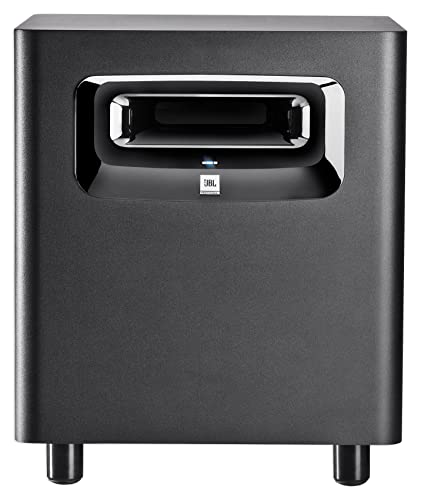
- 20 Hz-region bass and 113 dB peak output
- Balanced XLR and 1/4-inch connectivity
- Selectable club-style XLF tuning
Best For: High-output home studio monitoring and dance production
Compact Wireless-Ready Bass
Audioengine S8 Powered Subwoofer
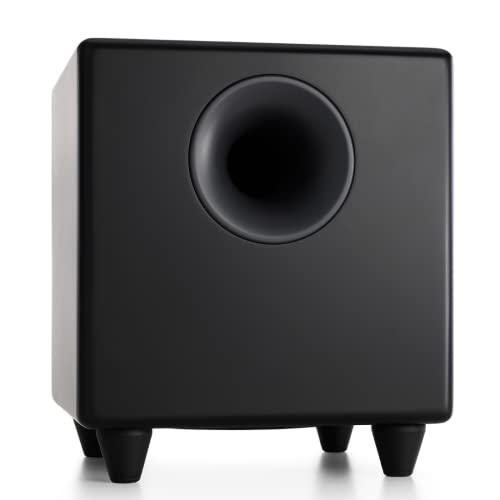
- 250-watt powered 8-inch subwoofer
- Down-firing design for flexible placement
- Optional W3 wireless adapter compatibility
Best For: Compact hybrid home studios and entertainment rooms
Monitor Matching Control

- 150-watt 8-inch bass-reflex design
- Adjustable low-cut and high-cut controls
- Phase switch for integration
Best For: Recording studios needing hands-on monitor setup control
Flexible Compact DSP Bass

- 80-watt Class-D amp, 120-watt peak
- 30–160 Hz adjustable low-pass filter
- LFE, RCA/AUX, and high-level inputs
Best For: Compact, flexible home studio setups
Desktop Bass Companion

- 8-inch subwoofer for Mackie CR monitors
- TRS, RCA, and Bluetooth connectivity
- Remote volume, bypass, and adjustable crossover
Best For: CR Series desktop monitoring setups
Deep-Bass Foundation

- 12-inch driver with 200-watt Class-D amplifier
- 26 Hz listed frequency response
- RCA, LFE, and speaker-level inputs
Best For: Larger studios and hybrid music systems
Compact Studio Tuning

- 8-inch driver with listed response down to 30 Hz
- Bluetooth 5.0 plus TRS, RCA, and aux inputs
- Adjustable filters and front headphone output
Best For: Compact production and multimedia setups
Compact Deep-Bass Pick
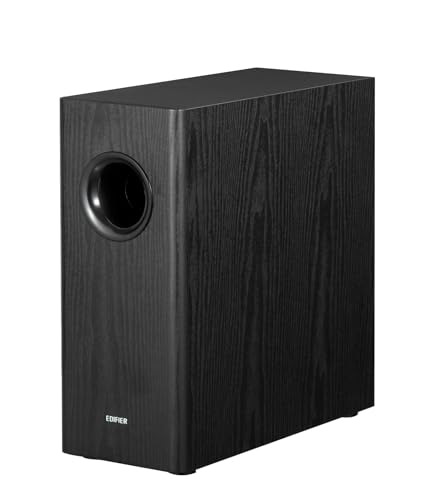
- 8-inch woofer with 70W RMS output and 35Hz response
- Adjustable crossover and phase for easier system matching
- Compact cabinet with auto-standby and included cables
Best For: Small home studios and RCA-based desktop audio setups
Flexible Connection Value
Monoprice 60-Watt Powered Subwoofer

- 8-inch driver with 60W RMS powered output
- Adjustable 50–150Hz low-pass crossover and gain
- RCA and high-level speaker inputs and outputs
Best For: Stereo or surround systems needing versatile wired connections
High-Output Studio Bass

- 10-inch woofer with 300W RMS and 600W peak output
- Class-D amplifier with adjustable volume, crossover, and phase
- RCA and high-level inputs and outputs for flexible integration
Best For: Larger home studios and rooms seeking impactful bass
Studio Bass Foundation – JBL Professional LSR310S
For home studios that need extended low end and high output, the JBL Professional LSR310S is a serious 10-inch option. Its balanced XLR and 1/4-inch connections make it straightforward to add to a compatible studio monitor setup, while the selectable XLF mode offers a club-style bass perspective for dance production.
Best For: Producers and engineers who want deep, high-output bass with balanced studio connectivity.
Pros:
- Reaches into the 20 Hz region with up to 113 dB peak output.
- Balanced XLR and 1/4-inch inputs plus XLR outputs support studio integration.
- XLF tuning provides an alternate, club-inspired bass response.
- Input sensitivity switch accommodates professional and consumer-level sources.
Cons:
- Its 10-inch cabinet may require more floor space than compact alternatives.
- XLF mode is specialized and may not suit neutral mixing decisions.
The LSR310S stands out when output, low-frequency extension, and professional connections matter most. It is a strong fit for larger or bass-focused home studios, especially those producing electronic or dance music.
Compact Wireless-Ready Bass – Audioengine S8 Powered Subwoofer
The Audioengine S8 is a compact 8-inch powered subwoofer for home studios that also serve as music, movie, or gaming spaces. Its 250-watt output, down-firing design, and optional compatibility with the Audioengine W3 wireless subwoofer adapter kit make it flexible when placement is a priority.
Best For: Small home studios and mixed-use rooms needing powerful, easy-to-place bass.
Pros:
- 250-watt output provides substantial bass from a compact enclosure.
- Down-firing design helps produce deep, resonant low frequencies.
- Compatible with the optional Audioengine W3 wireless subwoofer adapter kit.
- Sleep mode automatically powers down when not in use.
Cons:
- Connectivity is centered on wired RCA input rather than balanced studio connections.
- The supplied notes do not specify adjustable crossover or phase controls.
The S8 is a practical choice when you want strong bass without a large studio subwoofer footprint. It is less purpose-built for balanced pro-monitoring chains, but its compact design and broad home-audio suitability are useful in hybrid spaces.
Monitor Matching Control – Yamaha HS8S Studio Subwoofer
The Yamaha HS8S is designed for recording and live-music applications, making it a natural candidate for home studios built around compatible monitor systems. Its 8-inch bass-reflex design, 150-watt amplifier, and dedicated low-cut, high-cut, and phase controls provide useful options for integrating the subwoofer into a monitoring setup.
Best For: Recording-focused home studios that want hands-on crossover and phase adjustment.
Pros:
- 8-inch bass-reflex subwoofer with a stated 150-watt amplifier.
- Low-cut switch and adjustable 80–120 Hz low-cut control support system matching.
- Adjustable 80–120 Hz high-cut control and phase switch aid integration.
- Built for recording and live-music use with wired XLR connectivity.
Cons:
- Its listed dimensions and 33.6-pound weight make it relatively substantial.
- The supplied notes list a one-year manufacturer warranty.
With dedicated filtering and phase controls, the HS8S is geared toward users who want to tune the subwoofer rather than simply add more bass. It is a sensible monitoring-focused choice when control and Yamaha system compatibility are priorities.
Flexible Compact DSP Bass – BESTISAN MAGICUBE 80
The BESTISAN MAGICUBE 80 is a compact 8-inch powered subwoofer for home studios and general home audio. Its built-in DSP, adjustable 30–160 Hz low-pass filter, phase switch, and three connection options make it adaptable to systems using sub out, RCA, AUX, or high-level speaker outputs.
Best For: Budget-conscious home studio users who need flexible connections and compact placement.
Pros:
- Class-D amplification delivers 80 watts with 120 watts peak power.
- DSP processing and a 30–160 Hz adjustable low-pass filter support bass blending.
- Accepts LFE, AUX/RCA, and high-level speaker connections.
- Auto-standby activates after 15 minutes without a signal.
Cons:
- Its stated 35 Hz low-end reach is less extended than some larger studio subwoofers.
- The supplied details list RCA connectivity rather than balanced XLR inputs.
- The listed woofer diameter is 6.5 inches despite the 8-inch product designation.
The MAGICUBE 80 emphasizes convenience and system flexibility in a small footprint. It is a useful entry-level option for home studios that need adjustable bass support, though users seeking maximum low-end extension or balanced professional connections may prefer a larger studio-focused model.
Desktop Bass Companion – Mackie CR8SBT
The Mackie CR8SBT is a practical choice for anyone seeking subwoofers for home studios built around CR Series monitors. Its 8-inch driver, adjustable crossover, and TRS/RCA connectivity make it easy to add controlled low end to a desktop setup.
Best For: CR Series monitor users who want convenient desktop bass expansion with Bluetooth and remote control.
Pros:
- Designed to pair with Mackie CR Series monitors.
- Supports TRS, RCA, and Bluetooth connections.
- Adjustable crossover helps blend the subwoofer with monitors.
- Includes a desktop remote for volume and subwoofer bypass.
Cons:
- Its 40 Hz listed frequency response may not reach as low as some larger subwoofers.
- The 32.4-pound, floor-standing cabinet may be substantial for a small desk area.
- It is not waterproof.
The CR8SBT stands out for simple desktop operation and flexible connectivity. It is especially appealing when your monitoring system already uses Mackie CR speakers and you value quick access to volume and bypass controls.
Deep-Bass Foundation – Dayton Audio Classic CS1200
For larger rooms or systems that need substantial low-end extension, the Dayton Audio Classic CS1200 is a powerful option among subwoofers for home studios. Its 12-inch driver, 200-watt Class-D amplifier, and 26 Hz listed frequency response are suited to music and home entertainment systems.
Best For: Larger home studios, music listeners, and hybrid music-and-home-theater systems needing deep bass.
Pros:
- 12-inch driver and 200-watt Class-D amplifier provide strong output.
- Rigid, braced cabinet is designed for tight, accurate bass.
- Offers stereo RCA, LFE, and speaker-level inputs.
- Includes a five-year manufacturer warranty.
Cons:
- Its 18-inch-deep cabinet requires considerable floor space.
- It is wired rather than Bluetooth-enabled.
- The larger enclosure may be excessive for compact desktop monitoring.
The CS1200 is the most substantial option in this group, with connectivity that can accommodate varied system designs. Its size and wired setup make it better suited to a dedicated listening or studio space than a minimalist desk.
Compact Studio Tuning – PreSonus Eris Sub 8BT
The PreSonus Eris Sub 8BT is a versatile pick for subwoofers for home studios, combining an 8-inch front-firing driver with Bluetooth 5.0 and flexible wired inputs. Its adjustable highpass and lowpass filters help integrate the subwoofer with compact monitors.
Best For: Home producers and content creators using compact monitors who want room-tuning controls and convenient headphone access.
Pros:
- Reaches a listed low frequency of 30 Hz.
- Provides Bluetooth 5.0, balanced TRS, RCA, and front aux connectivity.
- Highpass and lowpass filters help align the sub with main monitors.
- Includes front-panel headphone output and a built-in headphone amplifier.
Cons:
- The 8-inch design is less substantial than a 12-inch subwoofer for larger spaces.
- Bluetooth range is listed at 10 meters.
- It is not waterproof.
The Eris Sub 8BT offers the broadest mix of studio-oriented controls and everyday convenience here. Its filter controls, tuning adjustments, and headphone output make it particularly useful when one compact setup serves both production and casual listening.
Compact Deep-Bass Pick – Edifier T5s
For home studios that need fuller low end without a bulky cabinet, the Edifier T5s combines an 8-inch woofer, 70W RMS Class-D amplification, and a compact design. Its adjustable low-pass filter and phase selector make it easier to integrate with compatible powered speakers or an amplifier.
Best For: Desktop and small-room setups using RCA-connected speakers or an amplifier with a subwoofer output.
Pros:
- Reaches down to a stated 35Hz and delivers 70W RMS from its built-in amplifier.
- Low-pass filter adjusts from 30Hz to 160Hz, with 0°/180° phase selection.
- Compact MDF cabinet, auto-standby, and included 3.5mm-to-RCA and RCA cables simplify setup.
Cons:
- Wired RCA connectivity only; it does not support Bluetooth, USB, or optical connections.
- Series connection without a subwoofer output requires main speakers with LINE IN.
The T5s is a practical choice among subwoofers for home studios when space, simple controls, and broad low-frequency adjustment matter more than wireless features.
Flexible Connection Value – Monoprice 60-Watt Powered Subwoofer
The Monoprice 60-Watt Powered Subwoofer is a straightforward option for home studios and mixed stereo setups. Its 8-inch driver, adjustable 50–150Hz low-pass filter, gain control, and multiple input and output types provide useful flexibility when integrating with existing equipment.
Best For: Users connecting a subwoofer to stereo or surround equipment through RCA line-level or high-level speaker connections.
Pros:
- 8-inch powered design provides 60W RMS output.
- Adjustable crossover and gain controls help balance bass with the main speakers.
- Supports RCA line-level inputs and outputs plus high-level speaker inputs and outputs.
Cons:
- Its stated frequency response begins at 50Hz, providing less specified low-end extension than some alternatives.
- The cabinet is larger and less compact than a typical desktop-focused subwoofer.
- It has wired connectivity rather than wireless audio support.
Choose this Monoprice model if connection flexibility is a priority and your system may use either line-level RCA or speaker-level wiring.
High-Output Studio Bass – Rockville Rock Shaker 10
For home studios where pronounced low-end impact is important, the Rockville Rock Shaker uses a 10-inch woofer and built-in Class-D amplifier rated at 300W RMS and 600W peak. Volume, crossover, and phase controls let you tailor its output to the rest of the system.
Best For: Larger studio, home theater, and gaming spaces that need stronger bass output and flexible wired integration.
Pros:
- 10-inch woofer with stated 300W RMS and 600W peak output.
- Class-D amplification is matched to the woofer and enclosure.
- Includes volume, crossover, phase controls, RCA line inputs/outputs, and high-level speaker inputs/outputs.
Cons:
- Its larger 20-pound cabinet may be excessive for a compact desktop studio.
- Wired connectivity only, with no stated wireless audio support.
- The supplied specifications list a frequency response of 200Hz without a lower-end response figure.
The Rock Shaker is the power-oriented choice in this group, particularly when a larger enclosure and high-output bass are acceptable in exchange for stronger impact.
How We Picked the Best Subwoofers for Home Studios
We focused on powered subwoofers that are practical for music production, mixing, desktop listening, or small home studios. The selection covers 8-, 10-, and 12-inch drivers, with options ranging from compact desktop units to higher-output models for larger rooms. We considered published power ratings, frequency claims, connection options, crossover and phase controls, wireless or Bluetooth features, auto-on behavior, and compatibility with common powered monitors.
Because specifications are not measured under identical conditions, treat frequency-response and wattage figures as useful reference points rather than direct guarantees of performance. Room acoustics, placement, and calibration often matter as much as the subwoofer itself.
Quick Comparison
- Compact desktop setups: PreSonus Eris Sub 8, Edifier T5s, and Monoprice’s 8-inch model suit smaller workspaces.
- Flexible studio monitoring: JBL Professional LSR310S, Yamaha HS8, and Mackie CR8SBT offer features aimed at integrating with monitor systems.
- Wireless or casual listening: Audioengine S8, Mackie CR8SBT, and PreSonus Eris Sub 8 add convenient wireless-related features.
- More low-end output: Dayton Audio Classic CS1200 and Rockville Rock Shaker 10 use larger drivers for rooms that need greater bass scale.
- Value-focused options: BESTISAN, Edifier, and Monoprice provide relatively compact ways to extend bass without moving to a larger studio sub.
Key Buying Factors for Subwoofers for Home Studios
Room Size and Driver Size
An 8-inch subwoofer is often easier to manage in a bedroom, office, or nearfield desktop setup. Ten- and 12-inch models can deliver more headroom, but they may excite room modes more strongly and require greater placement care. Bigger is not automatically better for accurate mixing.
Inputs, Outputs, and Monitor Integration
Check whether the sub accepts the connections your interface or monitor chain provides, such as RCA, TRS, XLR, or Bluetooth. A subwoofer with filtered outputs and adjustable crossover can make integration simpler. If you plan to use it with studio monitors, confirm the signal-routing method before buying.
Crossover, Phase, and Level Controls
Adjustable crossover frequency, volume, and phase help blend the sub with your main speakers. Start with a conservative level and a crossover near the lower operating range of your monitors, then make small adjustments while listening from your normal mixing position.
Accuracy Versus Impact
Home-theater models may emphasize impressive bass, while studio-oriented designs generally prioritize controlled integration. For production and mixing, choose predictable adjustment options and a smooth blend over maximum boom. Bass traps, symmetrical placement, and measurement software can improve results further.
Who Should Buy Which Subwoofers for Home Studios?
Choose a compact 8-inch model if you work at a desk, produce in a small room, or need modest low-end extension. Choose a studio-focused subwoofer if you mix regularly and want monitor-oriented connections and controls. Choose a 10- or 12-inch model if your room is larger and you need more headroom for music playback or home-theater use, provided you can manage placement and room response. Choose a Bluetooth or wireless-ready model if convenience and casual listening matter alongside production.
Whichever subwoofer you select, place it carefully, keep the level restrained, and evaluate familiar reference tracks from your usual listening position. A properly integrated sub should extend the system—not announce itself.