Reliable monitoring can make the difference between a confident performance and a distracting one. The best UHF wireless in-ear monitor systems give singers, musicians, presenters, and production teams a personal monitor mix without tethering performers to the console.
This roundup compares 10 systems across channel capacity, operating range, latency, receiver design, connectivity, and portability. Whether you need a simple single-performer kit or multiple bodypacks for a full group, use the guide below to match features with your stage setup.
Best 10 Uhf Wireless in Ear Monitor Systems Picks for 2026
Best Multi-Performer Setup

- Four-channel transmitter for up to four performers
- Separate mixes with loop-through connections
- Includes four receivers and rackmount hardware
Best For: Bands and worship teams needing four mono monitor mixes
Best for Long-Range Gigging
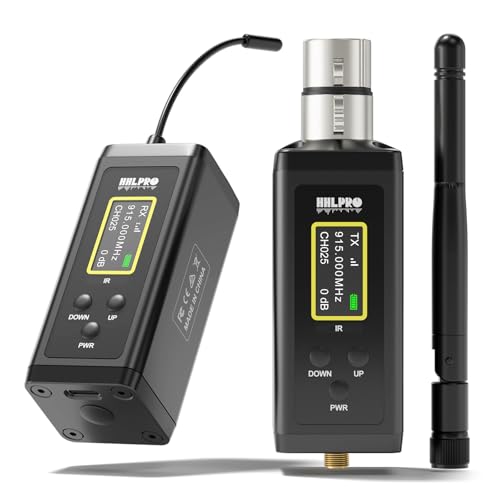
- 50 channels with a claimed 300-foot range
- Auto-scan and one-touch frequency syncing
- Rechargeable 1200mAh battery and hard case
Best For: Mobile musicians and bands playing larger venues
Best Single-Receiver Value

- 50 selectable UHF frequencies
- Separate input and pass-through outputs
- Includes rack kit, case, and one bodypack
Best For: Solo performers, speakers, and expandable monitoring rigs
Best Complete Band Package

- Two-channel transmitter with eight bodypacks
- Under-5ms latency and claimed 300-foot range
- Includes limiter and multiple input options
Best For: Large bands and teams needing eight wireless receivers
Best Overall Control

- Stereo/mono monitoring with EQ and balance controls
- 89 tunable frequencies for multi-system use
- Metal transmitter with rack kit and carrying case
Best For: Performers and speakers needing flexible, rack-ready monitoring
Best for Simple Band Setups

- Auto-pairs for quick setup
- 20 adjustable UHF channels help reduce interference
- Up to eight hours of rechargeable battery life
Best For: Bands and small stages needing easy wireless monitoring
Best Low-Latency Pick

- 1ms latency for responsive stage monitoring
- 48kHz/24-bit audio with seven selectable UHF channels
- XLR and AUX/LINE inputs plus USB-C charging
Best For: Live performers prioritizing low delay and input flexibility
Portable 16-Channel Pick
Rechargeable UHF IEM System with Earbuds

- 16 adjustable channels for frequency selection
- Up to five hours of rechargeable use
- Includes earbuds, adapter, cable, and bag
Best For: Portable rehearsal and live-performance monitoring
Low-Latency Performance Pick

- Under-5ms latency for real-time monitoring
- Accepts balanced XLR and unbalanced TS input
- Metal build with five-to-seven-hour battery life
Best For: Stage performers needing responsive mono monitoring
Streamlined Metal Pick
16-Channel Rechargeable UHF IEM

- 16 adjustable channels for interference management
- Rechargeable battery offers up to five hours
- Metal system with automatic connection
Best For: Users who already own compatible in-ear headphones
Best Multi-Performer Setup – Phenyx Pro PTM-33-4B
The Phenyx Pro PTM-33-4B is a practical choice among UHF wireless in ear monitor systems for bands that need four independent mono monitoring groups from one transmitter. Its integrated design can reduce mixer auxiliary-jack requirements while supporting rack-mounted touring and live-performance setups.
Best For: Four-member bands, worship teams, stage productions, and sound engineers needing up to four standalone mixes.
Pros:
- Provides four channels with separate left/right inputs and loop outputs.
- Supports up to four independent mixes with no stated audio delay.
- Offers 4×25 UHF frequencies, IR syncing, and a 140–164-foot line-of-sight range.
- Includes four bodypack receivers, earphones, rackmount hardware, and AA batteries.
Cons:
- Provides mono monitoring only.
- Range can be reduced by thick walls, glass, and metal obstructions.
- Requires four auxiliary connections on the audio mixer for the integrated setup.
Choose this system when a four-person performance needs separate monitor mixes without adding multiple transmitters. Its rack-ready format and included receivers make it especially convenient for organized touring or worship rigs.
Best for Long-Range Gigging – HHLPRO F10P UHF IEM System
The HHLPRO F10P is one of the more flexible UHF wireless in ear monitor systems for musicians who move around larger venues. It combines a 902–927MHz operating range, 50 channels, auto-scan, and a claimed 300-foot range with a compact metal build and rechargeable receiver battery.
Best For: Touring musicians, bar bands, church performers, rehearsals, and live venues where range and quick setup matter.
Pros:
- Offers 50 channels and a claimed 300-foot operating range.
- Uses auto-scan and one-touch syncing for faster frequency setup.
- Claims under-5ms latency and provides independent transmitter and receiver volume controls.
- Includes an XLR adapter, silicone covers, hard case, and a 1200mAh battery rated for 5–8 hours.
Cons:
- Uses a mono design rather than stereo monitoring.
- Battery life varies by use and is listed as 5–8 hours.
- Performance can still depend on venue RF conditions and obstacles.
This is a strong fit for performers who value portability, fast channel selection, and extended movement around a venue. The hard case and metal construction also suit musicians transporting their monitoring gear frequently.
Best Single-Receiver Value – Phenyx Pro PTM-11
The Phenyx Pro PTM-11 is a straightforward option among UHF wireless in ear monitor systems for one performer or speaker. It provides mono monitoring, separate left/right inputs and outputs, 50 adjustable frequencies, and a half-rack transmitter designed for stage, studio, lecture, and broadcast use.
Best For: Individual performers, pastors, conference hosts, broadcasters, and small monitoring setups that may expand with additional receivers.
Pros:
- Provides clear mono monitoring with reduced phase-related complexity.
- Offers separate left/right inputs and pass-through outputs to the soundboard or speaker.
- Includes 50 selectable frequencies and a claimed 164-foot operating range.
- Metal transmitter construction, rackmount hardware, carrying case, and a one-year warranty add practical value.
Cons:
- The package includes only one bodypack receiver and earphone.
- Monitoring is mono rather than stereo.
- Longer-range use requires avoiding thick walls, glass, and metal obstructions.
For a solo monitor position or a system built gradually, the PTM-11 offers useful routing flexibility without the complexity of a multi-channel package. Its pass-through outputs are particularly helpful when the original signal must continue to the rest of the audio system.
Best Complete Band Package – W IN-MIX EM200 8B
The W IN-MIX EM200 8B stands out among UHF wireless in ear monitor systems for teams that want to equip many performers at once. Its two-channel transmitter sends audio to eight bodypacks, while PLL technology, 40 frequencies per channel, a claimed 300-foot range, and under-5ms latency target stable timing on busy stages.
Best For: Large bands, worship teams, theater productions, touring groups, and recording environments needing eight bodypacks from one package.
Pros:
- Includes eight bodypack receivers and a two-channel transmitter.
- Claims under-5ms latency, 50Hz–20kHz response, and a 300-foot UHF range.
- Provides 40 preset frequencies per channel and PLL technology for stable operation.
- Features 3.5mm, 6.35mm, and USB inputs plus a built-in limiter and receiver volume control.
Cons:
- Each bodypack requires two AA batteries, which are not supplied.
- The system includes no earphones, so performers must provide compatible 3.5mm IEMs.
- It offers two transmitter channels rather than individually adjustable mixes for every receiver.
This package makes the most sense when the priority is outfitting an entire group quickly. It provides substantial receiver capacity and useful connectivity, though teams should budget for earphones and replacement AA batteries.
Best Overall Control – Phenyx Pro PTM-10
For buyers comparing UHF wireless in ear monitor systems, the Phenyx Pro PTM-10 stands out for its stereo monitoring, broad frequency tuning, and professional-friendly controls. It offers selectable stereo or mono operation, 89 tunable frequencies, and a stated range of up to 160 feet.
Best For: Performers, speakers, worship teams, and studio users who want flexible stereo monitoring and rack-ready hardware.
Pros:
- Selectable stereo and mono modes with balance and EQ controls.
- 89 tunable frequencies support multi-system setups of up to five systems.
- Metal transmitter, rack-mount kit, limiter, lock function, and carrying case add practical value.
- Hybrid XLR and 6.3mm inputs improve compatibility with different audio sources.
Cons:
- The included system uses AA batteries in the bodypack rather than a rechargeable battery.
- Its 160-foot range is specified for suitable operating conditions and may vary by environment.
The PTM-10 is a strong choice when sound-control features and installation flexibility matter more than the simplest possible setup. Its stereo capability and interference-management options make it especially adaptable for professional or multi-use environments.
Best for Simple Band Setups – EBJ SQ-01
The EBJ SQ-01 is a practical option among UHF wireless in ear monitor systems for rehearsals and smaller gigs. Its auto-pairing design reduces setup steps, while 20 adjustable channels provide a way to address interference when other wireless devices are nearby.
Best For: Bands, rehearsal spaces, and small or medium stages looking for an easy-to-operate wireless IEM system.
Pros:
- Auto-pairing simplifies initial setup.
- Twenty adjustable channels help manage frequency conflicts.
- Supports one transmitter with multiple receivers, with up to 10 sets listed for simultaneous operation.
- Rechargeable 1000mAh battery provides up to eight hours of use after a roughly two-hour charge.
Cons:
- It offers fewer adjustable channels than some larger multi-system installations may require.
- The 164-foot range is specified for open areas, so obstacles can affect coverage.
- Its feature set is oriented toward straightforward monitoring rather than advanced tone-shaping controls.
With automatic pairing, rechargeable power, and a stated 164-foot open-area range, the SQ-01 prioritizes convenience. It is a sensible fit for musicians who want quick setup for practice sessions and smaller performances.
Best Low-Latency Pick – POGOLAB MWB-1
The POGOLAB MWB-1 targets performers who prioritize timing and connection flexibility. This UHF wireless in ear monitor system specifies 1ms latency, 48kHz/24-bit audio, seven selectable channels, and both balanced XLR and AUX/LINE input options.
Best For: Live performers and bands that need very low monitoring delay with flexible mixer or playback-device connections.
Pros:
- Specified 1ms transmission delay supports real-time stage monitoring.
- 48kHz/24-bit audio, dynamic range over 106dB, and distortion under 0.5% are listed.
- Balanced XLR and AUX/LINE input options broaden source compatibility.
- USB-C rechargeable transmitter and receiver include battery indicators and belt-clip receiver design.
Cons:
- Seven selectable channels provide less frequency flexibility than systems with larger channel counts.
- Rated battery life is up to five hours, which may require recharging for longer events.
- The listed frequency response is 35Hz–16.5kHz rather than a full 20Hz–20kHz range.
The MWB-1 is compelling for performers who are particularly sensitive to monitoring delay. Its XLR and AUX/LINE options add useful versatility, although the five-hour battery rating and seven-channel design are worth considering before larger or extended productions.
Portable 16-Channel Pick – Rechargeable UHF IEM System with Earbuds
This portable option is a practical choice among uhf wireless in ear monitor systems for singers, bands, DJs, and studio users who need simple setup and adjustable frequency selection. Its UHF connection, 16 channels, rechargeable power, included earbuds, and carrying bag make it ready for rehearsals or live use.
Best For: Performers who want a compact, rechargeable monitor kit with included earphones and storage.
Pros:
- 16 adjustable channels help reduce interference from nearby devices.
- 1000mAh rechargeable battery charges in about two hours and provides up to five hours of use.
- Includes six sets of ear tips, an adapter, charging cable, and carrying bag.
- Metal enclosure and passive noise isolation support stage use.
Cons:
- Listed battery life is limited to about five hours.
- Passive rather than active noise cancellation.
- Single-system package may not suit larger ensembles needing multiple monitor mixes.
Choose this model if portability and included accessories matter most. The adjustable channels and automatic connection make it approachable, while the supplied earbuds and bag reduce the need for immediate add-ons.
Low-Latency Performance Pick – A9 Mono UHF IEM System
For musicians prioritizing responsive monitoring, this A9 is a strong contender among uhf wireless in ear monitor systems. It combines a mono transmitter and beltpack receiver with under-5ms latency, high-resolution audio specifications, metal construction, and support for balanced XLR or unbalanced TS input.
Best For: Singers, bands, and stage performers who need low-latency mono monitoring for rehearsals or live performance.
Pros:
- Ultra-low latency under 5ms is designed for real-time monitoring.
- Supports mono balanced XLR and unbalanced TS input.
- 24-bit/96kHz audio specification, 20Hz–20kHz response, and at least 94dB SNR.
- Metal casing, limiter circuitry, and claimed five-to-seven-hour battery life.
Cons:
- Provides mono monitoring rather than a stereo monitor mix.
- Requires about three hours for a full charge.
- Its professional feature set may be more than casual users need.
The A9 stands out when timing and input flexibility are more important than a basic plug-and-play setup. Its mono design is worth considering carefully, but the low latency and stated audio performance suit demanding stage applications.
Streamlined Metal Pick – 16-Channel Rechargeable UHF IEM
This streamlined system is suited to shoppers comparing uhf wireless in ear monitor systems for studio work, band rehearsal, and live performance. It offers UHF transmission, 16 adjustable channels, automatic pairing, rechargeable transmitter and receiver hardware, and a metal enclosure in a compact package.
Best For: Musicians who want a simple metal UHF system for rehearsals, studios, or live stages.
Pros:
- 16 adjustable channels provide options for avoiding frequency conflicts.
- 1000mAh rechargeable battery charges in about two hours and runs for up to five hours.
- Automatic connection is designed to simplify setup.
- Includes an XLR-to-6.35mm adapter and charging cable.
Cons:
- Package listing does not include earphones or a carrying bag.
- Approximate five-hour battery life may require recharging during extended events.
- Supplied details do not specify a latency rating or detailed frequency-response figures.
This is a sensible fit for users who already have suitable in-ear headphones and want a focused transmitter-receiver kit. Its channel selection and automatic connection support practical operation, while the accessory package is leaner than the bundled-earbud alternative.
How We Picked the Best Uhf Wireless in Ear Monitor Systems
We focused on the specifications that matter during rehearsals, live performances, worship services, theater, and presentations. The comparison considers UHF operating bands, adjustable channel counts, mono or stereo transmission, claimed range, latency, transmitter and receiver construction, power options, and the number of bodypacks supported.
Because manufacturer claims can vary with venue layout, interference, antenna placement, and local regulations, treat range figures as best-case guidance rather than a guarantee. A system with sensible frequency controls and a dependable setup may be more useful than one with the longest advertised distance.
Quick Comparison
| Feature | Why It Matters |
|---|---|
| Channel selection | More adjustable frequencies can make coordination easier when several wireless devices share a venue. |
| Mono or stereo | Mono is often sufficient for vocalists and basic monitoring; stereo can preserve panning and more detailed mixes. |
| Receiver capacity | Some transmitters support one bodypack, while multi-channel systems can serve several performers. |
| Range and latency | Adequate range supports movement, while low latency keeps the monitor mix feeling immediate. |
| Power and portability | Rechargeable or easily replaceable batteries simplify mobile use and event-day preparation. |
Key Buying Factors for UHF Wireless In-Ear Monitor Systems
Frequency Coordination
Check the stated operating band and available channels before buying. In busy venues, adjustable frequencies are valuable because microphones, wireless instruments, and neighboring systems can create interference. Always follow local rules for the frequencies you use.
Channel Count and Expansion
Choose a single-receiver kit for one performer, or select a transmitter designed to work with multiple bodypacks when several musicians need the same mix. Confirm whether additional receivers must be purchased separately and whether they can be tuned to the same transmitter.
Mono Versus Stereo
Mono systems are typically simpler and cost-effective for a centered vocal or instrument mix. Stereo systems are better suited to performers who need panning, separation, or a more natural representation of a complex monitor mix.
Connections, Range, and Power
Look for inputs that match your mixer, such as XLR, 1/4-inch, AUX, or line-level connections. Consider antenna placement and obstacles when judging range. Also verify battery life, charging arrangements, bodypack controls, and whether replacement batteries are readily available.
Who Should Buy Which Uhf Wireless in Ear Monitor Systems?
- Solo performers: Choose a compact mono system with straightforward controls, adequate range, and a lightweight beltpack.
- Bands and ensembles: Prioritize multi-receiver support, multiple adjustable frequencies, and a transmitter that can distribute a consistent mix to several performers.
- Professional stages: Consider rack-mountable hardware, stereo operation, robust metal construction, and enough frequency flexibility for coordinated wireless production.
- Mobile presenters and small venues: A portable rechargeable system with simple line or AUX connectivity can reduce setup time and equipment bulk.
Before purchasing, confirm the connector type, included earphones, transmitter output requirements, frequency compatibility, and return policy. The right choice is the system that fits your mixer, performer count, venue, and monitoring workflow—not necessarily the model with the largest headline range.