Great ideas disappear fast, and the right recorder helps musicians capture riffs, lyrics, rehearsals, and sound checks before they’re gone.
This roundup of the best voice recorders for musicians in 2026 focuses on audio quality, portability, battery life, and useful extras like voice activation and transcription support.
Best 10 Voice Recorders for Musicians Picks for 2026
Portable 4-Track Recorder
Zoom H4 Essential for Musicians

- 4-track recording with built-in stereo mics
- Two XLR/TRS inputs for external gear
- USB-C recording plus SD card backup
Best For: Musicians who need a compact recorder for songs, live sets, and external inputs
Hi-Res Music Recorder
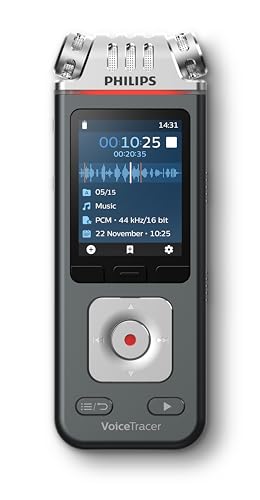
- Three hi-fidelity mics for music recording
- 24-bit/96 kHz capture for detailed audio
- Includes Sembly AI transcription trial
Best For: Musicians who want hi-res recording with transcription support
Ultra-Portable Stereo Recorder

- X/Y stereo mics with 32-bit float recording
- Lightweight 92 g body for easy carry
- USB-C mic mode for streaming and calls
Best For: Musicians who need a tiny recorder for rehearsals and quick ideas
High-Capacity Recorder

- 64 GB storage for long sessions
- Voice activation reduces silent gaps
- A-B repeat and variable-speed playback
Best For: Users who want a simple recorder for long notes and voice-triggered capture
AI Note-Taking Recorder
EVISTR L359 128GB Digital Voice Recorder

- 3072Kbps HD audio with noise reduction
- AI transcription, summaries, and speaker ID
- 128GB storage with up to 33 hours recording
Best For: Musicians who want quick transcription and organized notes after rehearsals or lessons
High-Capacity PCM Recorder
Tonfarb A20 136GB Voice Recorder

- 1536 kbps PCM audio with dual noise reduction microphones
- 136GB total memory with included 128GB TF card
- Up to 68 hours of continuous recording
Best For: Musicians who need long battery life and lots of storage for extended sessions
Budget Everyday Recorder
Sunlan 16GB Digital Voice Recorder
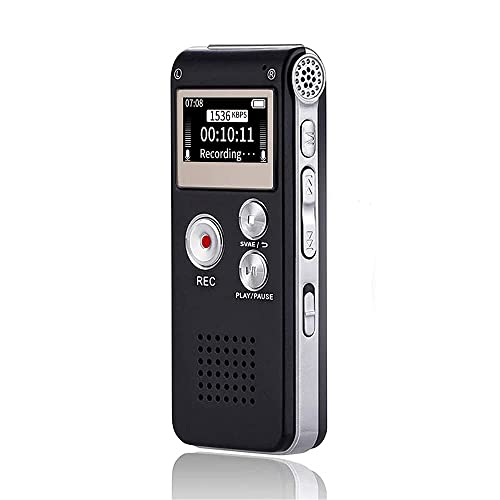
- One-button recording with easy playback
- 1536kbps audio plus DSP noise reduction
- Voice-activated recording and USB storage mode
Best For: Musicians looking for a simple, budget-friendly recorder for quick notes
Studio-Grade Detail for Long Sessions
Tonfarb 136GB PCM Voice Recorder

- 1536 kbps PCM recording with dual noise reduction
- 136GB total storage with 68-hour battery life
- One-click recording, A-B repeat, and password protection
Best For: Musicians needing clear, long-form recordings with simple controls
Organized Recording for Lessons and Sessions
EVIDA 128GB Voice Recorder with Playback
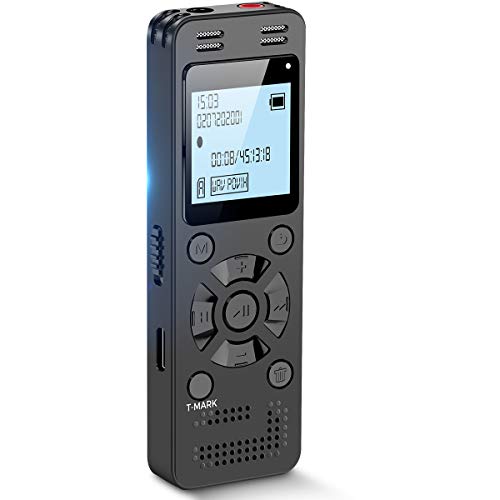
- 1536 kbps PCM recording with noise cancellation
- 128GB storage and four-folder file organization
- Voice activation with six selectable decibel levels
Best For: Users who want clear recordings and easy file organization
Compact Feature Set for Rehearsal Notes
Tonfarb 64GB PCM Voice Recorder

- 1536 kbps PCM recording with noise reduction
- 64GB storage and one-click record/save
- Voice activation plus A-B loop and bookmarks
Best For: Musicians wanting a compact everyday recorder
Portable 4-Track Recorder – Zoom H4 Essential for Musicians
If you need one of the more flexible voice recorders for musicians, the Zoom H4 Essential is built to handle rehearsals, live performances, interviews, and music ideas without forcing you to baby the input levels. Its 4-track design, built-in stereo mics, and two XLR/TRS inputs make it a practical all-around recorder for more than just quick demos.
Best For: Musicians who want a compact recorder that can handle songs, live sets, and external mics or gear.
Pros:
- Built-in stereo microphones plus two XLR/TRS inputs for mics, instruments, or mixer feeds
- 32-bit float recording helps reduce worry about distorted takes
- USB-C connection supports recording or streaming to a phone, tablet, or computer
- Can save a backup directly to SD card while recording to your device
Cons:
- Uses 2 AA batteries instead of a rechargeable built-in pack
- May be more recorder than needed if you only want simple voice notes
For musicians who need a recorder that can move from songwriting to live audio capture, this model offers a strong balance of portability and input flexibility. The guided menu approach is also a nice touch if you prefer a more straightforward setup.
Hi-Res Music Recorder – Philips VoiceTracer DVT6115
Philips VoiceTracer DVT6115 Music Recorder with Sembly AI Speech-to-Text Software Trial
Check Price On AmazonAmong voice recorders for musicians, the Philips VoiceTracer DVT6115 stands out if you care about high-resolution capture and want recordings that can also be turned into text. With three hi-fidelity microphones and 24-bit/96 kHz recording, it is aimed at detailed music capture as well as notes, meetings, and follow-up work.
Best For: Musicians who want hi-res recording plus a built-in transcription workflow.
Pros:
- Three hi-fidelity microphones are designed for music recording
- 24-bit/96 kHz quality supports detailed audio capture
- Smartphone app allows remote audio control
- Includes a Sembly AI speech-to-text software trial for transcription
Cons:
- Uses MP3 audio format rather than WAV
- 8 GB internal storage is more limited than higher-capacity options
This is a smart pick if your recording workflow goes beyond music and into organizing ideas, meetings, or written follow-up. The hi-res audio specs make it more appealing for capture quality, while the transcription trial adds extra utility for busy creators.
Ultra-Portable Stereo Recorder – Zoom H1 Essential
If you want a lightweight option among voice recorders for musicians, the Zoom H1 Essential focuses on quick stereo capture for songwriting sessions, rehearsals, acoustic performances, and everyday content. Its X/Y stereo mics and USB-C mic mode make it useful when you need something small that can still handle music clearly.
Best For: Musicians who want a tiny recorder for rehearsals, acoustic sessions, and quick captures.
Pros:
- X/Y stereo microphones with 32-bit float recording for clip-free audio
- Very compact and lightweight at 92 g
- USB-C microphone mode works for livestreams, calls, and desktop or mobile recording
- Supports songs, rehearsals, interviews, room tone, and other ambient capture
Cons:
- Uses 2 AAA batteries, so battery management matters on longer outings
- More limited than multi-input recorders for complex setups
This model makes sense when portability is the top priority and you still want clean stereo sound. It is especially handy for musicians who like to record ideas fast, carry less gear, and plug into a computer or phone when needed.
High-Capacity Recorder – EVISTR L357 with Playback
For musicians who want a simple backup recorder rather than a full production tool, this EVISTR model is a practical choice in the voice recorders for musicians category. It emphasizes long storage, easy operation, voice activation, and playback features that can help with lectures, interviews, rehearsals, and practice notes.
Best For: Users who want a straightforward recorder for long sessions, notes, and voice-triggered capture.
Pros:
- 64 GB storage supports long recording sessions and large file libraries
- Voice activation can reduce silent gaps and save playback time
- Playback tools include A-B repeat, rewind, and variable speed
- Simple two-button operation makes recording easy to start and save
Cons:
- Not as music-focused as higher-end stereo or multi-input recorders
- Built-in design is geared more toward speech and note capture than full performance recording
This is a solid fit if you value capacity, simplicity, and automatic recording behavior over advanced music features. It is best viewed as a dependable utility recorder for capturing ideas and spoken content rather than a studio-style music solution.
AI Note-Taking Recorder – EVISTR L359 128GB Digital Voice Recorder
If you want a voice recorder for musicians that can also handle rehearsals, lessons, and song ideas, the EVISTR L359 leans hard into organization as much as capture quality. It records up to 3072Kbps HD audio with noise reduction, then goes further with AI transcription, summaries, mind maps, and speaker identification through the app.
Best For: Musicians who want a compact recorder for capturing ideas, lessons, and spoken notes, plus fast AI transcription afterward.
Pros:
- 3072Kbps HD recording with intelligent noise reduction for clearer capture.
- AI transcription in 113 languages, plus smart summaries and mind maps.
- 128GB storage and up to 33 hours of continuous recording.
- One-button recording, password encryption, and a HOLD switch for privacy and safety.
Cons:
- AI features require the AI DVR Link app and OTG cable workflow.
- Mono mic design is better for spoken content than high-fidelity music recording.
For musicians who mainly need a practical capture-and-organize tool, this model stands out for workflow more than studio-style recording. The combination of strong storage, easy operation, and AI post-processing makes it especially useful for turning rehearsals, lessons, and brainstorming into usable notes.
High-Capacity PCM Recorder – Tonfarb A20 136GB Voice Recorder
For voice recorders for musicians who need long sessions and strong capture quality, the Tonfarb A20 focuses on clarity and endurance. It offers 1536 kbps PCM HD audio, dual noise reduction microphones, and voice-activated recording, making it a practical choice for recording spoken direction, rehearsal notes, or long practice sessions.
Best For: Musicians who need a long-lasting recorder with high-capacity storage and easy voice-activated operation.
Pros:
- 1536 kbps PCM recording with automatic noise reduction and dual mics.
- 136GB total memory, including 8GB built in and a 128GB TF card.
- Up to 68 hours of continuous recording per charge.
- Simple one-click recording, USB-C transfer, and password protection.
Cons:
- Designed around spoken capture, not specialized music recording features.
- Heavier than ultra-compact models at about 100 g.
This is a strong pick if your priority is capturing long stretches without worrying about storage or battery life. The easy interface and large LCD screen also make it straightforward to use in rehearsals, classes, or interviews where you do not want to miss a moment.
Budget Everyday Recorder – Sunlan 16GB Digital Voice Recorder
If you are shopping for voice recorders for musicians on a tighter budget, the Sunlan model keeps things basic and practical. It offers one-button recording, noise reduction, voice-activated recording, and 1536kbps capture, so it can handle quick rehearsal notes, class recordings, or idea capture without a complicated setup.
Best For: Musicians who want a straightforward, low-friction recorder for quick notes and simple playback.
Pros:
- One-button operation makes recording and playback very simple.
- 1536kbps recording with DSP noise reduction for clearer voice capture.
- Voice-activated recording helps save space and battery.
- Works as a music player and removable USB storage device.
Cons:
- 16GB storage is much smaller than higher-capacity alternatives.
- Battery life and recording time are shorter than the longest-running models.
This recorder makes sense when convenience matters more than advanced features. It is best viewed as a compact utility device for capturing spoken instructions, set-list reminders, or rough ideas rather than a premium all-rounder.
Studio-Grade Detail for Long Sessions – Tonfarb 136GB PCM Voice Recorder
If you’re comparing voice recorders for musicians, this Tonfarb model stands out for its 1536 kbps PCM recording, dual noise-reduction microphones, and voice-activated capture. It’s built to handle clear reference recordings, rehearsal notes, and long practice sessions without constant babysitting.
Best For: Musicians who want high-quality, long-duration recording with easy file transfer and low-noise capture.
Pros:
- 1536 kbps PCM recording with dual noise-reduction microphones for clearer audio capture
- Large 136GB total storage, including an 8GB built-in memory and 128GB TF card
- Up to 68 hours of continuous recording on a single charge
- One-click record/save, A-B repeat, and password protection add practical control
Cons:
- Not a dedicated music recorder, so it’s still a general-purpose voice recorder
- Voice-activated recording can be helpful, but not ideal if you want every bit of room tone preserved
- Heavier feature set may be more than needed for very simple note-taking
For musicians who prioritize clarity, storage, and uninterrupted capture, this is a strong all-around option. It offers enough recording quality and battery life to use during rehearsals, lesson sessions, or idea logging without feeling limited.
Organized Recording for Lessons and Sessions – EVIDA 128GB Voice Recorder with Playback
Among voice recorders for musicians, the EVIDA model is a practical pick if you want strong storage, clear PCM recording, and simple organization for different projects. Its voice-activated recording and folder structure make it easy to separate rehearsal notes, lesson captures, and interview-style audio.
Best For: Musicians, teachers, and students who want a straightforward recorder with strong file management.
Pros:
- 1536 kbps PCM recording with an upgraded noise-cancelling microphone
- 128GB storage and up to 54 hours of continuous recording
- Voice activation with six decibel levels for more selective capture
- Four-folder organization, password protection, A-B repeat, and bookmark features
Cons:
- Battery life is solid, but shorter than some higher-capacity alternatives
- Designed as a general recorder rather than a specialized music device
- Uses a C battery requirement listed in the details, which may be less convenient for some buyers
This recorder makes sense if organization matters as much as audio quality. For musicians who want a dependable everyday device for lessons, practice notes, and general recording, it covers the essentials without getting complicated.
Compact Feature Set for Rehearsal Notes – Tonfarb 64GB PCM Voice Recorder
If you want a smaller, more affordable-style option in the category of voice recorders for musicians, this Tonfarb 64GB recorder covers the essentials well. It offers PCM recording, automatic noise reduction, and a voice-activated mode that can help capture rehearsals, ideas, and session notes efficiently.
Best For: Musicians who want a compact recorder with strong basic features and simple day-to-day use.
Pros:
- 1536 kbps PCM recording with automatic noise reduction for clearer playback
- 64GB storage with up to 4,600 hours of recording capacity
- One-click record/save and voice activation for quick operation
- Includes useful extras like A-B loop playback, bookmarking, and password protection
Cons:
- 32-hour average battery life is shorter than larger-capacity competitors
- Smaller storage than the 128GB and 136GB options in this roundup
- Best as a general recorder, not a specialized music capture tool
For musicians who mainly need reliable note capture and easy portability, this model is a balanced pick. It gives you the core recording features most people need, while staying simple enough for regular use.
How We Picked the Best Voice Recorders for Musicians
We prioritized recorders that are practical for musical use, not just general note-taking. That means clearer mic performance, reliable file handling, simple controls, and enough storage or battery life to handle long sessions. We also looked at whether a recorder is easy to carry to rehearsals, gigs, lessons, and songwriting sessions.
Quick Comparison
The best Voice Recorders for Musicians usually fall into three groups: handheld stereo recorders for higher-fidelity capture, compact pocket recorders for fast ideas, and larger-capacity digital voice recorders for long practice logs or lectures. If you want cleaner room sound and better instrument capture, lean toward dedicated handheld units. If convenience matters most, a small voice recorder may be enough.
Key Buying Factors for Voice Recorders for Musicians
Microphone Quality and Stereo Capture
For music, mic quality matters more than app features. Look for stereo recording, low self-noise, and the ability to handle loud sources without distortion. A recorder that can capture a rehearsal space naturally will be more useful than one optimized only for speech.
Storage, Battery Life, and File Management
Long sessions eat battery and memory quickly, especially at higher recording quality. Larger internal storage, expandable memory, and USB charging are all valuable. Easy file transfer matters too, since musicians often need to move takes into a DAW or sharing folder fast.
Voice Activation, Overwrite, and Playback
Voice activation can help stretch battery and storage during practice or lesson capture, while built-in playback lets you review ideas immediately. For musicians, quick review is important for checking timing, lyrics, and arrangement notes on the spot.
Transcription and AI Tools
Some modern recorders include transcription or summarizing features. These can be useful for lyric drafting, rehearsal notes, or meeting-style band planning, but they should complement, not replace, good recording quality.
Who Should Buy Which Voice Recorders for Musicians?
If you want the best overall capture for rehearsals, acoustic sessions, or on-the-go song ideas, choose a handheld recorder with stronger mics and stereo recording. If you mainly need fast capture for lyrics, reminders, or lesson notes, a compact voice recorder may be the better fit. If you regularly record long sessions, prioritize capacity, battery life, and easy transfer over extra features.
For most musicians, the right choice comes down to how you record: clean sound for reference tracks, portability for everyday ideas, or long-form storage for practice and teaching. Matching the recorder to that use case will get you better results than chasing specs alone.