The best wireless in-ear monitor system for singers delivers clear vocals, dependable range, and low-latency monitoring without tying you to a stage cable. The right choice depends on your venue, wireless environment, performance style, and whether one transmitter must serve multiple performers.
We selected 10 systems spanning compact 2.4GHz options, longer-range UHF models, stereo monitoring kits, and multi-receiver setups. Use the guide below to narrow the field by the features that matter most on stage.
Best 10 Wireless in Ear Monitor System for Singers Picks for 2026
Compact Stage Starter
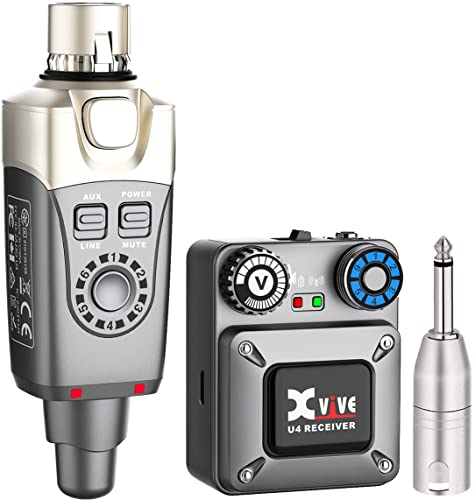
- Less than 5ms latency
- Over 90-foot range
- Up to 5 hours of battery life
Best For: Solo singers and small-stage performers
Four-Person Band Monitor
Phenyx Pro PTM-33-4B Wireless IEM

- Four independent monitor channels
- Four bodypack receivers included
- 140–164-foot line-of-sight range
Best For: Bands and worship teams needing separate mixes
High-Resolution Wireless Upgrade

- 24-bit/48kHz audio
- True diversity reception
- Smart channel scanning
Best For: Performers wanting detailed, stable wireless monitoring
Long-Range UHF Workhorse
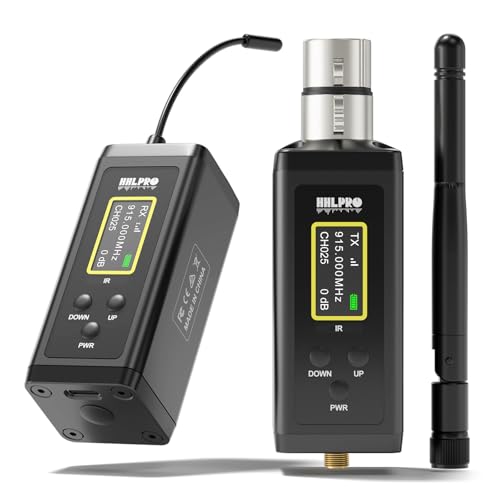
- Up to 300-foot range
- 50 channels with auto-scan
- Five to eight hours of battery use
Best For: Touring bands and larger-stage performers
Best Budget-Friendly Pick
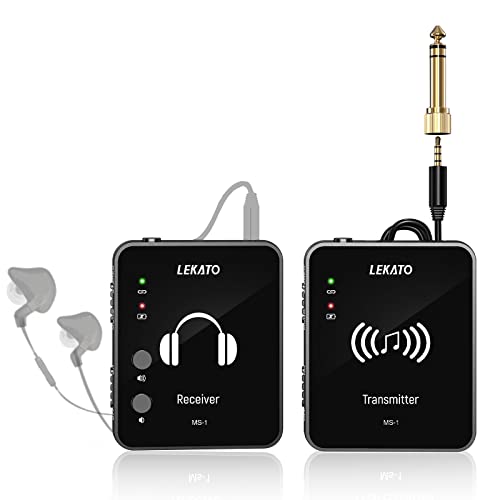
- Supports up to six receivers from one transmitter
- Stereo/mono operation with under 12ms latency
- More than five hours of rechargeable battery life
Best For: Affordable rehearsals, church services, and small gigs
Best Professional-Style Option

- 89 selectable 900MHz frequencies for multi-system use
- Up to 160 feet of stated operating range
- EQ, limiter, balance, PAD, and rack-mount features
Best For: Stage, studio, worship, and professional event setups
Best Long-Battery Pick

- Rechargeable system rated for up to 10 hours
- Automatic transmitter-receiver pairing
- Supports up to six units working simultaneously
Best For: Long rehearsals, church services, and extended performances
Best Portable Multi-Receiver Pick
LEKATO MS-20 2.4G Wireless IEM

- Includes two receivers and supports up to 10 pairs
- Up to 30 hours with the charging case
- 150-foot range with OTG and mono/stereo support
Best For: Bands and performers needing multiple receivers and long battery life
Best UHF Stage Setup
POGOLAB 7-Channel Wireless IEM

- 1ms latency with 48kHz/24-bit audio
- Seven selectable UHF channels
- Balanced XLR and AUX/LINE inputs
Best For: Live singers and bands using mixers or professional stage gear
Best Compact Band Practice Pick

- Under 4.5ms mono latency with 24-bit/48kHz audio
- Supports up to four receivers
- Six to eight hours of battery life and one-key mute
Best For: Small bands, church teams, and singers rehearsing or performing on compact stages
Compact Stage Starter – Xvive U4 Wireless IEM System
The Xvive U4 is a straightforward wireless in ear monitor system for singers who need a compact setup for rehearsals, small clubs, and live performances. Its 2.4GHz connection, low latency, and included transmitter-receiver pairing make it easy to add personal monitoring without a complicated rack system.
Best For: Solo singers, small bands, and performers who need a portable single-channel monitoring setup.
Pros:
- Less than 5ms latency helps keep monitoring responsive.
- Over 90 feet of range suits small clubs and venues.
- Up to five hours of rechargeable battery life.
- Includes a 1/4-inch-to-XLR adapter and carrying bag.
Cons:
- The listed package includes one transmitter and one receiver, so additional performers need more compatible units.
- Battery life is limited to approximately five hours.
- It operates in mono rather than providing a stated stereo monitoring mode.
With six channels, compact metal construction, and simple connectivity, the U4 is a practical entry point for singers who prioritize portability and quick setup over extensive multi-performer routing.
Four-Person Band Monitor – Phenyx Pro PTM-33-4B Wireless IEM
The Phenyx Pro PTM-33-4B is a wireless in ear monitor system for singers and bands that need several independent monitor feeds. Its integrated four-channel transmitter accepts four left/right inputs and loop outputs, while four included UHF bodypacks support simultaneous mono monitoring.
Best For: Four-member bands, worship teams, stage productions, and performers who need separate mixes.
Pros:
- Four channels can provide up to four standalone mixes.
- Includes four UHF bodypack receivers and four in-ear earphones.
- Offers a stated 140–164-foot interference-free line-of-sight range.
- Rackmount kit, loop outputs, and IR sync support touring workflows.
Cons:
- Monitoring is mono only.
- The system requires four auxiliary mixer outputs for its full four-channel setup.
- Range can be reduced by thick walls, glass, and metal obstructions.
This package is designed for coordinated group monitoring rather than a minimal solo rig. Its four receivers, UHF frequency options, and integrated transmitter make it a strong fit when multiple performers need their own stage mixes.
High-Resolution Wireless Upgrade – Xvive U45 5.8GHz IEM
The Xvive U45 is a wireless in ear monitor system for singers who want higher-resolution audio and a more robust wireless link. Its 5.8GHz true diversity design, dual-antenna receiver, smart channel scan, and selectable line or aux input modes make it well suited to changing stage setups.
Best For: Singers and bands seeking detailed audio, low latency, and flexible mixer integration.
Pros:
- 24-bit/48kHz audio and a 20Hz–20kHz frequency response support detailed monitoring.
- True diversity reception and dual antennas help maintain RF stability.
- Smart channel scanning simplifies setup in different venues.
- Supports up to six channels for multi-system configurations.
Cons:
- Battery life is listed at approximately five hours.
- The system does not specify a wireless operating range in the supplied details.
- It is supplied as a single system rather than a four-performer bundle.
The U45 is a more feature-focused choice than a basic wireless monitor, particularly for performers who value high-resolution audio and adaptable connections. Its five-hour battery rating should still be considered when planning longer shows.
Long-Range UHF Workhorse – HHLPRO F10P Wireless IEM
The HHLPRO F10P is a wireless in ear monitor system for singers and full bands that need long range, many channel options, and simple frequency matching. Its 902–927MHz UHF operation, 50 channels, auto-scan, and one-touch sync are aimed at busy venues, church stages, rehearsals, and touring use.
Best For: Gigging bands, church worship teams, and performers who need one transmitter to support multiple receivers.
Pros:
- Up to 300 feet of stated range supports movement across larger venues.
- Fifty channels and auto-scan help manage crowded RF environments.
- Less than 5ms latency keeps monitoring responsive.
- Five to eight hours of battery use, metal construction, and a hard case suit touring.
Cons:
- The mono design does not provide stated stereo monitoring.
- The supplied details do not specify the number of receivers included.
- Actual range can vary with venue conditions and obstructions.
For singers who regularly move between venues, the F10P emphasizes range, channel flexibility, and fast pairing. Its one-transmitter, multiple-receiver design can also make it practical for expanding a band’s monitoring setup.
Best Budget-Friendly Pick – LEKATO MS-1 Wireless IEM
The LEKATO MS-1 is a practical wireless in ear monitor system for singers who want stereo monitoring, simple setup, and support for multiple performers. Its 2.4GHz connection offers low latency, while automatic pairing keeps rehearsal and small-stage setup straightforward.
Best For: Singers and small bands needing an affordable, easy-to-pair system for rehearsals, church, or small and medium-sized gigs.
Pros:
- One transmitter can support up to six receivers simultaneously.
- Supports stereo or mono input with 24-bit/48kHz audio and under 12ms latency.
- Rechargeable battery provides more than five hours of use, with up to 100 feet of range in open areas.
Cons:
- Its 2.4GHz band may be less suitable for environments with heavy wireless congestion.
- The stated battery life is shorter than some competing options.
Choose the MS-1 when simple pairing and multi-receiver flexibility matter more than extended battery life or advanced transmitter controls. It is a capable entry-level option for singers and bands working in smaller spaces.
Best Professional-Style Option – Phenyx Pro PTM-10 UHF IEM
The Phenyx Pro PTM-10 is a wireless in ear monitor system for singers who need more control over their monitor mix and a longer operating range. Its selectable 900MHz frequencies, stereo/mono modes, EQ, limiter, and balance controls make it a more configurable choice for stage and studio use.
Best For: Vocalists, bands, speakers, and worship teams wanting tunable frequencies, professional connections, and detailed monitor controls.
Pros:
- Offers 89 selectable frequencies and supports up to five systems simultaneously.
- Provides up to 160 feet of stated operating range with stereo/mono selection.
- Includes EQ, balance, limiter, PAD, lock, XLR and 6.3mm inputs, rack hardware, and a carrying case.
Cons:
- Uses AA batteries in the bodypack rather than a built-in rechargeable battery.
- Its broader feature set and rack-oriented design may be more than casual users need.
The PTM-10 stands out for singers who want a more traditional UHF system with frequency selection and mix-shaping tools. It is particularly well suited to organized stage setups where reliability and adjustment options are priorities.
Best Long-Battery Pick – M6S Stereo Wireless IEM
The M6S is a wireless in ear monitor system for singers seeking extended battery life and uncomplicated operation. It uses 2.4GHz wireless transmission, automatic pairing, stereo/mono switching, and a rechargeable battery rated for up to 10 hours after a full charge.
Best For: Singers, church performers, and bands that need a compact system for longer performances or extended practice sessions.
Pros:
- Rechargeable transmitter and receiver batteries are rated for up to 10 hours of use.
- Automatic pairing avoids manual channel selection.
- One transmitter can pair with multiple receivers, with up to six units working simultaneously.
Cons:
- The 2.4GHz band can be more susceptible to congestion than a tunable UHF system.
- The supplied notes specify a battery life of up to eight hours in the detailed specifications, despite the ten-hour product description.
The M6S is appealing when charging convenience and runtime are more important than advanced frequency management. Confirm the expected battery performance for your use, but its multi-receiver support and simple pairing make it a practical choice for group performances.
Best Portable Multi-Receiver Pick – LEKATO MS-20 2.4G Wireless IEM
For singers seeking a wireless in ear monitor system for singers, the LEKATO MS-20 emphasizes portability, long battery life, and flexible multi-person monitoring. Its transmitter and two receivers auto-pair, support mono or stereo operation, and can cover up to 150 feet in open areas.
Best For: Bands, rehearsals, live performers, and studio users who need two included receivers and extended battery life.
Pros:
- Includes one transmitter and two receivers, with support for up to 10 receiver pairs.
- Up to 30 hours of use with the 2,000mAh charging case.
- Supports OTG input, 24-bit/48kHz audio, and a 150-foot open-area range.
- Compact clip-on design with selectable mono/stereo modes.
Cons:
- Earphones are not included.
- It is not water resistant.
- Its 2.4GHz wireless band may require care around other wireless devices.
The MS-20 is a strong choice when several performers need a shared monitoring setup and charging convenience matters. The included case and dual receivers make it especially practical for mobile bands.
Best UHF Stage Setup – POGOLAB 7-Channel Wireless IEM
The POGOLAB is a wireless in ear monitor system for singers who prioritize low latency and flexible stage connectivity. Its UHF transmission, seven selectable channels, balanced XLR input, and 1ms delay are suited to live performance environments where timing and connection options matter.
Best For: Singers, worship teams, bands, and stage performers using mixers or professional audio equipment.
Pros:
- Offers 1ms ultra-low latency with 48kHz/24-bit audio and distortion under 0.5%.
- Seven selectable UHF channels help manage interference in crowded setups.
- Provides balanced XLR and AUX/LINE input options.
- Includes a belt-clip receiver with volume controls and a stated 164-foot line-of-sight range.
Cons:
- Battery life is up to five hours per charge.
- The package includes a transmitter and one receiver rather than multiple receivers.
- Earphones are not listed as included.
Choose the POGOLAB when a singer needs a conventional stage-monitor workflow with XLR connectivity and very low delay. Its shorter stated runtime makes charging between longer events important.
Best Compact Band Practice Pick – LEKATO MS-02 Stereo IEM
The LEKATO MS-02 is a compact wireless in ear monitor system for singers designed for small and medium stages, rehearsals, and recording setups. It combines stereo 2.4GHz transmission, auto-pairing, a clip-on receiver, and a one-key mute function in a straightforward two-unit package.
Best For: Solo performers, singers, church teams, and small bands that need simple monitoring with up to four receivers.
Pros:
- Provides under 4.5ms latency in mono mode and 24-bit/48kHz audio.
- One transmitter can support up to four receivers.
- Offers six to eight hours of operation, five-level receiver volume control, and LED status indicators.
- Includes mono/stereo switching, one-key mute, and a 100-foot open-area range.
Cons:
- Earbuds are not included and must be purchased separately.
- Its stated range is shorter than the MS-20 and POGOLAB.
- Multi-receiver pairing requires following the described button-pairing process.
The MS-02 fits performers who want a lightweight, affordable-feeling setup for practice and smaller venues. Its one-key mute and expandable receiver support are useful when quick control and shared monitoring are priorities.
How We Picked the Best Wireless in Ear Monitor System for Singers
We evaluated these systems around the practical demands of live singers: monitoring clarity, usable operating range, connection stability, latency, battery endurance, setup simplicity, and input compatibility. We also considered whether each kit supports mono or stereo monitoring, one-to-many operation, selectable frequencies, rack mounting, and multiple performers.
Published specifications are useful starting points, but real-world range can vary with walls, audience bodies, competing wireless devices, and local regulations. Treat advertised distance and battery life as maximum or ideal-condition figures rather than guarantees.
Quick Comparison
| System type | Best suited to | Main advantage | Potential limitation |
|---|---|---|---|
| 2.4GHz compact systems | Small stages, rehearsals, worship, and solo performers | Simple pairing and portable setup | More vulnerable to crowded 2.4GHz environments |
| UHF systems | Live bands, larger stages, and demanding venues | Flexible frequency management and range | More setup and frequency-planning requirements |
| Stereo IEM systems | Singers needing a fuller, more spacious mix | Left/right monitoring and greater mix detail | Requires suitable stereo source routing |
| Multi-receiver systems | Bands sharing one monitor mix | One transmitter can serve several performers | More receivers, batteries, and fit considerations |
Key Buying Factors for a Wireless In-Ear Monitor System for Singers
Wireless Band and Interference
UHF models can offer useful frequency selection and strong stage coverage, while 2.4GHz systems typically emphasize quick pairing and convenience. For venues with dense Wi-Fi or Bluetooth traffic, frequency flexibility may be more valuable than the simplest setup.
Latency and Monitoring Clarity
Low latency helps vocals feel natural and keeps your voice aligned with the room sound. Check the stated latency, audio resolution, channel mode, and whether the system carries a true stereo signal. Your earphones also affect clarity, isolation, and perceived detail.
Range, Battery, and Charging
Choose enough range for the largest space where you perform, with reserve for obstructions. Confirm transmitter and receiver run time separately, then consider spare batteries, charging cases, USB charging, and whether a long performance can be covered without interruption.
Inputs and Stage Integration
Check for XLR, 1/4-inch, AUX, or line-level inputs that match your mixer or monitor output. A beltpack with a secure clip, clear controls, and robust connectors is especially important for active singers.
Who Should Buy Which Wireless in Ear Monitor System for Singers?
Solo singers, small worship teams, and rehearsal users will usually appreciate a compact 2.4GHz kit with automatic pairing. Bands performing in larger or more crowded venues should prioritize UHF frequency selection, dependable range, and a transmitter that integrates cleanly with the monitor console.
If several performers need the same mix, choose a one-to-many or multi-channel package and verify how many receivers are included. Singers who rely on spatial separation or detailed backing tracks should favor stereo support. Finally, prioritize comfort and isolation: the best wireless in-ear monitor system for singers is one that stays secure, sounds clear, and lets you focus on the performance rather than the equipment.