The best wireless in-ear monitor system can give performers a cleaner stage, better mobility, and more consistent monitoring than floor wedges. Rechargeable receivers add convenience by reducing disposable battery costs and simplifying setup for rehearsals, gigs, and services.
We compared 10 systems across wireless range, latency, channel flexibility, battery performance, connectivity, and multi-receiver support to help you choose the right fit for your setup.
Best 10 Wireless in Ear Monitor Systems with Rechargeable Receivers Picks for 2026
Best Long-Range Pick
2.4GHz 6-Channel Rechargeable IEM System
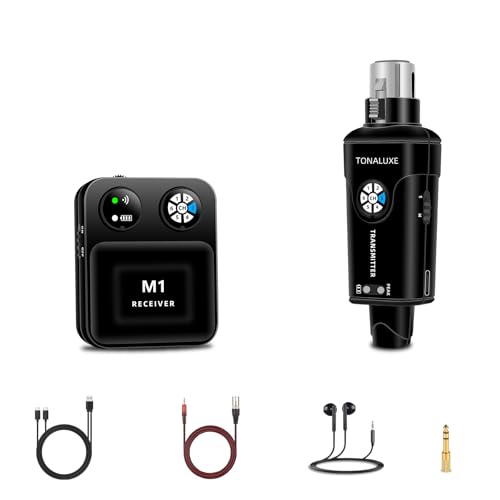
- 196-foot operating range
- Six channels with stereo/mono modes
- Up to eight hours of battery life
Best For: Performers needing extended range and longer runtime
Best for Two Performers
Xvive U4R2 Dual-Receiver IEM System

- Two receivers included
- Six channels with under 5 ms latency
- Up to 90 feet of range
Best For: Duos and small teams sharing one monitor feed
Best UHF Value
POGOLAB 7-Channel Rechargeable IEM System

- 1 ms claimed latency
- Seven selectable UHF channels
- XLR and AUX/LINE input options
Best For: Stage users needing low latency and flexible inputs
Best 5.8GHz Option
Xvive U45 Rechargeable IEM System

- 5.8GHz wireless connection
- Auto channel scanning
- Up to 100 feet of range
Best For: Solo performers wanting simple 5.8GHz monitoring
Best Band-Ready Value

- Two receivers included with one transmitter
- Up to 30 hours stated use with charging case
- 150-foot range and OTG support
Best For: Bands and portable multi-person monitoring
Best Long-Range UHF Pick
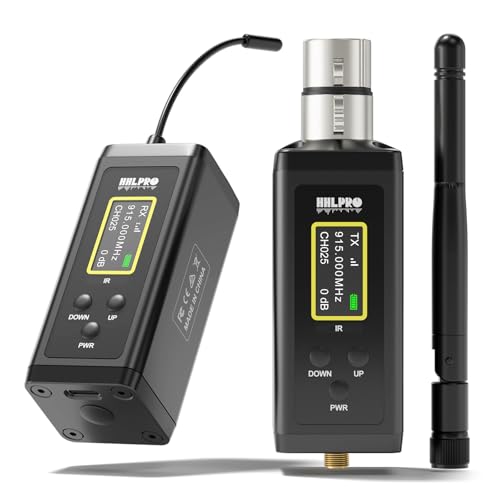
- 902–927MHz UHF with 50 channels
- Advertised 300-foot transmission range
- 5–8 hours stated battery life and charging operation
Best For: Touring performers and crowded RF environments
Best Proven Simple Setup

- Less than 5ms stated latency
- XLR and 1/4-inch input compatibility
- Rechargeable battery rated for five hours
Best For: Solo performers and compact rehearsal setups
Best Multi-Receiver Pick

- Sub-2ms stereo latency at 24-bit/48kHz
- Supports up to eight receivers per transmitter
- USB-C rechargeable receivers with up to six hours of use
Best For: Full bands and multi-performer stage setups
Best Complete Starter Kit

- Includes earbuds, cables, and a 6.35mm adapter
- Automatic pairing with mono/stereo switching
- Rechargeable battery rated for up to 10 hours
Best For: Churches and first-time IEM buyers wanting a complete kit
Best Compact Choice

- Below-4.5ms mono latency with 24-bit/48kHz audio
- Supports up to four receiver pairs
- 100-foot open-area range and 6–8-hour battery life
Best For: Small bands, rehearsals, and portable monitoring
Best Long-Range Pick – 2.4GHz 6-Channel Rechargeable IEM System
For shoppers comparing wireless in ear monitor systems with rechargeable receivers, this 2.4GHz kit stands out for its combination of range, channel flexibility, and rechargeable operation. It supports stereo or mono monitoring, offers up to 196 feet of range, and includes one transmitter and one bodypack receiver.
Best For: Bands, worship teams, vocalists, and performers who need extended range and up to eight hours of runtime.
Pros:
- Up to 196 feet of operating range with less than 5 ms latency.
- Six selectable channels and stereo/mono modes support flexible setups.
- Rechargeable battery provides up to eight hours of continuous use.
- Includes useful XLR, 1/4-inch, and 6.35 mm adapters.
Cons:
- Only one bodypack receiver is included.
- The plastic enclosure may be less rugged than a metal design.
This is a strong choice when range and battery life matter most. Its 24-bit/48 kHz audio, quick channel pairing, and broad accessory package make it practical for rehearsals, recording, and live performance.
Best for Two Performers – Xvive U4R2 Dual-Receiver IEM System
The Xvive U4R2 is a practical option among wireless in ear monitor systems with rechargeable receivers because it includes two receivers in one package. Its 2.4GHz connection, six channels, and less-than-5-ms latency are suited to small venues and team monitoring.
Best For: Duos, small bands, and stage teams that need two performers to monitor the same wireless transmitter.
Pros:
- Includes two rechargeable receivers and one transmitter.
- Six channels and less than 5 ms latency support coordinated performances.
- Up to 90 feet of working range suits small clubs and venues.
- Compact metal enclosure and included carrying bag improve portability.
Cons:
- Battery life is limited to up to five hours.
- The stated range is shorter than some competing systems.
- No headphone jack is listed in the supplied specifications.
Choose this kit when multiple performers need a shared monitor feed without buying separate receiver sets. Its two-receiver configuration is the main advantage, while the shorter range and five-hour battery limit make it better suited to smaller productions.
Best UHF Value – POGOLAB 7-Channel Rechargeable IEM System
The POGOLAB MWB-1 brings UHF connectivity to the wireless in ear monitor systems with rechargeable receivers category. It combines seven selectable channels, 1 ms latency, balanced XLR input, AUX/LINE switching, and a belt-clipped receiver for flexible stage monitoring.
Best For: Live bands, worship teams, and performers who prioritize very low latency and versatile audio inputs.
Pros:
- Delivers claimed 1 ms latency with 48 kHz/24-bit audio.
- Seven selectable UHF channels help manage crowded stage environments.
- Supports balanced XLR and AUX/LINE sources.
- USB-C rechargeable batteries provide up to five hours of operation.
Cons:
- Battery life is shorter than some eight-hour alternatives.
- Its frequency response is specified at 35 Hz–16.5 kHz rather than a wider 20 Hz–20 kHz range.
- Only one receiver is included.
This system is particularly appealing for performers who need fast response and input flexibility. The seven-channel UHF design, color-coded connection indicators, and volume controls make setup and onstage adjustments straightforward.
Best 5.8GHz Option – Xvive U45 Rechargeable IEM System
The Xvive U45 is a straightforward choice for shoppers seeking wireless in ear monitor systems with rechargeable receivers and 5.8GHz connectivity. It pairs one transmitter with one receiver, adds auto channel scanning, and provides less-than-5-ms latency with up to 100 feet of range.
Best For: Solo performers and compact live setups that want simple 5.8GHz wireless monitoring.
Pros:
- 5.8GHz operation is designed for stable, reduced-interference performance.
- Auto channel scan helps select an appropriate channel.
- Less than 5 ms latency supports responsive monitoring.
- Both transmitter and receiver are rechargeable for up to five hours of use.
Cons:
- Only one receiver is included.
- Battery life is limited to up to five hours.
- The range is specified at up to 100 feet, less than the longest-range option here.
The U45 makes sense for users who prefer a simple one-transmitter, one-receiver setup. Its 5.8GHz connection and auto-scan feature emphasize easy operation, though larger teams may need a system with more included receivers or longer battery life.
Best Band-Ready Value – LEKATO MS-20 2.4G IEM System
If you need wireless in ear monitor systems with rechargeable receivers for rehearsals or live work, the LEKATO MS-20 stands out for its included two receivers, charging case, and long stated battery capacity. It also supports OTG input for compatible USB-C devices.
Best For: Bands, singers, and small live setups that need multiple rechargeable receivers in one package.
Pros:
- Includes one transmitter and two receivers, with support for additional receivers.
- Charging case provides up to 30 hours of stated usage and uses USB-C charging.
- Offers 150-foot open-area transmission, auto-pairing, and low-latency monitoring.
- Supports mono/stereo switching and OTG audio input for compatible devices.
Cons:
- Earphones are not included.
- It is not water resistant.
- Its 2.4GHz connection may be less suitable than UHF in especially crowded RF environments.
The MS-20 is a practical choice when portability and multiple receivers matter most. Its case-based charging and simple pairing make it especially convenient for band practice, studio monitoring, and smaller performances.
Best Long-Range UHF Pick – HHLPRO F10P Wireless IEM
For wireless in ear monitor systems with rechargeable receivers aimed at busy venues, the HHLPRO F10P uses the 902–927MHz UHF range and offers 50 channels. Its auto-scan, one-touch synchronization, and stated 300-foot range are useful when setup speed and roaming distance are priorities.
Best For: Gigging musicians, worship teams, and performers working in larger or RF-crowded spaces.
Pros:
- UHF operation, 50 channels, and an advertised 300-foot range support flexible venue use.
- Auto-scan and one-touch sync simplify frequency setup.
- Rechargeable 1200mAh battery provides a stated 5–8 hours of use and can operate while charging.
- Metal construction, hard case, XLR adapter, and silicone covers suit touring use.
Cons:
- The listed battery life is shorter than the LEKATO system’s stated case-supported runtime.
- The mono design may not suit users specifically seeking stereo monitoring.
- The product listing identifies a single transmitter and receiver, so additional units may be needed for a full band.
The F10P emphasizes range, channel flexibility, and rugged portability. Choose it when reliable setup and UHF operation are more important than a multi-receiver bundle or stereo design.
Best Proven Simple Setup – Xvive U4 Wireless IEM
The Xvive U4 is a straightforward option among wireless in ear monitor systems with rechargeable receivers, pairing a transmitter with a beltpack receiver. It provides uncompressed 2.4GHz transmission, less than 5ms stated latency, and compatibility with balanced XLR or unbalanced 1/4-inch inputs.
Best For: Solo performers, rehearsal rooms, and small bands that want a compact, easy-to-use monitor link.
Pros:
- Rechargeable lithium batteries provide a stated five hours of battery life.
- Less than 5ms latency and 24-bit/48kHz audio support responsive monitoring.
- Accepts mono balanced XLR or mono unbalanced TS input.
- Metal housing, built-in limiter, and six simultaneous channels add practical flexibility.
Cons:
- Only one transmitter and one beltpack receiver are included.
- Five-hour battery life may require recharging during longer events.
- The system is mono rather than a stereo monitor solution.
The U4 makes sense for buyers who value a compact workflow and broad mixer compatibility. Its main tradeoffs are the shorter battery rating and single-receiver package, so larger bands may need additional units.
Best Multi-Receiver Pick – M-VAVE SWS-12
For bands that need one shared mix, the M-VAVE SWS-12 is a strong option among wireless in ear monitor systems with rechargeable receivers. Its 2.4GHz stereo connection supports sub-2ms latency, 24-bit/48kHz audio, and up to eight receivers from one transmitter.
Best For: Full bands, stage performances, and studio setups requiring multiple receivers.
Pros:
- Sub-2ms stereo latency with 24-bit/48kHz audio.
- One transmitter can connect with up to eight receivers.
- Receivers offer independent volume control, while the transmitter includes mute.
- Rechargeable design with USB-C charging and up to six hours of receiver use.
Cons:
- The listed package is a 1-transmitter/4-receiver configuration, rather than the full eight-receiver capacity.
- No noise control is specified.
Auto pairing and clip-on receivers simplify setup, while the long transmitter battery life suits extended rehearsals. Choose it when multi-performer monitoring is more important than built-in noise reduction.
Best Complete Starter Kit – Voxfull M6S
The Voxfull M6S is a practical entry point for shoppers comparing wireless in ear monitor systems with rechargeable receivers because it includes a receiver, transmitter, earbuds, cables, and a 6.35mm adapter. Its 2.4GHz system offers automatic pairing and selectable mono or stereo input.
Best For: Church services, live performers, and buyers who want a ready-to-use monitoring kit.
Pros:
- Includes in-ear headphones, receiver, transmitter, cables, and adapter.
- Automatic pairing simplifies initial setup.
- One transmitter can support multiple receivers, with up to six units working simultaneously.
- Built-in rechargeable batteries provide up to 10 hours after a full charge according to the product description.
Cons:
- The specifications also list an average battery life of eight hours, so real-world runtime may vary.
- Its RF wireless specification provides less detail about operating range than some competing listings.
- The product listing contains inconsistent noise-control information.
With automatic pairing and included earbuds, the M6S minimizes the extra purchases often required for an IEM setup. Its battery claims should be interpreted conservatively because the listing gives two different runtime figures.
Best Compact Choice – LEKATO MS-02
The LEKATO MS-02 is a compact choice among wireless in ear monitor systems with rechargeable receivers, offering 2.4GHz transmission, mono/stereo switching, and a clip-on design. It supports one transmitter with up to four receiver pairs and provides up to 6–8 hours of operation.
Best For: Small or medium bands, singers, rehearsals, and recording setups where portability matters.
Pros:
- Mono-mode latency is listed below 4.5ms, with 24-bit/48kHz audio.
- One transmitter supports up to four receiver pairs.
- Receivers provide five-level volume adjustment and battery-level LEDs.
- Open-area wireless range is listed at up to 100 feet.
Cons:
- Earbuds are not included and must be purchased separately.
- Battery life is listed as 6–8 hours, shorter than the transmitter runtime of some competing systems.
- No noise control is specified.
The MS-02 balances useful stage features with a small beltpack format, and its mute button adds practical control during performances. Factor in the cost of separate earbuds when comparing total setup prices.
How We Picked the Best Wireless in Ear Monitor Systems with Rechargeable Receivers
We focused on practical features that matter during real rehearsals and performances: wireless stability, usable range, audio latency, stereo or mono operation, transmitter inputs, receiver battery life, charging options, and ease of pairing. We also considered whether a system supports multiple receivers, since bands, worship teams, theaters, and production crews may need several performers to monitor the same mix.
Product listings can vary by bundle, so verify the included transmitters, receivers, cables, earphones, and charging accessories before ordering. Claimed range is also affected by walls, people, antennas, and local interference.
Quick Comparison
- Best for simple personal monitoring: A single-transmitter, single-receiver 2.4GHz system is typically the easiest starting point.
- Best for multiple performers: Choose a bundle with two or more receivers, or a transmitter designed to pair with additional beltpacks.
- Best for longer stage distances: UHF systems and models advertising extended range may have an advantage in open environments.
- Best for stereo mixes: Look for explicit stereo support and confirm that the transmitter and receiver both provide the required connections.
- Best for fast setup: Automatic pairing and clearly labeled input, output, and charging ports reduce troubleshooting.
Key Buying Factors for Wireless In-Ear Monitor Systems with Rechargeable Receivers
Wireless Band and Reliability
2.4GHz systems are widely available and often easy to use, but they can share spectrum with other wireless devices. UHF or 5.8GHz options may suit particular venues better. Check local frequency requirements and avoid assuming that a higher advertised range guarantees better performance indoors.
Latency and Audio Format
Low latency is important for singers and musicians because noticeable delay can make timing uncomfortable. Look for a stated latency figure and confirm whether the system supports stereo, mono, or both. Higher sample-rate or bit-depth claims can be useful, but stable transmission and correct gain staging matter more in a live mix.
Battery and Charging
Compare receiver runtime with the length of your typical event, then leave reserve capacity for soundcheck and delays. Charging cases, USB charging, and replaceable or independently charged receivers can make multi-person setups easier to manage.
Inputs, Range, and Expansion
Check whether the transmitter accepts XLR, 1/4-inch, AUX, or line-level sources. Confirm connector compatibility with your mixer and whether the system can support the number of receivers you need. A claimed range of 164 to 300 feet may be useful, but clear line of sight generally produces the most dependable results.
Who Should Buy Which Wireless in Ear Monitor Systems with Rechargeable Receivers?
Solo performers and small rehearsal groups should prioritize simple pairing, low latency, and a comfortable rechargeable receiver. Bands and worship teams should look for multi-receiver compatibility, reliable channel selection, and enough battery life for extended services. Stage and theater crews may benefit from UHF or longer-range designs, provided the frequency plan is suitable for the venue. Home studios and content creators should favor clean stereo operation, flexible inputs, and straightforward charging over maximum range.
Before buying, count the performers who need monitoring, identify the output available on your mixer, and decide whether stereo is genuinely necessary. Those three checks will narrow the options faster than range or marketing specifications alone.