Built-in phone microphones are convenient, but they often capture room echo, handling noise, and distracting background sounds. The best wireless microphones for smartphones place the mic closer to your voice, helping videos, interviews, livestreams, and calls sound cleaner.
This roundup compares 10 options across iPhone and Android compatibility, microphone format, portability, noise control, and included receivers. Check connector support carefully before buying, especially if you use USB-C, Lightning, or multiple devices.
Best 10 Wireless Microphones for Smartphones Picks for 2026
Best Dual-Mic USB-C Kit

- Two pre-paired microphones
- Automatic GainAssist leveling
- Up to 21 hours with case
Best For: Two-person videos with USB-C smartphones
Best Ultralight Noise-Canceling Set
- 10 g transmitter
- Two noise-cancellation levels
- Automatic clipping protection
Best For: Solo mobile creators and interviews
Best Handheld Interview Mic
- Cardioid 14 mm condenser capsule
- 48 kHz/24-bit recording
- Up to 15 hours of use
Best For: Handheld interviews and reporting
Best Solo USB-C Mobile Kit

- USB-C plug-and-play receiver
- Up to 48 hours with case
- Noise cancellation and limiting
Best For: Solo vlogs and long mobile shoots
Best Lightweight Pick

- 5-gram transmitters for discreet, comfortable wear
- 48kHz/24-bit audio with AI noise cancellation
- 30-hour case battery and claimed 328-foot range
Best For: Vloggers and mobile creators needing advanced controls in a tiny mic
Best Accessory Bundle
GoorDik USB-C Wireless Mini Mic

- Dual transmitters for two-person recording
- Denoise modes plus furry and foam windscreens
- 6–12 hours per transmitter and phone-charging receiver
Best For: Creators who want a flexible two-mic kit for USB-C devices
Best Plug-and-Play Value
- Automatic pairing with no app or Bluetooth required
- Two mics support simultaneous dual-person recording
- 24-hour case runtime and claimed 70-foot range
Best For: Mobile creators seeking an uncomplicated two-mic setup
Top Pick

- Lightning and USB-C plug-and-play adapters
- Two lavalier mics with foam and deadcat wind protection
- Up to six hours of battery life with device charging
Best For: Creators recording interviews, voiceovers, and outdoor videos
Best for Phone-Case Compatibility

- Longer receiver designed for use with most phone cases
- Lightning and USB-C compatibility across phones and tablets
- Two mics with automatic pairing and noise reduction
Best For: Vloggers and teachers who record without removing phone cases
Best for Two-Person Recording

- Two microphones for simultaneous recording
- Up to 98 feet of stated wireless transmission
- Noise reduction, mute, and reverb modes
Best For: Interviews, podcasts, and videos with two speakers
Best Dual-Mic USB-C Kit – RØDE Wireless Micro
For creators comparing wireless microphones for smartphones, the RØDE Wireless Micro is a straightforward two-person setup for USB-C phones. Its pre-paired receiver, automatic GainAssist leveling, and included windshields help simplify mobile recording without requiring an app.
Best For: Interviews, two-person videos, and creators using iPhone 15-or-later or Android USB-C phones.
Pros:
- Includes two microphones and a pocket-sized charging case.
- Pre-paired operation starts when the receiver is docked.
- GainAssist automatically manages recording levels.
- Charging case provides up to 21 hours of combined use.
Cons:
- Designed for USB-C phones and does not work directly with Lightning iPhones.
- Not the most suitable choice for users who need a single handheld interview microphone.
This is a particularly convenient option when you need two wireless voices and want minimal setup. Confirm that your smartphone has USB-C before buying.
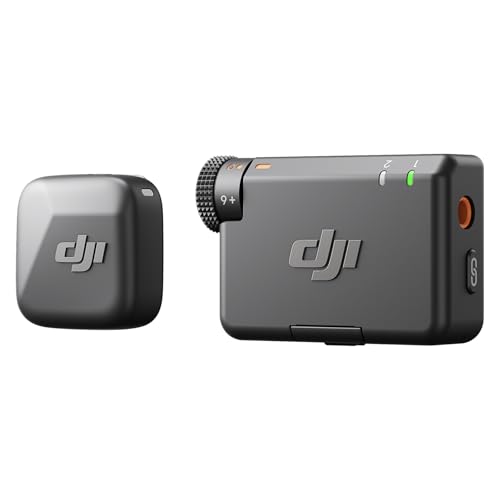
Best Ultralight Noise-Canceling Set – DJI Mic Mini
The DJI Mic Mini is a compact choice among wireless microphones for smartphones, combining a 10 g transmitter with two noise-cancellation levels and automatic limiting. This one-transmitter kit also includes a USB-C mobile adapter and camera audio cable for flexible recording.
Best For: Solo creators, interviews, and mobile filming in environments where background noise may vary.
Pros:
- Ultralight 10 g transmitter is discreet and comfortable to wear.
- Two noise-cancellation levels help tailor the sound to the setting.
- Automatic limiting helps prevent clipping from overly loud input.
- Rated for up to 400 m transmission and approximately 10 hours of battery life.
Cons:
- This package includes one transmitter, so it is not intended for two simultaneous speakers.
- The listed USB-C mobile adapter may require an additional solution for Lightning phones.
Choose this kit if portability and adaptable noise control matter more than recording two people at once. Its DJI OsmoAudio compatibility is also useful for creators already using supported DJI devices.
Best Handheld Interview Mic – COMICA Revo S
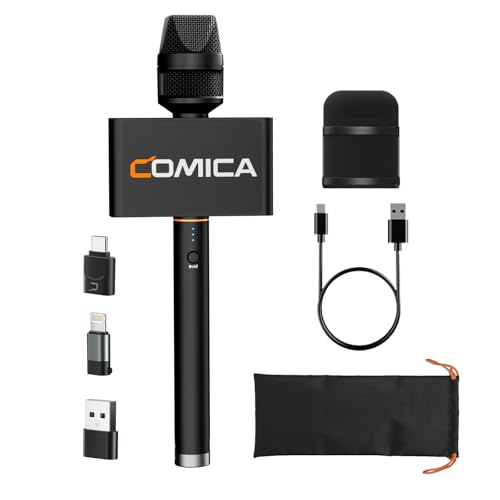
The COMICA Revo S takes a different approach to wireless microphones for smartphones: it is a handheld reporter-style microphone rather than a clip-on transmitter. Its cardioid capsule, 48 kHz/24-bit recording, one-key denoise, and adjustable gain make it suited to direct-to-camera interviews and spoken content.
Best For: Interviews, podcasts, news-style videos, and handheld smartphone reporting.
Pros:
- Handheld 14 mm condenser capsule uses a cardioid pattern for focused pickup.
- Supports 48 kHz/24-bit recording and one-key CalMix denoise.
- Three gain levels allow basic sensitivity adjustment.
- Built-in battery provides up to 15 hours of use.
Cons:
- It is a one-channel handheld microphone, not a two-person wireless kit.
- Lightning devices may require an OTG-compatible USB-C-to-Lightning adapter.
- Its larger handheld form is less discreet than a lavalier transmitter.
For presenters who want the familiar look and handling of a report microphone, the Revo S is a focused option. It is especially practical when the microphone will be held close to the speaker during interviews or live content.
Best Solo USB-C Mobile Kit – DJI Mic Mini Mobile RX
This DJI Mic Mini package is built specifically for solo smartphone creators who want a direct USB-C connection. The clip-on transmitter offers noise cancellation and automatic limiting, while the charging case extends total battery life to up to 48 hours.
Best For: Solo vlogs, livestreams, travel videos, and extended mobile recording with USB-C phones.
Pros:
- USB-C mobile receiver provides plug-and-play phone connection.
- Compact 10 g transmitter is designed for discreet on-camera use.
- Two noise-cancellation levels help handle different recording environments.
- Charging case offers up to 48 hours of battery life.
Cons:
- Includes one transmitter, so it is intended for solo use rather than two speakers.
- The mobile receiver is USB-C, so compatibility should be checked with Lightning phones.
- It is less versatile for users who need a standard camera receiver or multiple transmitters.
If long battery life and simple phone connection are priorities, this is the more travel-friendly DJI Mic Mini configuration. It is a strong fit for solo creators who want a small clip-on system without carrying a larger kit.
Best Lightweight Pick – BOYA mini 2 Wireless Lavalier
If you want wireless microphones for smartphones that stay discreet during long shoots, the BOYA mini 2 stands out for its 5-gram transmitters, strong audio specifications, and broad feature set. It connects through a USB-C receiver and works with Android phones, smartphones, tablets, laptops, and PCs.
Best For: Vloggers, interviewers, streamers, and creators who want a nearly invisible mic with advanced noise control and long battery life.
Pros:
- Extremely lightweight 5-gram design for comfortable, discreet wear.
- 48kHz/24-bit recording, 80dB signal-to-noise ratio, and 120dB SPL handling.
- AI noise cancellation, limiter, and -12dB safety track help protect recordings.
- Up to 30 hours with the charging case and a claimed 328-foot wireless range.
Cons:
- Uses a USB-C receiver and does not support Bluetooth connectivity.
- Some cameras and devices, including certain action cameras, Insta360, GoPro, Akaso, and OnePlus devices, are not supported.
- Long-range use may be affected by walls, buildings, and other obstacles.
The BOYA mini 2 is a feature-rich choice when sound protection, app controls, and extended runtime matter as much as portability. Its compatibility limitations are worth checking before purchase.
Best Accessory Bundle – GoorDik USB-C Wireless Mini Mic
For shoppers comparing wireless microphones for smartphones, the GoorDik USB-C kit offers a practical two-transmitter setup with denoise modes and useful wind protection. It is designed for USB-C phones, tablets, and computers, with adapters included for broader device compatibility.
Best For: Beginner and experienced creators recording podcasts, vlogs, livestreams, and two-person content in indoor or outdoor settings.
Pros:
- Active denoise and original-sound modes provide recording flexibility.
- Includes furry windscreens and foam covers for windy or noisy environments.
- Two transmitters support dual-person recording, with rotatable magnetic clips.
- Each transmitter offers 6–12 hours of use, and the receiver can charge a phone.
Cons:
- Some Android phones may require OTG activation.
- Computer users may need to select the receiver as the default input device.
- The product is intended for USB-C connections, with adapters needed for other ports.
This GoorDik package is especially appealing if you need two microphones and outdoor accessories without assembling a separate kit. Its setup is straightforward, but device-specific OTG and input settings may require attention.
Best Plug-and-Play Value – NPTCL Wireless Lavalier Mic
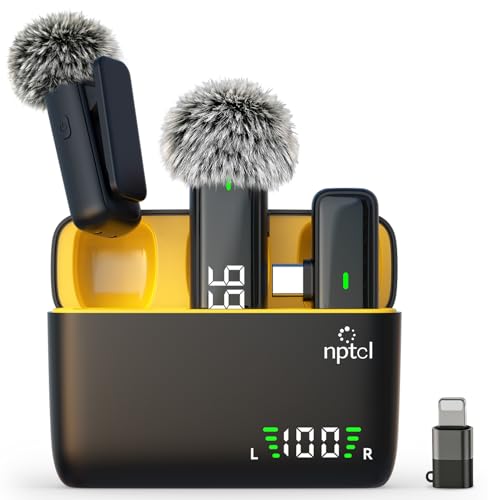
The NPTCL K1 is a straightforward option among wireless microphones for smartphones, pairing automatically without an app or Bluetooth. Its two microphones, charging case, and USB-C and Lightning support make it useful for mobile video, interviews, and two-person recording.
Best For: TikTok, YouTube, podcast, livestream, and interview creators who prioritize easy setup and dual-person pickup.
Pros:
- Plug-and-play operation with automatic pairing and no app required.
- Two omnidirectional microphones can capture two speakers simultaneously.
- Noise reduction, windscreen covers, mute function, and a digital battery indicator.
- Up to 24 hours with the charging case and a claimed 70-foot wireless range.
Cons:
- Each microphone runs for about 6 hours per charge.
- Older Lightning iPhones require the included adapter, and other adapters may not work.
- The supplied specifications list a 9V battery requirement, which may warrant checking the product documentation.
The NPTCL K1 is a sensible pick for creators who want minimal setup and two-person recording at a practical range. Confirm the included adapter is suitable for your phone before ordering.
Top Pick – Mini Mic Pro
For creators seeking wireless microphones for smartphones, the Mini Mic Pro is a compact plug-and-play option with both Lightning and USB-C adapters. It includes noise-reduction features, wind protection, and two lavalier microphones for recording on phones, tablets, laptops, and more.
Best For: Content creators who want a portable two-mic kit with broad device compatibility and outdoor wind protection.
Pros:
- Includes Lightning and USB-C adapters with no app or Bluetooth setup required.
- Comes with two lavalier microphones, foam windscreens, and deadcat covers.
- Offers up to six hours of use per charge and allows simultaneous device charging.
- Lightweight design weighs under an ounce.
Cons:
- The included warranty and replacement coverage are limited in duration.
- Its single-channel specification may be less suitable for more advanced multi-channel recording.
With its included accessories, dual-device connectors, and long stated battery life, the Mini Mic Pro is a versatile choice for mobile interviews, voiceovers, TikTok videos, and outdoor shoots.
Best for Phone-Case Compatibility – MAYBESTA Wireless Mini Mic
The MAYBESTA wireless mini microphone is a practical pick among wireless microphones for smartphones, especially if you prefer to keep your phone case on while recording. Its longer receiver, automatic pairing, and Lightning and USB-C support make it suitable for vlogging, livestreaming, teaching, and interviews.
Best For: Phone users who want a two-microphone kit that can connect through many cases without an app or separate adapter.
Pros:
- The upgraded longer receiver is designed to work with most phone cases.
- Supports iPhone, iPad, Android, laptop, and tablet devices with Lightning and USB-C connectors.
- Automatic connection requires no app or adapter, and the receiver and microphones indicate successful pairing.
- Includes noise reduction, windscreens, three clips, and a mute function.
Cons:
- The supplied specifications list a shorter wireless range and battery runtime only generally, without exact figures.
- Android compatibility may depend on the device and connector configuration.
The MAYBESTA stands out for its case-friendly receiver and straightforward setup. It is a sensible option for creators who frequently switch between compatible devices and want to start recording quickly.
Best for Two-Person Recording – CZOCPOS Wireless Lavalier Mic
For interviews and collaborative videos, the CZOCPOS two-pack is one of the more flexible wireless microphones for smartphones. It includes two microphones, automatic plug-and-play pairing, noise reduction, and a stated transmission range of up to 98 feet.
Best For: Two-person interviews, podcasts, vlogs, and video shoots where separate microphones and wireless movement are useful.
Pros:
- Two microphones support simultaneous recording by two users.
- Plug-and-play setup requires no Bluetooth, app, or separate adapter.
- Includes a USB-C connector and iOS adapter for phones, tablets, Windows PCs, and Macs.
- Offers noise reduction, mute, and reverb modes, plus up to five hours of use per charge.
Cons:
- Android users may need to enable OTG before use.
- The listed charging and connector setup may require attention when recording with different devices.
- The stated five-hour runtime is shorter than some competing options in this roundup.
The CZOCPOS is particularly appealing when two speakers need separate clip-on microphones. Its long stated range, selectable audio modes, and phone-charging support add flexibility for mobile production.
How We Picked the Best Wireless Microphones for Smartphones
We focused on the features that matter most in real mobile recording: dependable phone connectivity, compact designs, voice clarity, useful noise reduction, battery convenience, and compatibility with current iPhone and Android devices. The selection includes dual-microphone kits for interviews, single-transmitter systems for solo creators, handheld designs for presentations, and low-cost clip-on microphones for casual recording.
We also considered whether each product is supplied with a dedicated receiver, a mobile receiver, or a USB-C connection. A microphone can sound good and still be inconvenient if its receiver blocks another port, requires an adapter, or does not work with your phone’s operating system.
Quick Comparison
| Type | Best For | What to Check |
|---|---|---|
| Dual lavalier kit | Interviews and two-person videos | Two transmitters, receiver range, charging case |
| Single wireless mic | Solo videos and voiceovers | Phone connector and battery life |
| Handheld wireless mic | Presentations, street interviews, and events | Grip, receiver compatibility, and pickup pattern |
| USB-C clip-on mic | Android and USB-C iPhone recording | Direct USB-C support and app compatibility |
Key Buying Factors for Wireless Microphones for Smartphones
Connector and Device Compatibility
Confirm whether the kit uses USB-C, Lightning, or a dedicated mobile receiver. USB-C models are versatile for many Android phones, tablets, computers, and newer iPhones, while Lightning accessories may be necessary for older iPhone models. Also check whether your phone can record audio from external USB devices.
Microphone Style
Lavalier microphones clip to clothing and keep a consistent distance from the speaker, making them a practical choice for tutorials, interviews, and social videos. Handheld models are easier to position during reporting or presentations. A two-transmitter kit is worthwhile when two people need to speak on separate audio channels.
Noise Reduction and Sound Quality
Noise cancellation can reduce steady background sounds, but it cannot replace good microphone placement. Look for adjustable or selectable noise reduction when possible, and avoid placing the capsule against clothing, jewelry, or hair. For natural speech, prioritize clear midrange reproduction over exaggerated bass or aggressive processing.
Battery, Range, and Controls
Check rated operating time, charging-case support, and whether the transmitter and receiver show battery status. Longer wireless range helps outdoors, but walls and crowded wireless environments can reduce performance. Mute buttons, gain controls, monitoring, and automatic pairing can make a larger difference than headline range numbers.
Who Should Buy Which Wireless Microphones for Smartphones?
- Interviewers and two-person creators: Choose a dual-transmitter lavalier kit with a charging case.
- Solo video creators: A lightweight single-transmitter system is simpler to carry and set up.
- Presenters and street reporters: A handheld wireless microphone offers a familiar grip and quick speaker changes.
- Android and USB-C users: Select a USB-C receiver or direct USB-C microphone, and verify phone support.
- Budget-conscious beginners: A basic plug-and-play clip-on pair can improve speech clarity without adding a complex setup.
For the best result, position the microphone roughly 15–20 cm from your mouth, secure the clip firmly, and make a short test recording before filming. That simple check can reveal connection, clothing-rub, and background-noise problems before they affect the full video.