Tube microphone preamps can add a smoother edge, extra gain, and a more characterful front end for vocals, instruments, and voice work. The right model depends on how much color you want and how clean your signal chain needs to stay.
In this roundup, we focus on practical choices for home studios, project rooms, and more serious tracking setups, with options that balance tone, features, and value.
Best 10 Tube Microphone Preamps Picks for 2026
Compact Tube Channel Strip
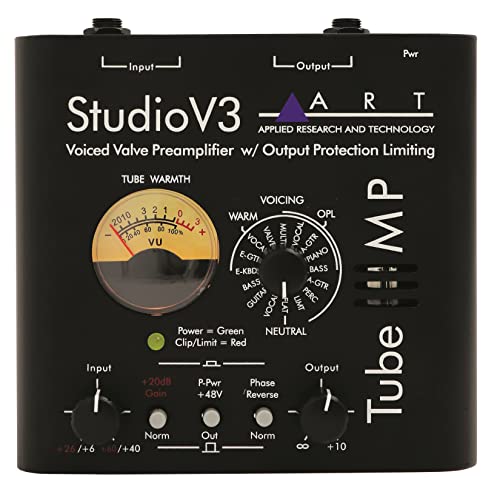
- Single-channel tube mic/instrument preamp
- Variable Valve Voicing for tone shaping
- Built for vocals, guitars, bass, keyboards, and drums
Best For: Home studio users who want a compact tube preamp for mics and instruments.
Tube DI Preamplifier

- 12AX7 tube preamp with XMAX input stage
- Gain, tube drive, and input-shaping controls
- Mic and instrument inputs with phantom power and filters
Best For: Players and recordists who want one tube preamp for both microphones and instruments.
Simple Single-Channel Preamp

- Single-channel tube mic/instrument preamp
- Compact 2.3-pound stainless steel build
- Includes a 2-year manufacturer warranty
Best For: Users who want a simple tube preamp for one mic or instrument at a time.
USB Tube Preamp

- Supports mic, instrument, and line-level sources
- 16 preamp voicings for flexible tone options
- Built-in USB/audio interface with included software
Best For: Computer-based recordists who want tube preamp voicings and USB output in one unit.
Compact Warmth with Built-In Compression
ART Tube MP/C Compact Tube Microphone Preamp

- Tube preamp with opto compressor
- Warm, vintage sound profile
- Compact corded-electric desktop unit
Best For: Home studios needing tube warmth and basic compression
Budget Tube Control with Limiter
Behringer Tube ULTRAGAIN MIC300

- Single-channel tube preamp with limiter
- Supports mic, instrument, and line sources
- Compact studio or live setup format
Best For: Budget users needing limiter protection on a single channel
Vintage Tape-Era Tube Tone
Warm Audio WA-MPX Single-Channel Tube Mic Preamp

- 351-style tape-era tube preamp design
- 300V power with 90dB of tube gain
- Analog saturation plus hi/low-pass filters
Best For: Users wanting authentic vintage tube tone and saturation control
Budget Tube Channel Strip
Behringer ULTRAGAIN PRO MIC2200
- Hand-selected 12AX7 tube
- Built-in parametric EQs
- Independent line driver for +4 dBu conversion
Best For: Home studios needing a tube preamp with EQ and level conversion
Warm Dual-Use Tube Preamp
ART TPS II Tube Preamplifier System

- Switches between mic and instrument modes
- Variable input impedance and Valve Voicing
- 5 Hz to 50 kHz wide frequency response
Best For: Players and recordists needing one warm tube preamp for mic and guitar
High-Gain Studio Tube Preamp
iCON Pro Audio UFO Class A Tube Microphone Preamplifier

- Class A discrete circuitry with no ICs
- Up to 68 dB clean gain and 131 dB dynamic range
- Four swappable tube options plus VU meter
Best For: Studio users who want high gain and flexible tube voicing
Compact Tube Channel Strip – ART Tube MP Studio V3
If you’re shopping for tube microphone preamps that can also handle instruments, the ART Tube MP Studio V3 is a simple single-channel option with a tube mic/instrument preamp design and Variable Valve Voicing. It fits easily into a small studio setup and keeps the feature set focused on practical recording use for vocals, guitars, bass, keyboards, and drums.
Best For: Home studio users who want a compact tube preamp for mics and instruments.
Pros:
- Single-channel tube microphone and instrument preamplifier
- Variable Valve Voicing for shaping the tube character
- Works with vocals, guitars, bass, keyboards, and drums
- Compact metal enclosure and corded electric power
Cons:
- Only one output channel
- No USB or built-in audio interface listed
- Basic layout may not suit users who want advanced routing
Overall, the Tube MP Studio V3 is a straightforward pick if you want an affordable-feeling, compact tube stage for everyday recording tasks. Its broad input compatibility makes it easy to place in a small project rig without adding unnecessary complexity.
Tube DI Preamplifier – Presonus TubePre v2
The Presonus TubePre v2 is a tube microphone preamp and DI box built around a 12AX7 tube-based preamp with an XMAX solid-state input stage. It adds gain control and tube drive saturation control, plus mic and instrument inputs, so it works well as a flexible front-end for a small recording setup.
Best For: Players and recordists who want one tube preamp for both microphones and instruments.
Pros:
- 12AX7 tube-based preamp with XMAX solid-state input stage
- Gain control and tube drive saturation control
- Separate instrument and mic inputs
- Includes phantom power, HP filter, pad, and polarity reverse
Cons:
- Single-channel design only
- One-year warranty listed
- No built-in USB interface is listed in the supplied notes
This is a practical choice if you want a tube preamp with useful recording controls rather than a stripped-down box. The added switching and DI flexibility make it especially handy when you need one unit to cover several input types.
Simple Single-Channel Preamp – ART Tube MP
The ART Tube MP is a basic single-channel tube microphone and instrument preamplifier that keeps the focus on straightforward analog gain staging. If you’re comparing tube microphone preamps and want a compact unit without extra features, this model stays close to the essentials.
Best For: Users who want a simple tube preamp for one mic or instrument at a time.
Pros:
- Single-channel tube microphone and instrument preamplifier
- Compact 2.3-pound design
- Stainless steel construction
- 2-year warranty listed by the manufacturer
Cons:
- No detailed controls or extra features are listed in the supplied notes
- Only one channel
- No USB or DI functions are mentioned
The Tube MP is the most straightforward option in this group, which can be an advantage if you just need a no-fuss tube front end. It makes sense for small setups where size and simplicity matter more than added processing.
USB Tube Preamp – Behringer MIC500USB
The Behringer MIC500USB is a tube microphone preamp aimed at users who want preamp flexibility and direct computer connection in one box. It supports microphone, instrument, and line-level sources, offers 16 preamp voicings, and adds a built-in USB/audio interface for recording workflows.
Best For: Computer-based recordists who want tube preamp voicings and USB output in one unit.
Pros:
- Handles microphone, instrument, and line-level sources
- 16 preamp voicings for different recording needs
- Built-in USB/audio interface for direct computer connection
- Includes software plus 150 instrument/effect plug-ins
Cons:
- Feature set is broad, which may be more than basic users need
- Two channels are listed, but the unit is still a compact desktop-style box
- Best results will depend on how well the voicings match the source
This model stands out if you want tube coloration plus digital convenience rather than a purely analog preamp. Its voicing options and USB interface make it a strong fit for home recording, podcasting, and quick computer-based setups.
Compact Warmth with Built-In Compression – ART Tube MP/C Compact Tube Microphone Preamp
If you want one of the more flexible tube microphone preamps for adding warmth and control in a small setup, the ART Tube MP/C is built around a tube signal path with an opto compressor. Its warm, vintage-leaning sound profile is aimed at users who want a little character without giving up modern dynamics control.
Best For: Home studios and solo recordists who want tube warmth plus simple compression in one box.
Pros:
- Tube amplifier design for a warm, vintage sound profile.
- Built-in opto compressor adds useful dynamics control.
- Compact, corded-electric unit for straightforward desktop use.
- Aluminum and rubber enclosure keeps the unit durable and portable.
Cons:
- Single-unit design means no multi-channel expansion.
- Most appealing if you specifically want added tube character and compression.
Overall, the Tube MP/C is a practical pick if you want tube coloration and compression in a compact preamp rather than a more complex channel strip.
Budget Tube Control with Limiter – Behringer Tube ULTRAGAIN MIC300
Behringer Tube ULTRAGAIN MIC300 Audiophile Vacuum Tube Preamplifier with Limiter
Check Price On AmazonThe Behringer MIC300 is one of the tube microphone preamps designed to add tube character to studio or live recording setups while keeping the signal under control with a built-in limiter. It supports microphone, instrument, and line-level sources, and its single-channel layout makes it easy to drop into a simple recording chain.
Best For: Budget-conscious users who want a tube preamp with limiter protection for a single source.
Pros:
- Single-channel tube microphone/instrument preamplifier.
- Built-in limiter helps prevent output clipping.
- Works with microphone, instrument, and line-level sources.
- Compact, corded-electric design for studio or live use.
Cons:
- Single-channel only.
- Designed for straightforward utility rather than elaborate tone shaping.
If you need a simple tube front end with limiter protection, the MIC300 is a functional choice for solo vocal, instrument, or line-level recording tasks.
Vintage Tape-Era Tube Tone – Warm Audio WA-MPX Single-Channel Tube Mic Preamp
Among tube microphone preamps focused on vintage character, the Warm Audio WA-MPX is built to reproduce a tape-era tube mic preamp sound with plenty of gain and saturation options. It combines 300V power, 90dB of tube gain, and selectable all-analog tape saturation, making it a strong fit when you want more than clean amplification.
Best For: Engineers and musicians seeking authentic vintage tube tone with analog saturation control.
Pros:
- Based on a 351-style tape-era tube preamp design.
- Offers 300V power and up to 90dB of tube gain.
- Selectable all-analog tape saturation adds vintage texture.
- Hi-pass and low-pass filters help refine tone and reduce unwanted noise.
Cons:
- Single-channel design limits it to one source at a time.
- Most useful if you specifically want a colored, vintage-style preamp.
The WA-MPX is the most tone-shaping oriented option here, making it a compelling choice when analog saturation and classic tube flavor are the priority.
Budget Tube Channel Strip – Behringer ULTRAGAIN PRO MIC2200
Behringer ULTRAGAIN PRO MIC2200 Audiophile Vacuum Tube Microphone/Line Preamplifier
Check Price On AmazonIf you want tube microphone preamps that add a little character without a huge price jump, the Behringer MIC2200 is built for practical studio use. It pairs a hand-selected 12AX7 tube with a discrete mic/line preamp stage, plus fully parametric EQs and an independent line driver for flexible gain staging.
Best For: Home studios that want a tube preamp with onboard EQ and line-level conversion.
Pros:
- Hand-selected 12AX7 tube for a more musical sound
- Ultra-wide 10 Hz to 200 kHz bandwidth for an open signal path
- Integrated fully parametric EQs for shaping tone at the source
- Independent line driver helps convert -10 dBV to +4 dBu pro level
Cons:
- Single-channel design limits multi-mic setups
- More of a channel strip style unit than a simple clean preamp
This is a useful pick if you want extra control in one rack unit, especially when you need preamp, EQ, and level conversion together. It leans toward versatility over minimalism.
Warm Dual-Use Tube Preamp – ART TPS II Tube Preamplifier System
The ART TPS II is a tube microphone preamps option designed for users who want flexibility between mic and instrument sources. Its variable input impedance, Variable Valve Voicing, and enhanced ART Tube Technology make it a practical choice when you want to tailor the front end to different recording tasks.
Best For: Players and recordists who need one warm tube preamp for both microphones and guitar sources.
Pros:
- Automatically switches between instrument and mic preamp use
- Variable input impedance adds source-matching flexibility
- Variable Valve Voicing lets you shape the tube character
- Wide 5 Hz to 50 kHz response supports a broad recording range
Cons:
- Single output channel may not suit larger tracking setups
- Rack-mounted size is more of a studio centerpiece than a compact desktop unit
For users who want a warm, adaptable front end, the TPS II covers a lot of ground with straightforward controls. It is especially appealing when mic and instrument duties need to share the same preamp.
High-Gain Studio Tube Preamp – iCON Pro Audio UFO Class A Tube Microphone Preamplifier
If you are comparing tube microphone preamps for a serious studio chain, the iCON Pro Audio UFO stands out for its Class A discrete design and high clean gain. It offers 68 dB of gain, four swappable Electro-Harmonix tube options, and balanced XLR I/O, making it a flexible fit for vocal and instrument tracking.
Best For: Studio users who want high gain, tube swapping options, and detailed control over tone.
Pros:
- Class A discrete circuitry with no ICs in the signal path
- Up to 68 dB of clean gain for demanding microphones
- Includes four swappable Electro-Harmonix-compatible tube choices
- VU meter, tube display, pad, polarity reverse, and mic/instrument switching
Cons:
- Heavier unit at 9.24 pounds
- External power supply adds another piece to manage
- More feature-rich than a simple plug-and-play preamp
The UFO is a strong match when you want more than just basic tube warmth and need real routing and gain control. Its combination of low noise, wide bandwidth, and tube-swap flexibility makes it a capable studio preamp.
How We Picked These Tube Microphone Preamps
We prioritized models that make sense for real-world recording: usable gain range, dependable noise performance, sensible controls, and enough tonal flexibility to suit different voices and instruments. We also considered whether each unit is best for adding subtle warmth, noticeable tube character, or extra utility such as DI input, compression, or USB connectivity.
Because Tube Microphone Preamps vary widely in design, we looked at both signal quality and workflow. Some are simple single-channel boxes for a quick upgrade, while others are more feature-rich channel strips or hybrid interface tools.
Quick Comparison: Which Type Fits Your Setup?
If you want a straightforward first upgrade, a basic single-channel preamp is usually the easiest choice. If you need more control over peaks, a unit with compression or limiting can help tame vocals on the way in. For hybrid recording, USB-enabled models may be useful, while higher-end options are better suited to users who want stronger sonic character and more headroom.
Key Buying Factors for Tube Microphone Preamps
Gain and Noise Floor
Check whether the preamp offers enough clean gain for your microphones, especially if you record dynamic mics or quiet sources. A tube stage should add warmth without making hiss or hum the dominant sound.
Color Versus Transparency
Some Tube Microphone Preamps are designed to be subtle, while others intentionally add saturation and harmonic thickness. Decide whether you want light polish or a more obvious tonal shift.
Inputs, Outputs, and Extra Features
Features like DI inputs, pad switches, phase reverse, limiter or compressor circuits, and USB output can improve flexibility. Choose only the extras you will actually use, since simpler designs often keep the signal path cleaner.
Channel Count and Workflow
Single-channel models are ideal for vocals and overdubs, while dual-channel or rack units make more sense for stereo recording, instruments, or tracking multiple sources at once.
Who Should Buy Which Tube Microphone Preamps?
Beginners and budget-focused buyers should look for an affordable, easy-to-use preamp that gives an audible upgrade without complicating the signal chain. Home recordists who track vocals and instruments regularly may benefit from models with more tone-shaping control or built-in compression. If you want a more premium front end for critical recording, step up to a higher-end tube preamp with stronger construction, better dynamics, and more refined sound.
Ultimately, the best choice depends on whether you want a gentle enhancement, a flexible tracking tool, or a more pronounced tube voice. Matching the preamp to your microphones, room, and recording goals matters more than chasing the most features on paper.