If you need more inputs without rebuilding your entire studio, eight channel microphone preamps are a smart way to expand cleanly. They’re especially useful for drums, bands, live multitrack capture, and adding serious headroom to an existing interface.
In this roundup, we focused on practical picks for different workflows, from straightforward ADAT expanders to more feature-rich studio solutions and splitter options for live use.
Best 10 Eight Channel Microphone Preamps Picks for 2026
Budget 8-Channel ADAT Expanders

- 8 Midas mic preamps
- 24-bit AD/DA with ADAT optical out
- Wired XLR input support
Best For: Adding eight mic inputs to an ADAT-based recording setup
Premium Tonal-Shaping Preamps

- 8 PureDrive mic preamps
- 31-step trim control in 1 dB increments
- Four input impedance options
Best For: Engineers wanting premium 8-channel preamps with tonal flexibility
Live Sound Network Preamps

- 8 MIDAS-designed programmable mic preamps
- AES50 networking with SuperMAC
- 2-port ULTRANET distribution hub
Best For: Live sound setups that need networked eight-channel preamps
Studio-Grade Interface Preamps

- Eight Clarett+ low-noise mic preamps
- All-analogue Air mode on every preamp
- 18-in/20-out interface with ADAT expansion
Best For: Producers wanting a clean 8-preamp interface with expansion
Passive Routing Splitter
Behringer MS8000 8-Channel Microphone Splitter
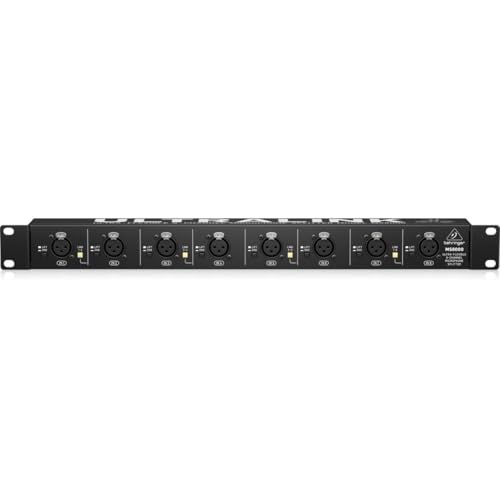
- 8 inputs and 16 outputs for multi-destination routing
- Direct out and link out on every channel
- Passive design with ground-lift switch
Best For: Live and studio users who need flexible mic signal splitting
ADAT Preamp Expander
Focusrite Scarlett OctoPre Dynamic 8 Mic Preamp
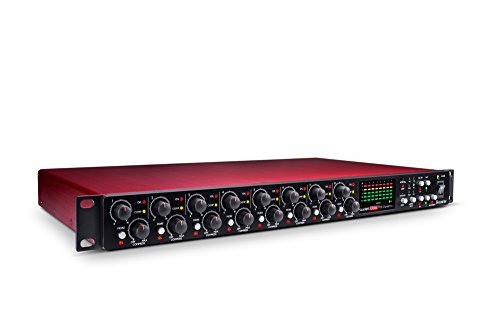
- Eight mic preamps with 48V phantom power
- Built-in analog compression on every channel
- ADAT and word clock connectivity for expansion
Best For: Users adding eight high-quality inputs to an ADAT interface
Isolated Mic Splitter

- Splits 8 mic signals into 16 outputs
- Transformer-isolated outputs with ground lift
- Direct outs pass phantom power
Best For: Engineers needing isolated 8-channel mic splitting
Hybrid Studio Interface

- Eight MAX-HD mic preamps with +75 dB gain
- 14 total line inputs for gear and synths
- Standalone Mixer Mode and Mic Pre Mode
Best For: Hybrid studios needing flexible I/O and clean mic preamps
Wireless Event System

- Eight wireless channels with headsets, bodypacks, and lapels
- Over 300 ft signal coverage for large spaces
- Low-noise receiver with four antennas
Best For: Churches, schools, and events needing eight wireless mics
Rackmount Splitter

- Eight-channel mic/line splitter in 1U rack space
- One direct output plus two transformer-balanced outputs
- Built for routing to multiple mixers or recorders
Best For: Live sound and installed systems needing signal splitting
Budget 8-Channel ADAT Expanders – Behringer ADA8200
Behringer ADA8200 Audiophile 8 In/8 Out ADAT Audio Interface with Midas Mic Preamplifiers
Check Price On AmazonIf you need eight channel microphone preamps for adding more inputs to a setup, the Behringer ADA8200 is built around straightforward ADAT expansion. It combines 8 Midas mic preamps with 24-bit conversion and ADAT optical output, making it a practical way to feed a digital mixer or interface with more channels.
Best For: Users who want an affordable 8-channel mic preamp and ADAT converter for extra recording inputs.
Pros:
- 8 Midas-designed microphone preamps for eight-channel capture
- 24-bit AD/DA conversion with ADAT optical out
- Wired XLR audio input support for simple integration
Cons:
- Maximum sample rate is limited to 48 kHz
- Designed as an ADAT interface, not a full-featured standalone interface
This is a sensible buy if your main goal is to expand channel count without overcomplicating the rig. It keeps the feature set focused on multi-channel preamp duties and digital output.
Premium Tonal-Shaping Preamps – SSL PureDrive Octo
The Solid State Logic PureDrive Octo is aimed at users shopping for eight channel microphone preamps with more tonal control than a basic clean preamp bank. It offers 8 high-performance PureDrive mic preamps, 48V phantom power, polarity invert, a 3rd order hi-pass filter, and 31-step trim control for precise level setting.
Best For: Engineers who want eight premium mic preamps with drive options and detailed front-end control.
Pros:
- 8 PureDrive mic preamps with +48V phantom power
- 31-step trim control with 1 dB increments
- Polarity invert and 3rd order hi-pass filter on board
- Four input impedance options for tonal shaping with dynamic and ribbon mics
Cons:
- More specialized than a simple transparent preamp expander
- Requires USB or D-Sub connectivity rather than a basic plug-and-play layout
For buyers who want eight channels and also care about shaping the front end, this model stands out. It is the most flexible option here for dialing in both gain and character.
Live Sound Network Preamps – Behringer SD8
The BEHRINGER SD8 is a network-ready option for buyers who need eight channel microphone preamps and flexible digital routing. It includes 8 MIDAS-designed, fully programmable mic preamps, plus AES50 network ports and a 2-port ULTRANET distribution hub for systems that rely on digital connectivity.
Best For: Live sound or stage setups that need networked eight-channel mic preamps and monitoring distribution.
Pros:
- 8 MIDAS-designed, fully programmable mic preamps
- AES50 ports with low-jitter, low-latency SuperMAC networking
- 2-port ULTRANET distribution hub for personal monitoring mixers
- 8 analog, servo-balanced XLR outputs
Cons:
- Maximum sample rate is limited to 48 kHz
- More specialized for networked systems than for simple standalone recording
This is the strongest fit when your eight preamps need to live inside a larger stage or distributed audio system. It prioritizes network connectivity and routing features over studio-interface convenience.
Studio-Grade Interface Preamps – Focusrite Clarett+ 8Pre
If you are comparing eight channel microphone preamps for a studio interface, the Focusrite Clarett+ 8Pre offers a polished all-in-one approach. It pairs eight professional-quality Clarett+ preamps with 18-in/20-out connectivity, ADAT expansion, Air mode, and 24-bit/192kHz operation for detailed recording work.
Best For: Producers who want eight clean, low-noise mic preamps inside a versatile studio interface.
Pros:
- Eight Clarett+ preamps with low distortion and ultra-low noise
- All-analogue Air mode on every preamp for added high-frequency lift
- 18-in/20-out design with ADAT optical input for expansion
- 24-bit/192kHz support plus two transparent headphone outputs
Cons:
- More interface-focused than a dedicated standalone preamp unit
- Best value is tied to using its broader routing and software features
This is the most rounded choice if you want eight strong mic preamps and a full recording interface in one box. It is especially attractive for users who need both capture quality and expansion headroom.
Passive Routing Splitter – Behringer MS8000 8-Channel Microphone Splitter
If you need one of the more flexible eight channel microphone preamps alternatives for routing stage or studio signals, the Behringer MS8000 is built for splitting, not amplification. It gives you 8 inputs and 16 outputs, letting you send each mic or DI source to a front-of-house console, a recording setup, monitor mix, broadcast feed, or other destination at the same time.
Best For: Live rigs and studio setups that need passive 8-channel signal splitting with ground-lift control.
Pros:
- 8 inputs and 16 outputs for sending signals to multiple destinations
- Each channel includes direct out and link out connections
- Input Link function can combine adjacent channels for expanded routing options
- Ground lift switch helps reduce hum from ground loops
Cons:
- Passive design means volume must be controlled at the source
- Does not provide microphone preamp gain
- More about routing than tone-shaping or recording features
The MS8000 is a practical choice when the main job is dependable signal distribution across several systems. If your priority is routing flexibility rather than active preamp processing, it covers a lot of ground in a compact 1RU format.
ADAT Preamp Expander – Focusrite Scarlett OctoPre Dynamic 8 Mic Preamp
For buyers comparing eight channel microphone preamps, the Focusrite Scarlett OctoPre Dynamic stands out as an ADAT expander with eight natural-sounding Scarlett mic preamps and flexible channel processing. It is designed to add more inputs to a compatible interface, while also giving you analog compression, line outputs, and word clock I/O for a more complete tracking setup.
Best For: Expanding an ADAT-equipped interface with eight preamps, compression, and digital synchronization.
Pros:
- Eight Scarlett mic preamps with 48V phantom power on every channel
- Analog compression available on every channel for tracking control
- 8 balanced line outputs and 2 front-panel instrument inputs
- ADAT connectivity plus word clock I/O for synchronization
Cons:
- Requires an ADAT-equipped interface to use its main expansion features
- Best suited to expansion rather than stand-alone recording
- More complex than a simple analog-only preamp unit
This is a strong fit if you need more mic inputs without replacing your current interface. The OctoPre Dynamic adds practical recording tools like compression and metering, making it especially useful for drums, loud sources, and larger sessions.
Isolated Mic Splitter – ART S8 8-Channel Mic Splitter
If your search for eight channel microphone preamps is really about clean multi-send routing, the ART S8 offers a straightforward way to split eight low-impedance mic signals into sixteen outputs. Each channel provides a direct output and a transformer-isolated output, making it useful when you need a simple, dependable stage or studio distribution box.
Best For: Splitting eight microphone lines with transformer isolation and phantom-power-friendly direct outs.
Pros:
- Splits 8 balanced mic signals into 16 outputs
- Transformer-isolated outputs help separate signal paths
- Direct outputs pass phantom power
- Per-channel ground lift and -29 dB pad switches add control
Cons:
- Passive splitter, so it does not add preamp gain
- Focused on routing rather than signal processing
- Single-purpose design may be overkill if you only need one output path
The S8 is a solid utility piece for users who want isolation and simple split routing in one box. It is especially appealing when you need phantom power compatibility on direct outputs and a rugged, no-frills approach.
Hybrid Studio Interface – Fender Quantum LT 16
If you need eight channel microphone preamps plus plenty of extra line-level I/O, the Fender Quantum LT 16 is built for hybrid studio setups. It combines eight MAX-HD mic preamps with 14 total line inputs, low-latency drivers, loopback, MIDI, and standalone operating modes, making it a flexible center piece for recording, mixing, and synth integration.
Best For: Home and project studios that want eight clean mic preamps, lots of line inputs, and standalone routing options.
Pros:
- Eight MAX-HD mic preamps with up to +75 dB gain for clear multi-mic recording
- 14 line inputs, including six front combo inputs and eight rear TRS inputs
- Standalone Mixer Mode and Mic Pre Mode for use without a computer
- Loopback, MIDI I/O, balanced outputs, and a high-headroom headphone amp
Cons:
- Designed as a full interface, so it may be more than some simple mic-preamp-only setups need
- Best value depends on whether you will use the extra line inputs and standalone modes
The Quantum LT 16 stands out when you want an interface that can handle microphones, external gear, and routing in one box. For studios that need eight channel microphone preamps and expansion-ready connectivity, it offers a practical all-in-one workflow.
Wireless Event System – UHF 8-Channel Lavalier Set
This UHF wireless microphone system is aimed at live speaking and performance uses where eight microphones need to be active at once. It includes eight headsets, eight bodypacks, and eight lapel mics, with a receiver designed for wide-area coverage and straightforward operation in group settings.
Best For: Churches, schools, meetings, weddings, and karaoke setups that need an eight-mic wireless system.
Pros:
- Eight-channel wireless system with eight headsets, bodypacks, and lapel mics included
- Wide area signal coverage over 300 ft
- High-sensitivity design with low noise and broad dynamic range
- Four antennas on the receiver to help improve signal stability
Cons:
- Requires 2 AA batteries per unit, and batteries are not included
- Uses a fixed frequency range of 500 MHz to 580 MHz
While this is not a studio mic preamp product, it is a practical eight-channel vocal system for events that need multiple wireless mics at once. If your priority is handling group speech or performance audio rather than recording preamps, it fits that role well.
Rackmount Splitter – ART S8-3Way
The ART S8-3Way is for users who need to split microphone or line-level signals cleanly across multiple destinations. With eight channels in a 1U rackmount design, it is a practical utility unit for live sound or installed systems where signal distribution matters more than built-in microphone gain.
Best For: Live sound rigs and installed setups that need an eight-channel mic or line splitter.
Pros:
- Eight-channel microphone/line-level splitter in a compact 1U rackmount format
- Provides one XLR direct output plus two transformer balanced XLR outputs
- Useful for routing signals to multiple mixers, monitors, or recording paths
Cons:
- Does not provide microphone preamps or gain control
- Focused on splitting signals, not converting or processing audio
For buyers comparing eight channel microphone preamps, this model serves a different job: distribution rather than amplification. It is a strong fit when you already have preamps and need a reliable way to send the same eight channels to more than one destination.
How We Picked the Best Eight Channel Microphone Preamps
We prioritized sound quality, usable gain range, noise performance, and integration with common studio workflows. For Eight Channel Microphone Preamps, the most important question is not just how many channels you get, but how well they fit your existing interface, converters, and recording setup.
We also considered whether a model functions as a pure preamp expander, a full audio interface, or a splitter for stage and broadcast use. That distinction matters because the best choice for a home studio is not always the best choice for live sound.
Quick Comparison: Which Type Fits Your Setup?
If you already have an interface with ADAT input, an eight-channel preamp expander is usually the most efficient upgrade. If you need a full front end, a feature-rich interface may make more sense. If your priority is sending one microphone signal to multiple destinations, a splitter is the right tool instead.
Key Buying Factors for Eight Channel Microphone Preamps
Connectivity
Check for ADAT, USB-C, analog line outputs, or splitter routing depending on your setup. Compatibility is often the biggest factor in real-world satisfaction.
Noise and Gain
Clean gain matters, especially for dynamic microphones, quiet vocalists, and overheads. Low-noise design helps preserve detail when recording at higher gain settings.
Extra Features
Some Eight Channel Microphone Preamps add compression, instrument inputs, pad switches, or line-level routing. These can be useful, but only if they match your workflow.
Use Case
Studio recording, live capture, church installs, podcast production, and stage splitting all benefit from different feature sets. Choose the tool that solves your actual problem, not just the one with the most specs.
Who Should Buy Which Eight Channel Microphone Preamps?
Choose a simple ADAT expander if you want to add eight clean microphone inputs to an existing interface. Choose a premium preamp or interface if you want better conversion, more routing, or a more polished recording front end. Choose a splitter if you need to distribute mic signals to multiple systems without changing the source device.
For most buyers, the best Eight Channel Microphone Preamps are the ones that reduce friction, preserve signal quality, and integrate cleanly into the gear you already own.