Dual channel in-ear monitoring systems can make a huge difference when you need cleaner stage sound and more control over your mix. Whether you’re running rehearsals, live shows, or worship services, the right setup helps you hear what matters without fighting stage volume.
In this roundup, we focus on practical systems that balance sound quality, connection stability, portability, and ease of use so you can choose confidently for your rig and budget.
Best 10 Dual Channel in Ear Monitoring Systems Picks for 2026
Ultra-Portable Wireless Rig

- 2-channel UHF wireless IEM with 2x40 frequencies
- Includes 4 bodypacks and 4 in-ear earphones
- 330 ft open-space range with PLL stability
Best For: Bands and stage crews needing a multi-user mono wireless monitor system
Reliable Stereo/Mono Pick

- 100 selectable UHF frequencies
- Mono or stereo operation with LCD control
- Includes two receivers and a carrying case
Best For: Live performers and studios wanting flexible wireless monitoring
Wired Mix Control Option
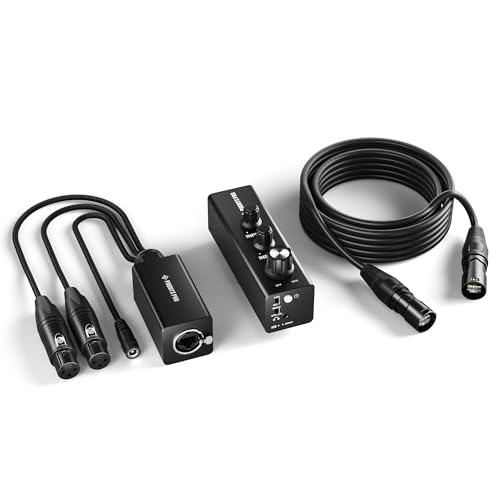
- Dual XLR inputs for stable wired monitoring
- Independent left/right volume control
- Runs on 12V DC or 2x AAA batteries
Best For: Players who want a portable wired IEM amp with personal mix control
Modern 5.8 GHz Choice

- 5.8 GHz true diversity wireless system
- Channel Scan Mode finds the best channel
- 24-bit/48kHz audio with USB-C charging
Best For: Musicians needing a compact wireless IEM with simple channel scanning
True Stereo Monitoring
Xvive U45D True Stereo Wireless In-Ear Monitor System

- True stereo with dual XLR inputs
- Four modes: Stereo, L, R, and Mix
- Less than 5 ms latency with simple setup
Best For: Bands and worship teams that need stereo in-ear monitoring with flexible routing
Reliable Mono UHF
Phenyx Pro PTM-22 Mono Dual Wireless IEM System

- Dual-channel UHF with 2x50 selectable frequencies
- Rugged metal transmitter with LCD display
- Includes two bodypack receivers for shared monitoring
Best For: Singers and worship teams needing a durable mono IEM system
Portable Auto-Pair IEM
MELONARE PM-1 UHF Wireless In-Ear Monitor System

- Automatic pairing for quick setup
- Mono/stereo switching with UHF 500MHz hopping
- Portable kit with useful adapters and cables
Best For: Solo performers and small groups that want a simple portable IEM
4-Pack Stage Monitor Set
D Debra Audio ER-202 with 4 Bodypacks

- UHF PLL design with 100 preset frequencies per channel
- Includes 4 bodypack receivers for multiple performers
- Built-in limiter and LCD status displays
Best For: Bands and studios needing a mono dual-channel IEM system for several users
Stereo Monitoring Pick
D Debra Audio ST-202 with 2 Bodypacks
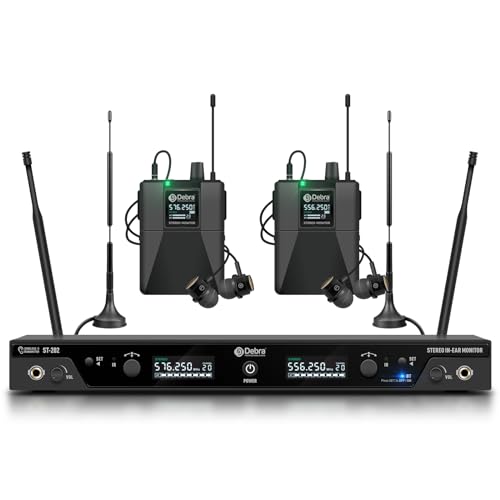
- Stereo separation for more precise audio positioning
- UHF PLL system in the 560-590 MHz band
- Works with computers, phones, tablets, and consoles
Best For: Stereo-focused users who want a wireless IEM system for music, gaming, or media
Compact Two-Receiver Kit
D Debra Audio ER-202 with 2 Bodypacks

- UHF PLL wireless monitoring with 100 preset frequencies per channel
- Built-in limiter and RF/AF display indicators
- Compact package with 2 bodypack receivers
Best For: Small bands or studio setups needing a compact mono IEM bundle
Ultra-Portable Wireless Rig – 2-Channel UHF Rack IEM
If you want dual channel in ear monitoring systems with a wireless setup that’s simple to run on stage, this IME-4000 is built around UHF operation, PLL stability, and a 2-channel transmitter with four bodypack receivers. It’s a practical fit for bands and venues that want zero-latency monitoring, quick IR syncing, and enough range for moving around without being tethered.
Best For: Bands, stage performers, church teams, and MCs that need a wireless mono IEM package with multiple bodypacks.
Pros:
- 2-channel UHF system with 2×40 preset frequencies in the 520 MHz–580 MHz range
- Includes 4 bodypack receivers and 4 in-ear earphones for multi-user monitoring
- Built-in limiter circuitry helps prevent distortion at high input levels
- Up to 330 feet of open-space coverage for flexible stage movement
Cons:
- Designed for mono monitoring rather than stereo mixes
- Longer distances may be affected by thick walls, glass, or metal blocks
- Uses ABS bodypacks, so it’s less rugged than fully metal receivers
This system makes sense if your priority is dependable wireless monitoring with multiple receivers and straightforward setup. It leans more toward live-stage practicality than deep mix control, but the included bodypacks and frequency flexibility make it a strong value for working performers.
Reliable Stereo/Mono Pick – 100-Frequency UHF IEM
For buyers comparing dual channel in ear monitoring systems, the AUDIO 2000’S AWM6305U stands out as a flexible UHF option with two wireless receivers, a matching transmitter, and 100 selectable frequencies. It supports mono or stereo operation, adds limiter circuitry for cleaner audio at higher levels, and includes a carrying case for easier transport.
Best For: Performers, DJs, karaoke setups, and studios that want a wireless IEM system with mono/stereo flexibility.
Pros:
- 100 pre-programmed selectable frequencies for easier channel planning
- Supports both mono and stereo modes with LCD display and level adjustment
- Built-in limiter circuitry helps reduce distortion from excessive input levels
- Includes two receivers and a hard PVC carrying case
Cons:
- Only two receivers are included, so it’s less expandable than larger packs
- Rated for 1-year warranty coverage only
- More feature-rich than basic systems, but still a wired-output transmitter design
This is a strong middle-ground choice if you need more tuning options than a basic system but still want straightforward operation. The mono/stereo switching and dual balanced I/O make it adaptable for live and studio monitoring tasks.
Wired Mix Control Option – Dual-Channel Portable IEM Amp
If you’re shopping for dual channel in ear monitoring systems but want a wired solution instead of wireless RF, the Phenyx Pro PWM-10 is a portable in-ear monitor amplifier with two XLR inputs, mono/stereo selection, and independent left/right volume control. It’s designed for stable, lossless sound over long cable runs and gives you direct control over the mix at the bodypack.
Best For: Bands, recording setups, and players who want a compact wired IEM amp with personal mix control.
Pros:
- Dual XLR inputs support long cable runs without degradation
- Mono/stereo mode selection for different monitoring needs
- Independent left and right channel volume adjustments for personalized mixes
- Flexible power from 12V DC or 2x AAA batteries
Cons:
- Wired system requires cable routing, so it’s not as free-moving as wireless IEMs
- Needs either DC power or batteries to operate
- CAT-5 cabling and adapters add setup pieces compared with a simple bodypack-only solution
This is a smart pick when reliability and mix control matter more than wireless convenience. Its dual-channel layout and portable power options make it especially useful for rehearsals, stage use, and recording environments where clean signal path is the priority.
Modern 5.8 GHz Choice – Scan-Mode Wireless IEM
The Xvive U45 is a compact wireless in-ear monitor system built around 5.8 GHz transmission, true diversity reception, and a channel scan mode that helps you find a cleaner wireless channel fast. For users comparing dual channel in ear monitoring systems, it’s a straightforward option for studio work, rehearsals, or live use when you want clear audio and simple setup.
Best For: Musicians and audio users who want a compact 5.8 GHz wireless IEM with easy channel selection.
Pros:
- 5.8 GHz true diversity wireless design for solid RF connection
- Channel Scan Mode helps locate the best available wireless channel
- High-resolution 24-bit/48kHz audio with 20Hz–20kHz response
- USB-C charging with up to 5 hours of battery life
Cons:
- Range is listed at 100 ft / 30.5 m, which is shorter than some stage-focused systems
- Receiver and transmitter must be matched manually after scanning
- Battery life is modest at up to 5 hours
Overall, this model is best viewed as a clean, modern wireless IEM solution with useful scan functionality rather than a high-channel-count rack system. Its compact format and high-resolution audio make it a solid fit for smaller performance spaces and home or studio monitoring.
True Stereo Monitoring – Xvive U45D True Stereo Wireless In-Ear Monitor System
If you’re comparing dual channel in ear monitoring systems for live work, the Xvive U45D stands out for true stereo monitoring and flexible routing. Its dual XLR inputs and four listening modes make it easy to handle stereo mixes, centered mono feeds, or one-source monitoring without changing your whole setup.
Best For: Musicians, bands, and worship teams that want a true stereo wireless IEM with simple setup and low latency.
Pros:
- True stereo with separate left and right inputs for clearer instrument, vocal, and click placement.
- 4 monitoring modes: Stereo, L, R, and Mix for both stereo and mono workflows.
- Less than 5 ms latency keeps monitoring immediate during performances and rehearsals.
- Fast setup with six channels and channel scan, plus same-mix sharing for multiple receivers.
Cons:
- Battery life is listed at up to 5 hours, so long sets may need charging planning.
- Range is up to 100 ft, which may be limiting on larger stages.
Overall, the U45D is a strong fit if you want stereo clarity first and still need the convenience of a compact wireless system. It is especially practical for teams that share a monitor mix but want a cleaner, more separated in-ear image.
Reliable Mono UHF – Phenyx Pro PTM-22 Mono Dual Wireless IEM System
For buyers focused on dual channel in ear monitoring systems with dependable mono performance, the Phenyx Pro PTM-22 is built around straightforward monitoring and frequency flexibility. Its dual-channel UHF design, 2×50 selectable frequencies, and sturdy metal transmitter aim to keep stage monitoring stable in busy RF environments.
Best For: Singers, musicians, churches, and studio users who want a rugged mono wireless IEM system with broad frequency selection.
Pros:
- Dual-channel UHF design with 2×50 selectable frequencies helps reduce interference.
- Rugged metal transmitter and LCD display support easier channel management.
- Includes two bodypack receivers, making it useful for shared monitoring setups.
- Built for live performance, worship, studio practice, and other audio monitoring needs.
Cons:
- Designed for mono audio monitoring rather than true stereo imaging.
- Wireless range is listed at 164 ft, but real-world performance will still depend on RF conditions.
The PTM-22 is a practical choice if your priority is reliable mono monitoring rather than stereo separation. It suits teams that want a durable wireless system with flexible frequency options and an easy path to managing multiple receivers.
Portable Auto-Pair IEM – MELONARE PM-1 UHF Wireless In-Ear Monitor System
If you want dual channel in ear monitoring systems that keep setup simple, the MELONARE PM-1 is built around automatic pairing and compact portability. It offers mono/stereo switching, UHF 500MHz frequency hopping, and low-latency monitoring for small gigs, rehearsals, and studio use.
Best For: Solo performers, small bands, and home-recording setups that want a portable wireless IEM with easy pairing.
Pros:
- Automatic pairing removes the need to manually select a channel.
- Mono/stereo switching gives you flexible control over the monitoring feed.
- UHF 500MHz frequency hopping is designed for a more stable, interference-resistant connection.
- Includes useful adapters and cables for mixers, sound cards, speakers, and guitar amps.
Cons:
- Battery life is up to 5 hours, so extended sessions may require recharging.
- It comes as a 1 receiver + 1 transmitter set, so larger teams would need additional hardware.
The PM-1 is a convenient pick when you value quick setup and portability over a more complex rack-style system. Its included accessories and automatic pairing make it especially appealing for performers who want to get monitoring going fast.
4-Pack Stage Monitor Set – D Debra Audio ER-202 with 4 Bodypacks
If you need dual channel in ear monitoring systems for stage, studio, or band use, the D Debra Audio ER-202 is built around a UHF PLL design with a strong focus on stable signal handling. It offers 100 preset frequencies per channel, built-in limiter circuitry, and a front-panel monitoring output, making it a practical option when you want straightforward wireless monitoring with a wider usable range.
Best For: Bands, studios, and live performers who want a mono dual-channel wireless IEM setup with four bodypacks.
Pros:
- UHF PLL system with 100 preset frequencies per channel for easier interference avoidance.
- Built-in limiter circuitry helps reduce distortion under high input levels.
- Includes 4 bodypack receivers, which is useful for multi-performer setups.
- LCD displays on transmitter and receiver make monitoring status easier.
Cons:
- Mono monitoring only, so it is not the right choice if you specifically want stereo IEM playback.
- Range depends on conditions, even though the open-stage claim reaches up to 300 meters.
- Uses 3.5 mm earphone jacks, so compatibility should be checked if you already own other monitors.
This model stands out for its four-receiver package and practical stage-oriented feature set. If your priority is dependable mono monitoring for several musicians at once, it offers a solid and focused layout.
Stereo Monitoring Pick – D Debra Audio ST-202 with 2 Bodypacks
For buyers comparing dual channel in ear monitoring systems, the D Debra Audio ST-202 focuses on stereo separation and flexible everyday compatibility. It uses UHF PLL wireless transmission in the 560-590 MHz band, supports 60 preset frequencies, and is designed to deliver clear audio positioning for music, gaming, or multimedia use.
Best For: Users who want a stereo wireless IEM system with strong separation and broad device compatibility.
Pros:
- Stereo monitoring with strong audio separation for clearer sound positioning.
- UHF PLL transmission with 60 preset frequencies for better channel flexibility.
- Designed to work with computers, phones, tablets, and game consoles.
- Lightweight build and memory foam ear cups aim at longer wearing comfort.
Cons:
- Comes with 2 bodypacks, so it is less suited to larger band setups than 4-pack systems.
- Wireless technology is listed as infrared in the details, so the specs should be reviewed carefully before buying.
- Its feature mix leans beyond stage use into gaming and media, which may not suit purists seeking a stage-only IEM.
The ST-202 is a good fit when stereo imaging matters as much as wireless monitoring. It is especially appealing if you want one system that can move between stage, home, and device-based listening setups.
Compact Two-Receiver Kit – D Debra Audio ER-202 with 2 Bodypacks
This ER-202 version is a more compact choice among dual channel in ear monitoring systems, keeping the same UHF PLL monitoring approach but with a smaller two-bodypack package. It is aimed at stage, studio, and band work, with 100 preset frequencies per channel, a built-in limiter, and clear transmitter/receiver status indicators.
Best For: Small performance setups that need a mono wireless IEM kit with two bodypacks.
Pros:
- UHF PLL design with 100 preset frequencies per channel for interference management.
- Built-in limiter circuitry helps prevent distortion from excessive input levels.
- More compact two-bodypack bundle for smaller monitoring needs.
- LCD displays and RF/AF indicators help with basic system monitoring.
Cons:
- Only includes 2 bodypack receivers, so it is not ideal for larger ensembles.
- Mono monitoring may be limiting if you want stereo detail.
- Open-stage range claims are strong, but practical distance will vary with conditions.
If you want the ER-202 platform without the larger four-receiver package, this version keeps the same core wireless monitoring features in a simpler bundle. It is best when you only need to cover a couple of performers and want to keep the setup compact.
How We Picked the Best Dual Channel in Ear Monitoring Systems
We prioritized systems that fit real-world use: dependable wireless performance, usable channel options, practical monitoring modes, and enough flexibility for musicians, engineers, and worship teams. We also looked at setup simplicity, portability, receiver design, and whether the system works better for mono monitoring, stereo monitoring, or multiple users.
Quick Comparison
If you want the shortest path to a good choice, start with your use case. Wired portable units are usually best for rehearsal rooms and budget-conscious setups. Wireless UHF systems are a strong fit for live stages where movement matters. 5.8GHz options can be appealing for cleaner spectrum management in some environments, while true stereo systems are best for players who want more separation and a more detailed mix.
Key Buying Factors for Dual Channel In-Ear Monitoring Systems
Mono Vs. Stereo
Mono is often simpler and easier to manage, especially for vocalists and smaller bands. Stereo is worth considering if you want panning, instrument separation, or a more immersive monitor mix.
Signal Range and Stability
For wireless models, check the stated range and frequency options. More selectable frequencies can help reduce interference, but your venue, transmitter placement, and RF environment still matter a lot.
Latency and Monitoring Feel
Low latency is important if you play rhythmically or sing tightly with the band. Even modest delay can make in-ear monitoring feel disconnected, so prioritize systems designed for responsive monitoring.
Portability and Power
Some dual channel in-ear monitoring systems are rack-friendly and stage-ready, while others are compact enough for rehearsal bags and mobile rigs. Battery options, beltpack size, and power source all affect day-to-day convenience.
Inputs, Outputs, and Compatibility
Look at whether the system supports XLR, stereo/mono switching, and the kind of source gear you already use. Compatibility with mixers, audio interfaces, and instrument setups is essential for a painless workflow.
Who Should Buy Which Dual Channel in Ear Monitoring Systems?
Choose a wired dual channel system if you want simplicity, lower cost, and a reliable setup for practice or fixed installations. Choose a UHF wireless system if you need freedom of movement on stage and broader live-performance flexibility. Choose a true stereo system if you care about mix detail and spatial separation. If you’re outfitting a band, worship team, or multi-performer stage, prioritize systems that make it easy to expand and keep channels organized.
For most buyers, the best option is the one that matches your environment first and your feature list second. A well-matched system will sound better, feel easier to use, and hold up more reliably in actual performances.