Great vocal performance starts with hearing yourself clearly. The right wireless monitoring setup can reduce stage volume, improve pitch control, and make it easier to stay locked in with the band.
This roundup of in ear monitoring systems for singers focuses on sound quality, latency, reliability, and real-world ease of use so you can choose with confidence.
Best 10 In Ear Monitoring Systems for Singers Picks for 2026
Budget-Friendly Stereo Starter
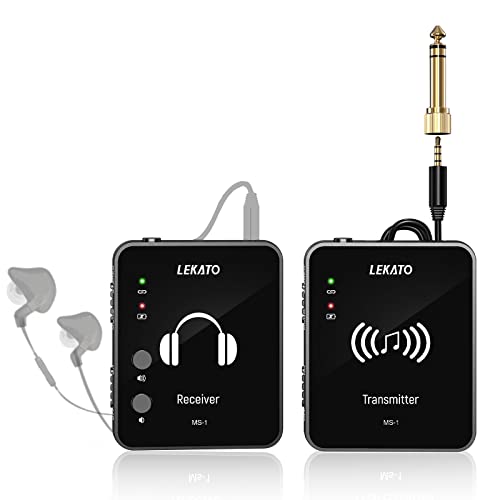
- Auto-pairing simplifies setup.
- One transmitter can feed multiple receivers.
- Stereo 2.4GHz design with 100 ft range.
Best For: Singers and small bands wanting simple wireless monitoring
Rack-Ready Multi-Performer Choice
Phenyx Pro PTM-33 4-Bodypack System

- Comes with 4 bodypacks for shared monitoring.
- Rack-mountable transmitter with loop outputs.
- UHF mono design with IR sync and 4 x 25 frequencies.
Best For: Church bands and live groups needing a rack-ready mono monitor system
Compact Low-Latency Pick
LEKATO MS-02 Ultra-Low Latency IEM

- Mono mode latency is listed under 4.5 ms.
- Supports one transmitter to up to 4 receivers.
- 6 to 8 hours of battery life with LED indicators.
Best For: Singers and trainees wanting a lightweight low-latency monitor
Long-Range Stage Monitor

- Includes 4 bodypack receivers and earphones.
- 2 x 40 UHF frequencies with PLL stability.
- Up to 330 ft open-space range.
Best For: Bands and churches needing long-range mono monitoring for multiple performers
Starter Wireless IEM for Small Gigs
LEKATO MS-20 2.4G IEM for Live Monitoring
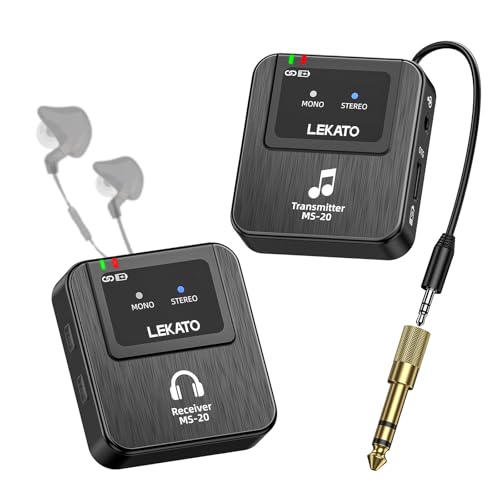
- 2.4GHz wireless with auto-pairing
- OTG support for phones and tablets
- Up to 10 receivers with 8+ hour battery
Best For: Singers and small bands wanting an easy starter wireless monitor
Durable UHF Stage Monitor
Phenyx Pro PTM-22 Wireless IEM System

- UHF mono system with 100 selectable frequencies
- Metal transmitter with LCD and rugged build
- Includes two receivers, earphones, and carry case
Best For: Bands and worship teams needing durable, interference-aware monitoring
Long-Run Portable Monitor

- Up to 30 hours with charging case
- 2.4GHz wireless with OTG support
- Supports one transmitter to many receivers
Best For: Mobile singers and bands needing longer battery life
Compact UHF Stereo Monitor
Phenyx Pro Compact UHF Stereo Wireless IEM
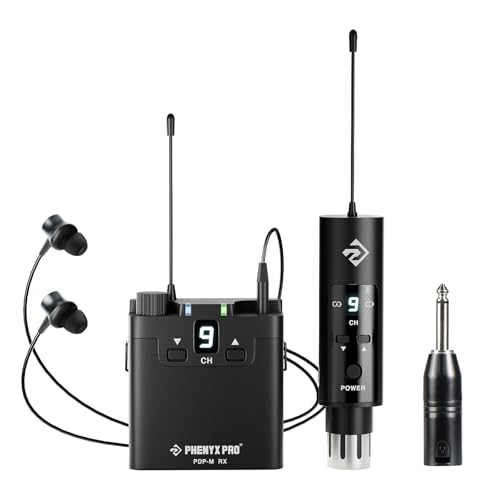
- Mono or stereo monitoring support
- 24-bit/48kHz digital audio path
- Up to 160-200 ft range
Best For: Singers and small bands needing a portable monitor with flexible routing
2.4G Clip-On Practice IEM
Wireless In Ear Monitor System for Musicians

- Stereo and mono monitoring modes
- Lightweight clip-on design
- Up to 30m open-range transmission
Best For: Vocalists and rehearsal players needing simple wireless monitoring
5.8G Low-Latency Stage IEM
AOKEO AK-680 Wireless In Ear Monitor
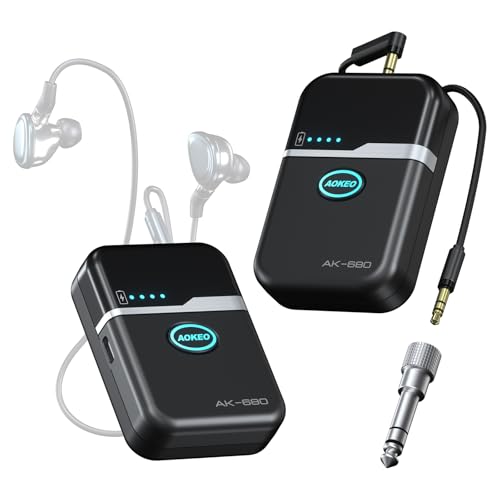
- 5.8G transmission for cleaner wireless use
- Up to 12 hours of battery life
- Receiver volume buttons and auto pairing
Best For: Singers wanting a low-interference monitor for stage or studio
Budget-Friendly Stereo Starter – LEKATO MS-1 for Small Gigs
If you want practical in ear monitoring systems for singers without a complicated setup, the LEKATO MS-1 is built for simple pairing and everyday stage use. It supports stereo transmission, can pair one transmitter to multiple receivers, and is aimed at small to medium performances, rehearsals, churches, and studio monitoring.
Best For: Singers, bands, and worship teams that want an easy-to-use wireless IEM for small to medium gigs.
Pros:
- Auto-pairing keeps setup straightforward.
- Supports up to 6 sets working simultaneously with one transmitter.
- True stereo transmission with a 2.4GHz wireless design.
- Compact receiver system with over 5 hours of battery life.
Cons:
- Battery life is more modest than some upgraded models.
- Best suited to open-area use with a 100 ft range.
- Requires a stereo source and stereo cable to use stereo mode properly.
The MS-1 makes sense if you care more about ease, stereo support, and flexible one-to-many monitoring than advanced rack features. It is a solid entry point for singers who need reliable wireless monitoring for rehearsals and smaller live setups.
Rack-Ready Multi-Performer Choice – Phenyx Pro PTM-33 4-Bodypack System
For singers and bands looking at in ear monitoring systems for singers in a more traditional live-sound workflow, the Phenyx Pro PTM-33 is a mono UHF setup with four bodypacks and a rack-mount-friendly transmitter. It offers 4 x 25 frequencies, IR sync, and a system designed around clear personal mixes and interference-resistant monitoring on stage.
Best For: Worship teams, live bands, and stage performers who need a rack-ready mono monitor system with multiple receivers.
Pros:
- Includes 4 bodypacks for multi-performer monitoring.
- 4 x 25 UHF frequencies help reduce interference.
- Rack-mountable transmitter with loop outputs and 4 groups of L/R inputs.
- IR sync makes linking receivers faster and easier.
Cons:
- Mono-only monitoring, not stereo.
- Uses AA batteries for the bodypacks.
- Best results depend on clear line-of-sight and avoiding thick barriers.
This system is a strong fit when you want a more installed-style monitor rig that can support several performers at once. If your priority is stable mono monitoring and a cleaner stage workflow, the PTM-33 is built for that job.
Compact Low-Latency Pick – LEKATO MS-02 Ultra-Low Latency IEM
The LEKATO MS-02 is aimed at singers who want compact in ear monitoring systems for singers with faster response and simple control. It uses upgraded 2.4G transmission, supports mono or stereo input, and adds a one-key mute plus LED battery and volume indicators for more convenient day-to-day use.
Best For: Singers, trainees, and small rehearsal setups that want a lightweight wireless IEM with very low latency.
Pros:
- Upgraded latency is listed at under 4.5 ms in mono mode.
- Can send one transmitter to up to 4 receivers.
- 6 to 8 hours of battery life with LED status indicators.
- Compact clip-on design with mono/stereo switching.
Cons:
- Earbuds are not included.
- Range is listed at 100 ft in open areas.
- Best suited to smaller systems rather than larger stage deployments.
If you want a small, portable monitoring option that is easy to carry and quick to set up, the MS-02 has a strong feature set for the price class. Its low-latency design and handy controls make it especially appealing for singers who want a simple personal monitor solution.
Long-Range Stage Monitor – IME-4000 4-Bodypack UHF IEM
If your priority is coverage and a fuller stage monitoring setup, this UHF system is a practical option among in ear monitoring systems for singers. The IME-4000 includes four bodypacks, 2 x 40 frequencies, and a 330 ft open-space range, making it suited to bands, stages, studios, and worship environments.
Best For: Performers and teams that need a long-range mono UHF monitor system with four receivers.
Pros:
- Includes 4 bodypack receivers and in-ear earphones.
- UHF PLL design with 2 x 40 selectable frequencies.
- Up to 330 ft range in open spaces.
- Metal transmitter, LCD display, and low-battery/RF indicators.
Cons:
- Mono monitoring only.
- Best performance depends on avoiding thick walls, glass, and metal blocks.
- No Bluetooth feature despite the long wireless range specs.
The IME-4000 is built for users who want a more robust wireless monitor setup with longer reach and four receivers in the box. It is a sensible pick when stage mobility and stable UHF monitoring matter more than stereo operation.
Starter Wireless IEM for Small Gigs – LEKATO MS-20 2.4G IEM for Live Monitoring
If you need in ear monitoring systems for singers that are simple to set up and practical for rehearsals or small live shows, the LEKATO MS-20 is a strong starter pick. It uses 2.4GHz wireless transmission, supports OTG input from phones or tablets, and offers auto-pairing to keep setup quick.
Best For: Singers, guitarists, drummers, and small bands wanting an easy wireless IEM system for practice and live performance.
Pros:
- 24-bit/48kHz HD audio with a 20Hz–20KHz frequency range for clear monitoring
- Supports OTG audio input from smartphones and tablets for backing tracks
- One transmitter can send to multiple receivers, up to 10 pairs
- Compact clip-on design and 8+ hour battery life for portable use
Cons:
- Earphones are not included
- Battery life is solid, but shorter than the charging-case version
- Best suited to starter use and smaller-stage setups
Overall, this model focuses on convenience and dependable basic monitoring rather than advanced features. For performers who want an affordable, flexible entry into wireless stage monitoring, it covers the essentials well.
Durable UHF Stage Monitor – Phenyx Pro PTM-22 Wireless IEM System
For singers and performers who want in ear monitoring systems for singers with a more rugged stage-ready build, the Phenyx Pro PTM-22 is built around UHF mono monitoring and a metal transmitter. It offers 100 selectable frequencies and a dependable wireless range designed for rehearsal spaces, live shows, and worship use.
Best For: Bands, church teams, and stage performers who want a durable UHF wireless monitoring system with flexible frequency control.
Pros:
- UHF mono system with 2×50 selectable frequencies to help reduce interference
- Metal transmitter with LCD display for easier channel management
- Designed for live performance, studio practice, and church worship use
- Includes two bodypack receivers, two earphones, rackmount kit, and carry case
Cons:
- Mono-only monitoring, so it is not aimed at stereo-focused users
- Uses AA batteries for the receivers
- Larger wired-in setup than compact clip-on alternatives
This is a practical choice if durability and frequency flexibility matter more than ultra-portability. It fits performers who need a more traditional stage monitoring system for regular use.
Long-Run Portable Monitor – LEKATO MS-20 Charging 30H IEM
If battery life is your priority when comparing in ear monitoring systems for singers, this LEKATO MS-20 charging version stands out with its included storage case and up to 30 hours of use. It keeps the same 2.4GHz wireless, OTG support, auto-pairing, and one-to-many monitoring approach, but adds much longer runtime for rehearsals and gigs.
Best For: Singers, bands, and mobile performers who want extended battery life and easy portable charging.
Pros:
- Up to 30 hours of battery life with the included charging case
- 2.4GHz wireless with low noise, low latency, and 24-bit/48kHz audio
- OTG input support for direct use with compatible phones and USB-C devices
- One transmitter can support up to 10 receivers for group monitoring
Cons:
- Earphones are not included
- Works best with compatible iPad, iPhone, or USB-C OTG sources
- Still positioned as a compact plastic-bodied system rather than a heavy-duty rack unit
This version is the most travel-friendly LEKATO option in the group because the case extends usability between charges. It is a good fit for performers who want a lightweight monitor system that can keep up with longer rehearsal and performance days.
Compact UHF Stereo Monitor – Phenyx Pro Compact UHF Stereo Wireless IEM
If you want in ear monitoring systems for singers that are easy to carry and simple to deploy, this compact Phenyx Pro option is built for rehearsals, worship sets, small stages, and live performance. It supports mono or stereo monitoring, uses a 24-bit/48kHz digital signal path, and adds UHF frequency-hopping transmission for a steadier stage feed.
Best For: Singers and small bands that need a portable wireless monitor with flexible mono/stereo use.
Pros:
- Supports mono monitoring or stereo monitoring with the included adapter setup
- 24-bit/48kHz digital audio for a cleaner, more consistent monitor feed
- UHF 900MHz frequency hopping and up to 160-200 ft range
- Includes adapters, earphones, charging cable, and storage pouch
Cons:
- Battery runtime is listed at up to 4 hours, which may be short for longer sets
- Best fit is for small stages and practical stage use rather than larger touring rigs
Overall, this is a flexible starter-to-midrange monitor system for singers who want a compact package with both mono focus and stereo space when the source supports it. The included accessories and portable design make it convenient for quick setup and transport.
2.4G Clip-On Practice IEM – Wireless In Ear Monitor System for Musicians
For singers looking at in ear monitoring systems for singers on rehearsal days, livestreams, church sets, or small performances, this 2.4GHz system focuses on simple wireless monitoring and a lightweight clip-on design. It offers stereo and mono modes, low-latency transmission, and compatibility with mixers, interfaces, active speakers, tablets, and computers.
Best For: Vocalists and rehearsal players who want an easy wireless monitor for practice and everyday stage use.
Pros:
- Low-latency 2.4GHz wireless transmission with stereo and mono modes
- Up to 30 meters of range in open environments
- Lightweight clip-on body with built-in rechargeable battery
- Works with mixers, audio interfaces, active speakers, tablets, and computers
Cons:
- Best performance is achieved with direct line-of-sight positioning
- Battery life is listed at up to 5 hours, so longer sessions may require charging
- No noise control is listed in the supplied specs
This model is a practical pick if you need a straightforward monitor system that can move between rehearsal spaces and performance setups. Its clip-on format and broad device compatibility make it especially useful for singers who want a flexible, everyday monitoring tool.
5.8G Low-Latency Stage IEM – AOKEO AK-680 Wireless In Ear Monitor
If you want in ear monitoring systems for singers that aim for cleaner wireless performance, the AOKEO AK-680 uses 5.8G transmission to help avoid congestion in busy WiFi environments. It is designed for live stage use, studio recording, and home practice, with automatic pairing, a bodypack receiver, and a simple plug-and-play setup.
Best For: Singers and musicians who want a low-interference wireless monitor for stage, studio, or home use.
Pros:
- 5.8G transmission is positioned as cleaner and less prone to interference than congested 2.4GHz bands
- Up to 12 hours of battery life for longer rehearsals and gigs
- Includes volume buttons on the receiver for quick mix adjustment
- Comes with USB-C cables plus 3.5mm and 6.35mm connectivity options
Cons:
- Uses a bodypack receiver, so it is less minimal than clip-on-only designs
- No specific operating range is listed in the supplied notes
For performers who value long runtime and a cleaner wireless band, this system is built around convenience and stage-ready monitoring. The automatic pairing and included adapters make it easy to connect to common audio gear without a complicated setup.
How We Picked These in Ear Monitoring Systems for Singers
We focused on systems that make sense for live vocals: stable wireless connection, low-latency performance, usable battery life, and enough flexibility for solo performers, duos, and full bands. We also looked for models that are easier to set up on stage and practical for rehearsals, club gigs, church teams, and touring use.
Quick Comparison
In this group, 2.4GHz systems tend to be the easiest for quick setup and casual to mid-level use, while UHF systems usually offer more routing flexibility and better fit for busier wireless environments. Mono systems are common and perfectly usable for vocal monitoring, while stereo systems can feel more natural if you want a wider mix. Multi-bodypack packages are best when several singers need independent monitoring from the same transmitter.
Key Buying Factors for in Ear Monitoring Systems for Singers
Latency and Sync
Low latency matters because even small delays can make singing feel disconnected. Look for systems marketed as low latency or ultra low latency if you need tighter timing on stage.
Wireless Band and Range
2.4GHz systems are often convenient and compact, but crowded venues can be a challenge. UHF options can be a better choice when you need more control over frequencies and more dependable performance in demanding environments.
Mono Vs. Stereo
Mono is simpler and often enough for vocal monitoring. Stereo can help with separation, ambience, and a more natural mix, especially if you rely on hearing backing tracks, keys, or click.
Number of Receivers
If only one singer needs monitoring, a single receiver is fine. If you are shopping for a band or worship team, multi-receiver kits can save money and simplify setup.
Battery Life and Charging
Long rehearsal days and back-to-back services make battery life important. Charging cases, longer runtime, and easy recharging can reduce stress between sets.
Build and Stage Practicality
Bodypack durability, clip security, and rack-friendly transmitters all matter when gear gets moved often. If you gig regularly, sturdier hardware can be worth the extra cost.
Who Should Buy Which In Ear Monitoring Systems for Singers?
Solo singers and duos often do well with compact 2.4GHz systems that are quick to set up and portable. Touring musicians, church teams, and bands with multiple vocalists should lean toward UHF or multi-bodypack packages for more routing options and shared monitoring flexibility. If you want the easiest entry point, choose a simple stereo kit with auto-pairing. If reliability and expansion matter more, choose a more robust UHF system with multiple frequencies.
In short, the best choice depends on how many people need monitoring, how crowded your wireless environment is, and whether you value simplicity, flexibility, or pro-stage durability most.