Choosing the right podcast recorder can make recording faster, cleaner, and far less stressful. Whether you’re hosting solo episodes, remote interviews, or a full multi-guest show, the right device should match your workflow.
In this roundup, we focus on the best options for sound quality, input count, portability, and ease of use so you can find a recorder that fits your setup and budget.
Best 10 Podcast Recorders Picks for 2026
Portable Multi-Guest Podcasting
Zoom PodTrak P4 for 4-Mic Shows

- 4 XLR mic inputs with phantom power
- 4 headphone outputs with individual volume control
- Automatic Mix-Minus for phone and USB calls
Best For: Small podcast teams and interview shows
Compact Broadcast Studio
RØDECaster Duo for Pro Podcasting
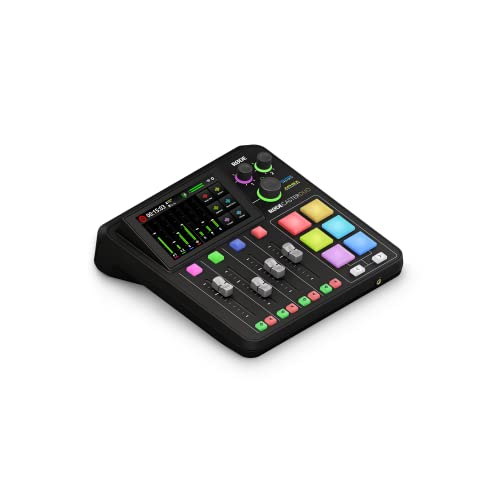
- Two Neutrik combo inputs with Revolution Preamps
- Four faders, touchscreen, and six SMART pads
- APHEX processing with Aural Exciter and Big Bottom
Best For: Solo creators and small studio-style podcast setups
Large-Cast Production Hub
Zoom PodTrak P8 with 6 XLR Inputs

- Six XLR inputs with up to 13-track recording
- 4.3-inch touchscreen with onboard editing tools
- Nine sound pads across four banks
Best For: Bigger podcast panels and co-hosted shows
Field-Friendly Portable Capture
Zoom H4 Essential for Podcasts

- Built-in stereo mics plus two XLR/TRS inputs
- Records to device and SD card for backup
- USB-C support for recording or streaming
Best For: On-the-go podcasters and interviewers
Multi-Host Pick
Zoom PodTrak P4next 4-input podcast recorder

- Four XLR inputs for up to four people plus a call-in guest.
- AI noise reduction, Tone Enhancement, and COMP help balance audio.
- Four headphone outputs let each speaker monitor independently.
Best For: In-person group podcasts and creators who want multitrack control
Portable Interview Option
Zoom H1 XLR compact 2-channel podcast recorder

- 32-bit/96kHz recording for clear, detailed capture.
- Two XLR/TRS combo inputs work with mics and other sources.
- OLED waveform display makes level checks quick and easy.
Best For: Portable interviews and smaller podcast setups
USB Mic Starter
Zoom PodTrak P2 easy 2-mic podcast recorder

- Two USB mic inputs for a fast, simple setup.
- Mix-Minus helps reduce echo when using remote guests.
- Records to SD card while streaming to a phone or computer.
Best For: Two-person USB mic podcasts and remote interviews
Portable All-Rounder
Zoom H2 Essential Handheld Recorder

- Three built-in mics with nine recording patterns
- 32-bit float recording helps avoid clipping
- USB mic mode with simultaneous SD backup
Best For: Solo podcasters and field recordists who need a compact, flexible recorder
Studio Control Hub
Zoom PodTrak P8 Battery Powered Bundle

- Six mic inputs and two call-ins at once
- Records up to 13 tracks with onboard editing
- Independent headphone outputs and sound pads
Best For: Multi-host podcasts and panel shows that need an all-in-one recorder
Compact Multitrack Starter
Zoom PodTrak P4 Bundle with ZDM-1 Pack

- Four XLR inputs with +48V phantom power
- Four headphone outputs and four sound pads
- Simultaneous TRRS and USB call-ins
Best For: Small podcast teams and newcomers who want a compact multitrack recorder
Portable Multi-Guest Podcasting – Zoom PodTrak P4 for 4-Mic Shows
For podcast recorders that keep a small show moving smoothly, the Zoom PodTrak P4 is built around simple multi-mic recording, easy remote call handling, and practical headphone monitoring. It gives you four XLR mic inputs, four headphone outputs, and support for phone or USB interviews, making it a flexible fit for compact interview setups.
Best For: Small podcast teams, interview shows, and creators who want an affordable all-in-one recorder with remote guest support.
Pros:
- Four XLR mic inputs with phantom power for multi-host recording
- Four headphone outputs with individual volume control
- Automatic Mix-Minus for phone and USB remote interviews
- Programmable Sound Pads for clips, stingers, or intro music
Cons:
- Battery life is limited to up to 3.5 hours on two AA batteries
- Smaller screen than larger studio-style recorders
The PodTrak P4 is a strong pick if you want straightforward podcast capture without a large desktop footprint. Its focus on guest calls, separate headphone monitoring, and easy sound pad control makes it especially useful for lean production workflows.
Compact Broadcast Studio – RØDECaster Duo for Pro Podcasting
If you want podcast recorders that feel closer to a full production studio, the RØDECaster Duo packs a lot into a compact control surface. It combines two high-quality combo inputs, broadcast-style faders, SMART pads, and APHEX processing, so it suits creators who want more control over their sound in one device.
Best For: Solo creators and small podcast setups that want premium preamps, hands-on mixing, and studio-style processing.
Pros:
- Two Neutrik combo jacks with low-noise Revolution Preamps
- Four broadcast-quality faders plus a high-resolution touchscreen
- Six SMART pads with bank switching for clips and actions
- APHEX effects including Aural Exciter and Big Bottom
Cons:
- Only two mic/instrument inputs, so it is not for larger panels
- Corded power means no battery-powered portability
The RØDECaster Duo is best when sound shaping and workflow matter as much as recording itself. Its premium preamps and onboard processing make it a polished option for podcasters who want a streamlined studio hub.
Large-Cast Production Hub – Zoom PodTrak P8 with 6 XLR Inputs
Among podcast recorders for larger shows, the Zoom PodTrak P8 stands out for its six XLR inputs, onboard editing tools, and generous sound-pad support. It is designed for multi-person productions that want a single device for recording, mixing, and basic editing without relying on a separate interface setup.
Best For: Bigger podcast panels, co-hosted shows, and creators who want built-in editing and lots of input capacity.
Pros:
- Six XLR mic inputs and up to 13-track simultaneous recording
- 4.3-inch touchscreen with EQ, compression, de-essing, and limiter controls
- Built-in Mix-Minus for phone calls and remote guests
- Nine sound pads across four banks for up to 36 clips
Cons:
- Uses four AA batteries, with up to two hours of battery operation
- Larger and heavier than smaller portable recorders
The P8 is a good fit when you need room for several voices and quick access to production tools. Its mix of input count, touchscreen control, and sound pads makes it one of the more complete tabletop options in this group.
Field-Friendly Portable Capture – Zoom H4 Essential for Podcasts
For creators who need podcast recorders that also handle field work, the Zoom H4 Essential is a compact handheld option with built-in stereo mics, two XLR/TRS inputs, and USB-C recording support. It is aimed at interviews, video audio, and live capture where portability matters as much as clean sound.
Best For: On-the-go podcasters, interviewers, and creators who want a handheld recorder that doubles as a field audio tool.
Pros:
- Built-in stereo microphones plus two XLR/TRS inputs
- Records to both your device and an SD card for backup
- USB-C connectivity for recording or streaming
- Spoken menu guidance for easier navigation
Cons:
- Only four tracks, so it is less suited to large multi-person shows
- Battery operation is limited to two AA batteries
The H4 Essential is a practical choice when you want one recorder for podcasts, interviews, and other mobile audio jobs. Its built-in mics, external input support, and backup recording make it especially handy for creators who move between locations.
Multi-Host Pick – Zoom PodTrak P4next 4-input podcast recorder
If you want podcast recorders that make group sessions easier to manage, the Zoom PodTrak P4next is built for four-person shows with room for a call-in guest. Its four XLR inputs, separate headphone controls, and AI tools like noise reduction, Tone Enhancement, and COMP help keep recordings clear without a lot of manual tweaking.
Best For: In-person panel podcasts, co-hosted shows, and creators who want multitrack flexibility with simple monitoring.
Pros:
- Four XLR inputs support up to four people plus a remote guest.
- AI noise reduction, Tone Enhancement, and COMP simplify cleanup.
- Four headphone outputs with separate volume controls make monitoring easy.
- Can record directly to a phone for video capture without syncing later.
Cons:
- Designed around XLR mics, so it is less convenient for USB-only setups.
- Best suited to multi-person recording rather than a solo portable workflow.
This is one of the more capable podcast recorders here if you need multiple mic inputs and want built-in tools that reduce editing work. The P4next focuses on practical show production, especially when you want everyone heard clearly during the session.
Portable Interview Option – Zoom H1 XLR compact 2-channel podcast recorder
For podcast recorders that travel well but still offer pro-level input options, the Zoom H1 XLR keeps the setup straightforward. It records in 32-bit/96kHz, gives you two XLR/TRS combo inputs, and adds an OLED waveform display so you can check levels quickly during interviews or field sessions.
Best For: Interviewers, field podcasters, and creators who want a compact recorder with flexible inputs.
Pros:
- 32-bit/96kHz recording supports detailed, high-quality capture.
- Two XLR/TRS combo inputs work with microphones and other sources.
- OLED waveform display helps you monitor levels at a glance.
- 3.5mm input and headphone output add useful connection flexibility.
Cons:
- Only two inputs, so it is not ideal for larger panel shows.
- Runs on AA batteries, which means you will need to manage power on longer sessions.
The H1 XLR is a practical choice if you want a compact recorder that still handles serious audio tasks. It fits well in a portable podcasting kit when you need simple operation, flexible inputs, and a small footprint.
USB Mic Starter – Zoom PodTrak P2 easy 2-mic podcast recorder
If you want podcast recorders that keep the setup as simple as possible, the Zoom PodTrak P2 is made for two-person shows with USB mics. It adds built-in Mix-Minus for remote guests, AI noise reduction, and onboard tone-shaping tools so you can record and stream without a complicated workflow.
Best For: Two-person podcasts, remote interviews, and creators using USB microphones.
Pros:
- Two USB mic inputs make it easy to start recording quickly.
- Built-in Mix-Minus helps prevent echo and feedback with remote guests.
- AI noise reduction, compressor, and de-esser reduce post-production work.
- Can record to SD card while streaming to a smartphone or computer.
Cons:
- Limited to two mic inputs, so it is not built for larger shows.
- Designed around USB mics, which may not suit every podcast setup.
The P2 is a clean fit if your podcasting workflow centers on USB microphones and quick setup. It combines recording, streaming, and basic processing tools in one small unit, making it easy to run sessions from almost anywhere.
Portable All-Rounder – Zoom H2 Essential Handheld Recorder
If you’re comparing podcast recorders and want one that can handle interviews, voice work, and backup capture without constant level tweaking, the Zoom H2 Essential is a smart compact option. Its three built-in mics and nine recording patterns give you flexibility for different rooms and setups, while 32-bit float recording helps prevent clipping at high volumes.
Best For: Solo podcasters, journalists, and creators who want a simple handheld recorder with flexible pickup patterns and clip-free recording.
Pros:
- Three built-in microphones with nine selectable recording patterns
- 32-bit float recording at up to 96kHz for clip-free capture
- Works as a USB microphone and records to SD card at the same time
- Bluetooth control and timecode sync for multi-unit recording
Cons:
- Handheld design is less suited to multi-host desk-style podcast setups
- Uses AA batteries rather than a built-in rechargeable battery
For podcasting on the move, the H2 Essential stands out as a flexible recorder that emphasizes reliability and convenience. It is especially appealing if you want a backup-friendly device that can double as a USB mic when needed.
Studio Control Hub – Zoom PodTrak P8 Battery Powered Bundle
For larger podcast setups, the Zoom PodTrak P8 is a feature-heavy choice among podcast recorders. It can handle up to six mics and two call-ins at once, records up to 13 tracks to SD card, and adds a touchscreen plus onboard editing tools so you can capture and shape episodes without needing a computer.
Best For: Podcasters running multi-host shows, panel discussions, or remote interviews who want an all-in-one recorder.
Pros:
- Six high-gain mic inputs plus two call-ins supported simultaneously
- Records up to 13 tracks directly to SD card
- Built-in editing tools for trimming, splitting, combining, and fading clips
- Independent headphone outputs and customizable sound pads
Cons:
- Larger and heavier than compact portable recorders
- Feature set may be more than a simple solo podcaster needs
The P8 is built for podcasters who want hands-on control and lots of input flexibility in one device. If your priority is managing multiple speakers, call-ins, and quick edits from the recorder itself, it is one of the most capable options in this group.
Compact Multitrack Starter – Zoom PodTrak P4 Bundle with ZDM-1 Pack
Zoom PodTrak P4 Portable Multitrack Podcast Recorder Bundle with 2X Zoom ZDM-1 Podcast Pack
Check Price On AmazonIf you want a smaller podcast recorder that still supports real multitrack capture, the Zoom PodTrak P4 is built for simple, practical sessions. It offers four high-gain XLR inputs, four sound pads, and separate headphone outputs, plus simultaneous TRRS and USB call-ins for remote guests or phone interviews.
Best For: Beginner-to-intermediate podcasters who need an affordable compact recorder with room for multiple voices.
Pros:
- Four high-gain XLR mic inputs with +48V phantom power
- Four sound pads for effects, music, or samples
- Four independent headphone outputs for monitoring
- Supports simultaneous TRRS and USB call-ins
Cons:
- Less expansive than the P8 for very large shows
- Bundle accessories add value, but the recorder itself is still relatively basic compared with higher-end models
The P4 is a strong fit if you want podcast recording features without moving up to a bulkier mixer-style unit. It covers the essentials well and keeps the setup straightforward for small group interviews and remote guest sessions.
How We Picked the Best Podcast Recorders
We focused on the features that matter most for real-world podcasting: XLR and USB input options, headphone monitoring, multitrack capability, portability, built-in mix controls, and support for remote guests. We also considered whether a recorder is better suited to a studio desk, a travel setup, or a creator who wants one device that can do both.
Quick Comparison of Podcast Recorders
If you need a simple two-person setup, a compact model with dual inputs is usually enough. For panel shows, look for more XLR channels and independent headphone outputs. If you record on the go, handheld units are easier to carry and often work well for interviews, field recording, and backup audio.
Key Buying Factors for Podcast Recorders
Input Count and Guest Support
Count how many microphones you need now, then add one more channel if you expect to grow. Solo creators can often use a smaller recorder, while co-hosted or interview-based shows benefit from four or more mic inputs.
Connectivity and Remote Recording
USB mic support, phone inputs, and computer connections are useful if you bring in remote guests or record hybrid episodes. These features can simplify your workflow and reduce the need for extra gear.
Monitoring and Control
Headphone outputs, level meters, and easy-access gain controls help you catch problems before they ruin a take. Sound pads and onboard mixing tools can also speed up production if you want to add intros, stingers, or live cues.
Portability and Power
Handheld and battery-powered Podcast Recorders are better for location work, travel, and flexible recording spaces. Desktop-style units usually offer more control and more inputs, but they are less convenient to move around.
Who Should Buy Which Podcast Recorders?
Solo podcasters and mobile creators should prioritize compact, easy-to-use recorders with strong mic support and simple operation. Interviewers and small teams should look for four-input options with good monitoring. Larger shows, live sessions, and creators who want the most routing flexibility should choose higher-channel models with expanded mixing features.
In short, the best podcast recorder is the one that matches your recording style, guest count, and preferred workflow. Start with your current setup, then choose the model that leaves room to grow.