Choosing the right recorder can make sessions faster, cleaner, and far less stressful. For musicians who also podcast, the best option is usually the one that balances mic inputs, portability, battery life, and easy monitoring.
This roundup focuses on Zoom podcast recorders for musicians, from compact handheld units to larger multichannel setups. If you need dependable recording for interviews, rehearsals, remote guests, or field capture, the models below cover the main use cases without overcomplicating the decision.
Best 10 Podcast Recorders for Musicians Picks for 2026
Portable Multi-Mic Podcaster

- 4 XLR mic inputs with phantom power
- 4 headphone outputs with individual volume control
- Multi-track recording plus Mix-Minus for calls
Best For: Small podcast teams and remote interview setups
Versatile Handheld Recorder

- Built-in stereo mics plus two XLR/TRS inputs
- 32-bit float 4-track recording helps avoid clipped takes
- USB-C plus SD card backup recording
Best For: Creators needing a portable all-round recorder
Smart 4-Input Podcast Mixer

- Four XLR inputs with multitrack recording
- AI noise reduction, Tone Enhancement, and COMP
- Four headphone outputs with separate volume controls
Best For: Creators wanting easy cleanup tools and four-mic recording
High-Channel Portable Recorder

- 6-track 32-bit float recording for clip-free audio
- Built-in X/Y mics plus four XLR/TRS inputs
- USB audio interface support for multiple devices
Best For: Musicians and podcasters needing maximum input flexibility
Two-Person USB Podcasting
Zoom PodTrak P2 Podcast Recorder

- Two USB mic inputs with two headphone outputs
- Mix-Minus supports remote guests without echo
- AI noise reduction and tone tools help clean vocals
Best For: Two-person podcasts and portable interview recording
Portable Field Capture
Zoom H2 Essential Handheld Recorder

- Three built-in mics with nine selectable patterns
- 32-bit float recording helps avoid clipping
- USB mic mode plus SD recording for backup
Best For: Portable interviews, rehearsal capture, and field recording
Musician Multitrack Workflow

- Records up to four tracks with bounce-to-track workflow
- Two XLR/TRS combo inputs for mics and instruments
- 32-bit float recording and built-in rhythm patterns
Best For: Musicians building demos, layers, and portable multi-track sessions
Portable Multitrack Pick
Zoom H5 4-Track Handheld Recorder for Filmmakers & Musicians
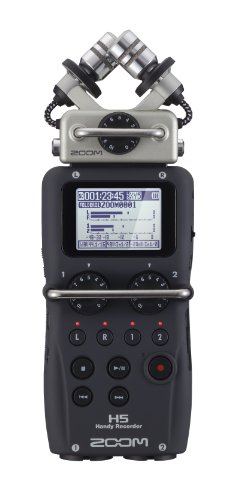
- Four-track simultaneous recording
- Interchangeable input capsules
- Two XLR/TRS combo inputs with phantom power
Best For: Musicians who want portable multitrack recording with flexible mic options
All-in-One Session Hub
Zoom LiveTrak L-8 Battery Powered Mixer/Recorder for Musicians & Podcasters

- Records 12 tracks at 24-bit/96kHz
- Four headphone outputs with three custom mixes
- Records to SD card and computer simultaneously
Best For: Bands and creators who need a compact mixer-recorder with flexible monitoring
Simple XLR Recorder
Zoom H1 XLR 2-Channel Recorder for Filmmakers, Musicians & Podcasters

- 32-bit/96kHz recording
- Two XLR/TRS combo inputs
- OLED waveform display for level monitoring
Best For: Musicians and podcasters who want simple two-channel recording
Portable Multi-Mic Podcaster – Zoom PodTrak P4
If you need one of the most flexible podcast recorders for musicians who also run interviews or roundtable sessions, the Zoom PodTrak P4 is built for exactly that kind of workflow. It gives you four XLR mic inputs, four headphone outputs, and multi-track recording, so small group sessions stay organized without extra gear.
Best For: Small podcast teams, music creators, and remote interview setups that need multiple mics and independent headphone monitoring.
Pros:
- 4 XLR mic inputs with phantom power support
- 4 headphone outputs with individual volume control
- Multi-track recording for inputs and sound pads
- Automatic Mix-Minus for phone and USB call-ins
Cons:
- Runs on 2 AA batteries for up to 3.5 hours, so battery life is limited
- More focused on podcasting than full multichannel music production
Overall, the P4 is a strong pick if you want a compact recorder that can handle in-person voices, remote guests, and basic sound effects without making the setup complicated.
Versatile Handheld Recorder – Zoom H4 Essential
The Zoom H4 Essential fits well among podcast recorders for musicians who want a portable unit that can also cover interviews, live sessions, and video audio. With built-in stereo mics, two XLR/TRS inputs, and 32-bit float recording, it is designed to capture detailed audio without worrying as much about distorted takes.
Best For: Creators who want a handheld recorder for podcasts, music, and location audio with simple USB-C and SD card workflows.
Pros:
- Built-in stereo microphones plus two XLR/TRS inputs
- 32-bit float, 4-track recording for more forgiving capture
- USB-C recording or streaming to phone, tablet, or computer
- Records a backup directly to SD card
Cons:
- Only two XLR/TRS inputs, so it is less suited to larger group recordings
- Uses 2 AA batteries, which may matter on longer sessions
It is a practical choice if you want one recorder for music, spoken word, and field recording, especially when portability and backup recording matter.
Smart 4-Input Podcast Mixer – Zoom PodTrak P4next
Among podcast recorders for musicians, the Zoom PodTrak P4next stands out for users who want straightforward control with some built-in processing help. It offers four XLR inputs, four headphone outputs, and multitrack recording, while AI noise reduction, Tone Enhancement, and COMP can simplify getting a polished result.
Best For: Podcasters and music creators who want four-mic recording with built-in cleanup tools and easy guest monitoring.
Pros:
- Four XLR inputs with multitrack recording support
- AI noise reduction, Tone Enhancement, and COMP included
- Four headphone outputs with separate volume controls
- Up to +70dB of gain for demanding mics
Cons:
- No built-in wireless or advanced music-specific instruments features listed
- Battery type is not clearly specified in the supplied notes
If you want a recorder that helps manage multiple voices and gives you processing assistance without a complex setup, the P4next is an appealing modern option.
High-Channel Portable Recorder – Zoom H6 Essential
The Zoom H6 Essential is a strong fit for podcast recorders for musicians who need more input capacity and more flexibility on location. It combines built-in X/Y mics with four XLR/TRS inputs, 32-bit float recording across six tracks, and USB audio interface support for computer or mobile workflows.
Best For: Musicians and podcasters who need a portable recorder with more inputs, backup recording, and interface functionality.
Pros:
- 6-track 32-bit float recording for clip-free capture
- Built-in X/Y mics plus four XLR/TRS inputs
- Works as a USB audio interface with PC, Mac, iOS, or Android
- Long battery life rated up to 18 hours with AAA batteries
Cons:
- Uses 4 AAA batteries, so power planning matters
- More recorder than simple two-person podcast setup needs
For creators who want a portable recorder that can scale from interviews to music sessions, the H6 Essential offers the broadest input flexibility in this group.
Two-Person USB Podcasting – Zoom PodTrak P2 Podcast Recorder
If you want podcast recorders for musicians that keep a simple interview setup moving fast, the Zoom PodTrak P2 is built for exactly that kind of grab-and-go recording. It handles two USB mics, lets you add a remote guest through a phone or computer with Mix-Minus, and includes AI noise reduction plus tone shaping to help your voices stay clear without extra editing.
Best For: Two-person podcasts, remote interviews, and portable vocal-focused recording setups.
Pros:
- Two USB mic inputs and two headphone outputs make a quick two-person setup easy.
- Built-in Mix-Minus helps bring in a remote guest without echo or feedback.
- AI noise reduction, compressor, and de-esser reduce post-production work.
- Can record individual tracks to SD card while streaming at the same time.
Cons:
- Designed around two USB mics, so it is not the most flexible choice for larger sessions.
- Runs up to 4 hours on batteries, which may be limiting for longer mobile recordings.
For musicians who need a straightforward way to record conversations, demos, or remote interviews, the P2 focuses on speed and vocal cleanup rather than complicated routing. It is a practical option if you value portability and easy setup over expandable inputs.
Portable Field Capture – Zoom H2 Essential Handheld Recorder
Among podcast recorders for musicians, the Zoom H2 Essential stands out if you need a compact handheld unit that can handle interviews, rehearsal capture, and location audio. Its three built-in microphones, nine selectable patterns, and 32-bit float recording make it a flexible choice when you want reliable sound without constantly adjusting gain.
Best For: Musicians, podcasters, and creators who need a portable recorder for interviews, ambient sound, or rehearsal documentation.
Pros:
- Three built-in mics with nine recording patterns add a lot of versatility.
- 32-bit float recording helps prevent clipping without gain adjustments.
- Works as a USB mic and records to SD card at the same time.
- Up to 20 hours of battery life supports long sessions.
Cons:
- Built-in microphones are convenient, but they are less flexible than external XLR inputs.
- Best for capture and backup recording rather than multi-source studio routing.
If you want one portable recorder that can move from podcasting to music-related field recording, the H2 Essential offers a lot of range in a small package. Its no-gain approach and backup recording make it especially useful when you need dependable results quickly.
Musician Multitrack Workflow – Zoom R4 Multi-Track Recorder
If you need podcast recorders for musicians that can also handle sketches, demos, and layered ideas, the Zoom R4 is built around multitrack workflow. It records up to four tracks, lets you bounce to a dedicated track to free up channels, and includes two XLR/TRS combo inputs so you can connect microphones, instruments, and keyboards with one compact unit.
Best For: Musicians who want a portable multitrack recorder for demos, layered ideas, and hybrid podcast or audio capture.
Pros:
- Up to four tracks with bounce support makes layering ideas more efficient.
- Two XLR/TRS combo inputs handle mics, instruments, and keyboards.
- 32-bit float recording helps keep audio clip-free without gain tweaking.
- Built-in rhythm patterns can support practice and songwriting sessions.
Cons:
- Only two combo inputs, so it is not intended for larger multi-person recording setups.
- The workflow is oriented toward recording and bouncing, not a full-featured studio mixer.
The R4 makes the most sense if your recording needs lean musical as much as conversational. It is a compact choice for creators who want to capture parts, build arrangements, and still keep a portable recorder in the bag.
Portable Multitrack Pick – Zoom H5 4-Track Handheld Recorder for Filmmakers & Musicians
If you’re comparing podcast recorders for musicians, the Zoom H5 stands out as a compact handheld option that can handle rehearsals, interviews, and small live sessions. Its interchangeable capsule system, four-track simultaneous recording, and two XLR/TRS combo inputs make it a flexible choice when you need portable recording with a little extra room to grow.
Best For: Musicians who want a battery-powered handheld recorder with interchangeable mics and flexible input options for quick multitrack capture.
Pros:
- Interchangeable input capsules, including the detachable X/Y capsule, add setup flexibility.
- Four-track simultaneous recording and two XLR/TRS combo inputs support more complex sessions.
- Selectable phantom power and a -20dB pad help with a wider range of sources.
- Runs on 2 AA batteries and records directly to SD/SDHC cards for portable use.
Cons:
- Records to SD/SDHC cards up to 32GB, which is less than larger-card options.
- Built around a handheld design, so it is less suited to full mixer-style workflows.
For musicians who need a lightweight recorder that can move from practice space to performance space, the H5 offers a practical mix of portability and multitrack capability. It is especially appealing if you want interchangeable mics plus direct recording without carrying a bigger rig.
All-in-One Session Hub – Zoom LiveTrak L-8 Battery Powered Mixer/Recorder for Musicians & Podcasters
When you’re shopping for podcast recorders for musicians, the Zoom LiveTrak L-8 is built for setups that need both mixing and recording in one unit. It captures up to 12 tracks at 24-bit/96kHz, includes six preamps, and offers four headphone outputs with three custom mixes, which makes it a strong fit for collaborative sessions and live-style recording.
Best For: Bands, creators, and podcasters who need a portable mixer/recorder with multiple inputs and personalized monitor mixes.
Pros:
- Captures 12 tracks simultaneously at 24-bit/96kHz directly to SD card.
- Six preamps with up to +54dB of gain and a -121dBu noise floor.
- Four headphone outputs and three independent monitor mixes support group recording.
- Records to SD card and computer at the same time via USB.
Cons:
- More complex than a simple handheld recorder, so it may be more than some solo users need.
- Larger footprint than pocket-size recorders, even though it is still portable.
The L-8 is a practical choice if your recording sessions involve multiple people, monitoring needs, or live mixing. It gives musicians and podcasters a flexible center point for recording without forcing you to choose between SD capture and computer recording.
Simple XLR Recorder – Zoom H1 XLR 2-Channel Recorder for Filmmakers, Musicians & Podcasters
Among podcast recorders for musicians, the Zoom H1 XLR is the simplest option here if you want straightforward two-channel recording with pro-style connections. It records in 32-bit/96kHz, includes two XLR/TRS combo inputs, and adds an OLED waveform display so you can keep an eye on levels while tracking guitars, vocals, or interviews.
Best For: Musicians and podcasters who want an easy-to-use recorder with XLR/TRS inputs and clear level monitoring.
Pros:
- 32-bit/96kHz recording aims for clear, detailed capture.
- Two XLR/TRS combo inputs handle microphones, instruments, and more.
- OLED waveform display makes level checking simple at a glance.
- Supports SDXC cards up to 1TB for extended sessions.
Cons:
- Only two channels, so it is less suited to larger group recordings.
- Battery-powered with 2 AA batteries, which may not appeal to users wanting built-in rechargeability.
If your priority is quick setup and clean two-input recording, the H1 XLR keeps things focused. It is a strong fit for musicians who want a compact recorder with useful monitoring and plenty of storage headroom.
How We Picked These Podcast Recorders for Musicians
We prioritized recording quality, input flexibility, portability, monitoring options, and workflow features that matter in real-world music and podcast production. That means a stronger focus on XLR/TRS connectivity, separate headphone outputs, multitrack capability, and simple operation under pressure. Battery power and compact size also mattered for creators who record away from a studio.
Quick Comparison of the Main Types
Among these Podcast Recorders for Musicians, the lineup splits into a few clear categories. PodTrak models are best for podcasting and interviews, especially when you need multiple mics and easy guest routing. Handheld H-series recorders suit musicians who want a portable all-rounder for demos, rehearsals, video audio, and on-location capture. The LiveTrak and R-series units lean more toward mixing and multitrack music recording, with more hands-on control.
Key Buying Factors for Podcast Recorders for Musicians
Inputs and Mic Flexibility
Check how many XLR or combo inputs you need today, then add one or two channels for growth. Solo creators can often get by with a 1- or 2-channel recorder, while interviews, band talkbacks, and roundtables usually benefit from four inputs or more.
Recording Format and Headroom
For musical sources, 32-bit float recording can be a major advantage because it helps prevent clipping when levels change unexpectedly. If you are recording loud performances, dynamic speech, or unpredictable rehearsals, this feature can save takes.
Monitoring and Workflow
Multiple headphone outs, onboard mix controls, and simple gain access are especially useful when recording with guests. If you plan to podcast on the go, built-in processing, USB interfacing, and phone connectivity can also speed up setup.
Portability and Power
Some creators need a pocketable recorder for field work; others need a tabletop unit for sessions and interviews. Battery operation, size, and mounting options should match where you actually record most often.
Who Should Buy Which Podcast Recorders for Musicians?
If you want a podcast-first setup with room for guests, a PodTrak model is the most direct fit. If you need a compact recorder for music, video, and audio capture, the H-series handhelds are usually the safest bet. If your priority is multitrack music recording or more mixer-style control, look closely at the R4 and LiveTrak L-8. For creators who record solo or with one guest over USB microphones, the smaller P2 can be a simple, efficient choice.
In short, the best choice depends on whether your workflow leans more toward interviews, music capture, or hybrid creator use. Match the recorder to your input count, portability needs, and editing workflow, and you will end up with a tool that stays useful long after the first setup.