The best drum machines for producers make it easier to build grooves, audition ideas, and add hands-on rhythm control to a studio or live setup.
These 10 picks cover analog and digital instruments, standalone production centers, samplers, compact sequencers, and MIDI controllers, so you can choose a workflow that matches your music and budget.
Best 10 Drum Machines for Producers Picks for 2026
Classic Powerhouse

- Circuit-modeled 808, 606, 909, 707, 727, and CR-78 sounds
- Imports custom mono or stereo samples
- Per-kit effects and performance-ready storage
Best For: Classic TR sounds with modern sample-based flexibility
Standalone Studio Hub

- Computer-free sampling, sequencing, and arrangement
- 16 stereo audio tracks and 32 plugin instruments
- USB-C audio and MIDI integration
Best For: Complete standalone beatmaking and song production
Analog Groove Specialist

- Separate accent control for every drum
- Song mode chains patterns
- Color sound-shaping on most instruments
Best For: Hands-on analog groove creation and performance
Portable Sampling Companion

- Battery-powered standalone sampler with speaker and microphone
- 16 pads with chopping and resampling workflows
- Four FX processors and 60 effect types
Best For: Portable sampling, beatmaking, and DAWless production
Classic Standalone Choice

- 500 onboard sounds with digital effects
- Full MIDI support for DAWs and instruments
- Pattern triggering, Drum Roll, and tap tempo
Best For: Producers wanting a versatile standalone drum machine
Compact Pad Production

- 16 MPC pads with three assignable banks
- 18 assignable knobs for software control
- Includes MPC Beats and Ableton Live Lite
Best For: DAW-based beat makers seeking portable pad control
Portable Sampling Performer
teenage engineering EP-133 K.O. II
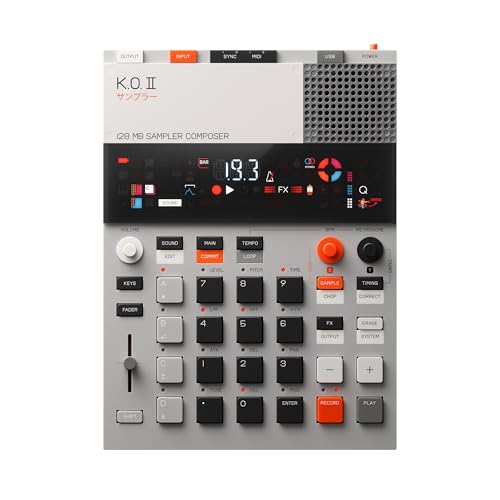
- Built-in mic, line-in sampling, and 128MB memory
- Four groups of 99 patterns with song mode
- Six master and 12 punch-in effects
Best For: Mobile producers and performers who sample and sequence on the go
Best Expandable Pad
LEKATO PD705 Percussion Sample Pad

- Nine velocity-sensitive dual-zone pads
- 592+ sounds and 30 preset kits
- MIDI, USB, triggers, and sample import
Best For: Hands-on producers building expandable MIDI drum setups
Best Pocket Sequencer
Teenage Engineering PO-12 Rhythm

- Synthesized and sampled drum sounds
- 16 punch-in effects and pattern chains
- Battery-powered pocket-sized design
Best For: Portable beat sketches and creative rhythm sequencing
Best Simple Beat Maker
Stylophone BEAT Compact Drum Machine

- Four drum kits and four bass sounds
- Layer recording and multiple patterns
- Click track, tempo lock, and headphones
Best For: Beginners making compact layered rhythm sketches
Classic Powerhouse – Roland TR-8S Rhythm Performer
For producers who want iconic sounds with modern flexibility, the Roland TR-8S is a strong choice among drum machines for producers. It combines circuit-modeled TR-808, 606, 909, 707, 727, and CR-78 sounds with sample import, kit creation, and detailed effects control.
Best For: Producers who want classic Roland drum sounds, customizable kits, and performance-ready hardware.
Pros:
- Includes detailed circuit-modeled sounds from several classic TR drum machines.
- Mixes TR sounds with imported mono or stereo samples.
- Offers per-instrument effects, tuning, decay, and sample manipulation.
- Saves instrument and master effects settings with each kit.
Cons:
- Its extensive sound-design and kit options may take time to master.
- Sample importing requires an SD card.
The TR-8S is especially compelling for producers who value recognizable vintage drum-machine character but do not want to give up sampling or detailed effects processing.
Standalone Studio Hub – Akai MPC One G2
The Akai MPC One G2 is a compact standalone production center for drum machines for producers who also need sampling, sequencing, and full song arrangement. Its MPC3 workflow, touchscreen, 16 pads, and expanded processing support computer-free beatmaking and hybrid studio setups.
Best For: Producers who want an all-in-one standalone workstation for beats, samples, external gear, and complete arrangements.
Pros:
- Runs sampling, sequencing, arranging, and performance workflows without a computer.
- Supports up to 16 stereo audio tracks and 32 plugin instruments per project.
- Provides velocity- and pressure-sensitive RGB MPC pads plus a 7-inch touchscreen.
- USB-C supports multichannel audio, expanded MIDI, and studio integration.
Cons:
- Its broad feature set may feel more complex than a dedicated drum machine.
- The unit is designed around a production-center workflow rather than simple drum-only operation.
Choose the MPC One G2 when drums are part of a larger production process and you want one compact device to move from sample chopping to finished arrangements.
Analog Groove Specialist – Arturia DrumBrute Impact
The Arturia DrumBrute Impact focuses on hands-on analog drum-machine performance. For producers comparing drum machines for producers, its separate accent controls, pattern chaining, and Color sound-shaping provide a direct way to build and vary rhythmic patterns.
Best For: Producers who prefer tactile analog drum programming and live pattern performance.
Pros:
- Provides a separate accent control for each drum.
- Song mode supports chaining patterns into longer performances.
- Color sound-shaping adds variation across most instruments.
- Metal construction offers a durable physical build.
Cons:
- The Color control does not apply to the cowbell.
- Its supplied feature set is more focused than a full sampling workstation.
The DrumBrute Impact is a focused option for producers who want immediate, physical control over analog-style grooves rather than an expansive sample-and-arrange environment.
Portable Sampling Companion – Akai MPC Sample
The Akai MPC Sample brings the familiar MPC workflow to a portable, battery-powered sampler. It suits producers looking for drum machines for producers that can record, chop, sequence, and process sounds away from a computer, with a built-in speaker, microphone, and rechargeable battery.
Best For: Mobile beatmakers, sample-based producers, beginners, and DAWless creators who want an accessible MPC workflow.
Pros:
- Works standalone with a rechargeable battery, speaker, microphone, and microSD storage.
- Includes 16 responsive pads and fast sample-chopping tools.
- Offers four internal effects processors with 60 effect types.
- Supports USB-C audio/MIDI, smart-device sampling, and MIDI connectivity.
Cons:
- The 2.4-inch display is smaller than the touchscreen on larger MPC models.
- The MIDI DIN adapter is not included.
- Its compact workflow may be less suited to large, complex arrangements.
The MPC Sample is a practical entry point for portable sampling and finger drumming, especially when immediacy and mobility matter more than a large workstation interface.
Classic Standalone Choice – Alesis SR-18
For producers who want a dedicated beat-making workstation, the Alesis SR-18 is a practical option among drum machines for producers. It combines 500 onboard sounds, built-in effects, pattern triggering, and full MIDI connectivity in a compact unit that can run from an adapter or batteries.
Best For: Songwriters, live performers, remix engineers, and producers who want a standalone drum machine with a broad preset library.
Pros:
- Includes 500 professional sounds with built-in digital effects.
- Supports MIDI connections to keyboards, computers, DAWs, and electronic drum kits.
- Pattern Play, Drum Roll, and tap-tempo features support hands-on beat creation.
- Can be powered by the included wall adapter or six AA batteries.
Cons:
- AA batteries are not included.
- Its plastic construction may feel less premium than a metal-bodied unit.
The SR-18 is a focused, self-contained choice for producers who value immediate access to classic drum-machine workflows and dependable MIDI integration over computer-free flexibility.
Compact Pad Production – Akai Professional MPD218
The Akai Professional MPD218 is a USB MIDI pad controller rather than a self-contained sound module, making it a useful choice among drum machines for producers who work with a computer or compatible iOS setup. Its velocity-sensitive MPC pads, assignable knobs, and included software focus on expressive DAW-based beat production.
Best For: Producers, programmers, musicians, and DJs who want portable pad control for drums, samples, effects, and virtual instruments.
Pros:
- Provides 16 velocity-sensitive MPC pads across three banks for 48 assignable pads.
- Includes 18 assignable 360-degree knobs across three banks.
- Offers note repeat and full-level controls for expressive performances.
- Includes MPC Beats, Ableton Live Lite, and Drum Synth 500 software.
Cons:
- Requires a connected computer, iOS device, or other compatible setup to generate sounds.
- The Camera Connection Kit for iOS connectivity is sold separately.
The MPD218 makes sense for producers who already create in a DAW and want tactile MPC-style triggering in a compact, USB-powered format rather than an independent hardware drum machine.
Portable Sampling Performer – teenage engineering EP-133 K.O. II
The teenage engineering EP-133 K.O. II combines sampling, sequencing, effects, and drum-machine functions in a portable unit. For producers comparing drum machines for producers, its built-in microphone, 128MB memory, pattern-based workflow, and battery operation make it especially suited to capturing ideas and performing beats away from a traditional studio.
Best For: Mobile beat makers and performers who want hands-on sampling, pattern arrangement, and live effects in one compact device.
Pros:
- Samples through the built-in microphone or line input and includes 128MB of memory.
- Provides four groups with 99 patterns, song mode, and a four-track sequencer.
- Includes six master effects and 12 punch-in effects controlled by a multifunctional fader.
- Supports MIDI and sync connections and runs on four AAA batteries or USB-C.
Cons:
- Four AAA batteries are not included in the supplied notes.
- Its 1.18-inch thickness and compact controls may require adjustment for users accustomed to larger workstations.
The K.O. II stands out when sampling and live manipulation matter as much as drum programming. Its portable design and expanded OS 2.0 features support a fast idea-to-track workflow without requiring a full studio setup.
Best Expandable Pad – LEKATO PD705 Percussion Sample Pad
For producers who want drum machines for producers with a hands-on playing experience, the LEKATO PD705 combines nine velocity-sensitive, dual-zone pads with an extensive percussion library. Its MIDI, USB, trigger, looper, and sample-import features make it a flexible choice for studio setups and live triggering.
Best For: Producers who want a playable drum pad with broad sounds, custom samples, and DAW/MIDI integration.
Pros:
- Nine dual-zone, velocity-sensitive pads and more than 592 preset sounds.
- Includes 5-pin MIDI, USB-B, audio, trigger inputs, and a footswitch connection.
- Supports custom kits, sample imports, backing-track triggering, and up to 20 saved kits.
Cons:
- Its 3.17 kg weight and larger footprint make it less pocketable than compact drum machines.
- Some setup and software features may require consulting the supplied FAQ and WaveManager resources.
The PD705 is more of a multipad workstation than a traditional tabletop drum machine, but that is its advantage for producers who prefer physical performance. It offers substantial expansion potential while remaining compatible with computer-based production workflows.
Best Pocket Sequencer – Teenage Engineering PO-12 Rhythm
The teenage engineering PO-12 is a highly portable option for producers looking for drum machines for producers that can create beats anywhere. It combines synthesized and sampled drum sounds with sequencing, parameter-style sound manipulation, punch-in effects, and pattern chaining in a compact battery-powered format.
Best For: Mobile beatmakers and producers who prioritize portability, quick pattern creation, and creative effects.
Pros:
- Combines synthesized and sampled drum sounds in a pocket-sized device.
- Offers 16 punch-in effects and 16 pattern chains for developing arrangements.
- Runs on two AAA batteries and includes a 3.5 mm line output for headphones or speakers.
Cons:
- Its compact design provides less physical playing surface than a full-size pad.
- Audio connectivity is centered on the auxiliary output rather than a broad range of studio connections.
The PO-12 is best viewed as an idea generator and portable sequencer rather than a complete production centerpiece. Its small size, battery operation, effects, and pattern chaining make it especially useful for sketching rhythms and experimenting away from the studio.
Best Simple Beat Maker – Stylophone BEAT Compact Drum Machine
The Stylophone BEAT offers an approachable route into drum machines for producers, with a compact stylus-controlled design and a focused set of drum and bass sounds. It supports layered recording, multiple patterns, muting, tempo control, and headphone monitoring for quick rhythm creation.
Best For: Beginners and producers who want a straightforward, portable rhythm machine for layering beats and bass parts.
Pros:
- Includes four drum kits and four bass sounds in a compact unit.
- Supports multiple recorded layers, sound muting, and multiple patterns.
- Offers a click track, tempo lock, built-in speaker, and wired headphone connection.
Cons:
- Its four kits and four bass sounds provide a narrower palette than larger sample-based units.
- Requires three AA batteries, which are not included.
- Its plastic construction may feel less substantial than larger production hardware.
The BEAT is a focused, easy-to-use choice for making rhythmic sketches without a complicated workflow. Its stylus interface and pattern features suit casual experimentation, while the layered recording and tempo tools add useful control for basic production ideas.
How We Picked the Best Drum Machines for Producers
We selected products across several categories rather than treating every rhythm device as interchangeable. The lineup includes dedicated drum machines, standalone grooveboxes, samplers, pad controllers, and compact beat-making tools. We considered sequencing depth, sound creation, sampling options, connectivity, portability, performance controls, and how easily each product fits into a modern production setup.
Because producers have different priorities, there is no single best choice for everyone. A hardware-focused musician may value analog tone and immediate controls, while a sample-based producer may need memory, audio inputs, and flexible sequencing. We also looked for options at different price and complexity levels.
Quick Comparison
| Best For | Recommended Type | What to Prioritize |
|---|---|---|
| Live performance | Dedicated drum machine or groovebox | Pattern switching, hands-on controls, reliable outputs |
| Sample-based production | Sampler or standalone production center | Storage, sample editing, sequencing, and effects |
| Analog-style workflow | Analog drum machine | Immediate controls, sound shaping, and punchy voices |
| DAW integration | MIDI pad controller | USB connectivity, responsive pads, and mapping support |
| Portable beat making | Compact sampler or pocket sequencer | Battery operation, size, and fast pattern creation |
Key Buying Factors for Drum Machines for Producers
Sound Engine and Editing
Decide whether you want synthesized drum voices, built-in samples, user samples, or a combination. Analog machines can provide a distinctive tactile sound-shaping experience, while sample-based devices offer broader sonic variety. Check how much control you have over pitch, decay, tuning, filtering, and effects.
Sequencing and Performance
Look for step sequencing, real-time recording, pattern chaining, parameter locks, swing, fills, and song-mode features if you build complete arrangements in hardware. Velocity-sensitive pads and responsive controls matter when you want expressive finger drumming or live improvisation.
Connectivity and Integration
Review the available MIDI, USB, audio, and synchronization connections. A standalone unit may need stereo or individual outputs for mixing, while a controller depends on a computer or external sound source. MIDI compatibility is especially important when combining several instruments.
Portability and Workflow
Compact devices are useful for travel and quick sketches, but smaller interfaces can limit editing depth. Consider power requirements, screen size, onboard storage, sample transfer, and whether the controls remain comfortable during longer sessions.
Who Should Buy Which Drum Machines for Producers?
- Choose a full-featured groovebox if you want sampling, sequencing, effects, and arrangement tools in one standalone device.
- Choose a dedicated drum machine if fast pattern creation, reliable timing, and hands-on rhythm performance are your main goals.
- Choose an analog-focused model if you prefer immediate sound shaping and a focused set of distinctive drum voices.
- Choose a sampler if your productions rely on custom one-shots, loops, vocals, or field recordings.
- Choose a MIDI pad controller if your DAW already supplies the sounds and you mainly need better finger-drumming control.
- Choose a compact portable device if portability, spontaneous idea capture, and low setup time matter more than deep arrangement features.
Before buying, make sure the instrument supports your preferred studio connections and production method. The right choice is the one that removes friction from your rhythm workflow and makes you want to create more often.