When you’re setting up your studio, choosing the right patch bay can make all the difference in audio routing. The options available range from compact designs to robust models, each offering unique features to suit your needs. Understanding the strengths of the top-rated patch bays can help you optimize your setup. Let’s explore some of the best choices out there and what sets them apart.
Samson S-Patch Plus Audio Patch Bay

If you’re looking for a reliable solution to streamline your audio routing, the Samson S-Patch Plus Audio Patch Bay is an excellent choice. With 48 balanced, 1/4 inch phone connections on both the front and rear, it centralizes your audio connections for maximum efficiency. Its solid construction guarantees dependable operation, maintaining a clean signal path. You won’t have to fumble behind your mixer anymore; the S-Patch simplifies your workflow. Plus, its high-quality miniature toggle switches let you easily configure channels in Normalled, Half-normalled, or Thru modes, providing flexibility for any setup. This patch bay is a game-changer for audio professionals.
Best For: Audio professionals seeking a reliable and efficient solution for centralizing their audio routing.
Pros:
- Fully balanced connections ensure a clean signal path.
- High-quality toggle switches allow for flexible channel configurations.
- Eliminates the hassle of reaching behind equipment for audio connections.
Cons:
- May require some technical knowledge for optimal configuration.
- Limited to 1/4 inch phone connections, which may not suit all setups.
- Size and weight could be a consideration for mobile setups.
Art Pro Audio TPatch – Eight Point Balanced Patch Bay
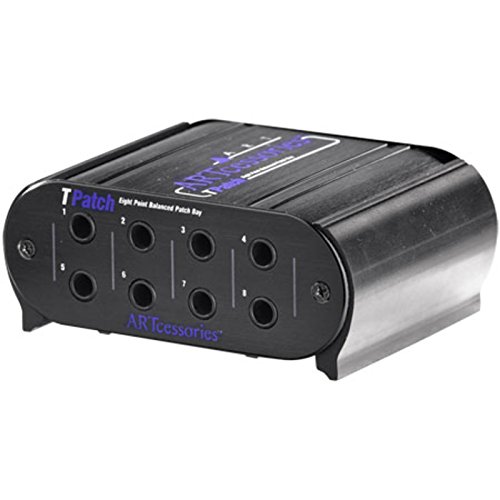
The Art Pro Audio TPatch – Eight Point Balanced Patch Bay is an ideal choice for audio engineers and musicians who need a compact and efficient solution for managing their studio cables. This 8-point patch bay offers balanced direct signals with switchable normal and half-normal modes, giving you flexibility in routing. It features durable 1/4-inch TRS connectors housed in a rugged aluminum case, ensuring longevity. Weighing just 15.5 ounces and measuring 3.9 x 4.61 x 1.85 inches, it fits perfectly on your desktop. With positive customer feedback and compatibility with Windows-based DAWs, it’s a reliable addition to your studio setup.
Best For: Audio engineers and musicians looking for a compact and efficient solution to manage studio cables.
Pros:
- Versatile design with switchable normal and half-normal modes for flexible routing.
- Durable construction with rugged aluminum casing and reliable 1/4-inch TRS connectors.
- Compact size makes it an ideal fit for limited desktop space.
Cons:
- Only compatible with Windows-based digital audio workstations, limiting use for Mac users.
- Lacks advanced features found in higher-end patch bays.
- Limited to eight points, which may not suffice for larger studio setups.
Art Pro Audio P48-48 Point Balanced Patch Bay

For professional and home recording enthusiasts seeking a reliable audio routing solution, the Art Pro Audio P48-48 Point Balanced Patch Bay stands out with its 48 TRS 1/4-inch female-to-female connectors. This 19-inch rackmount patch bay, housed in a sturdy steel chassis, is perfect for organizing your cables and minimizing wear on your audio equipment. Weighing just 0.2 kilograms, it’s lightweight yet durable. With configurable normal or half-normal operation and reversible rack ears, it offers excellent flexibility for various setups. Rated 4.4 out of 5 stars, it’s a top choice for optimizing audio performance in any studio environment.
Best For: Professional and home recording studios that require efficient cable management and audio routing solutions.
Pros:
- Flexible Configuration: Can be set up for normal or half-normal operation to suit different audio routing needs.
- Durable Construction: Fully shielded steel chassis ensures longevity and protection against wear and tear.
- Compact Design: Lightweight and rackmountable, making it easy to integrate into any studio setup.
Cons:
- Limited Connector Type: Only offers TRS 1/4-inch female-to-female connectors, which may not accommodate all equipment.
- Weight Capacity: Weighs only 0.2 kilograms, which might raise concerns for those needing a more robust solution.
- No Built-in Power Supply: Requires external power, which could complicate setup for some users.
ART P16 XLR Balanced Patchbay

Designed for audio professionals who demand reliability and versatility, the ART P16 XLR Balanced Patchbay stands out with its robust construction and flexible connectivity options. This 19-inch, 1U-high rack mount features a rugged, fully shielded black all-steel enclosure, ensuring durability in any setting. You’ll appreciate the 32 XLR connectors, with 16 female on the front and 16 male on the rear, making connections straightforward. Plus, the reversible rack ears allow for easy installation. With reliable PCB wiring and a three-year warranty, the ART P16 delivers peace of mind and excellent performance for your audio routing needs.
Best For: Audio professionals seeking a reliable and versatile patchbay for their studio setup.
Pros:
- Rugged, fully shielded all-steel enclosure ensures durability and protection against interference.
- Flexible connectivity with 32 XLR connectors (16 female on the front and 16 male on the rear) simplifies audio routing.
- Reversible rack ears offer easy installation in various rack configurations.
Cons:
- Limited to XLR connections, which may not accommodate all types of audio equipment.
- 1U height may limit space for additional equipment in compact setups.
- Some users may find the fixed number of connections restrictive for larger systems.
XLRM3 to XLRF3 Panel Mount Assembly Cable

When you need reliable audio routing in a compact setup, the XLRM3 to XLRF3 Panel Mount Assembly Cable stands out with its 1U 19″ rack design. This shielded cable features eight panel mount connectors, making it perfect for connecting audio mixers, microphones, and speakers. Weighing just 2 pounds, it’s durable and designed for frequent use. Each female XLR connector is paired with a male XLR cable end, ensuring a solid connection. With numbered connectors, you’ll easily manage your setup. Whether you’re in a studio or live environment, this cable provides the quality and convenience you need for seamless audio routing.
Best For: Professional audio engineers and musicians looking for a reliable solution for audio routing in studio or live settings.
Pros:
- Durable Design: Built to withstand frequent use, making it ideal for both studio and live environments.
- Numbered Connectors: Easy management of cable connections to streamline setup and troubleshooting.
- Shielded Cable: Provides excellent signal integrity and reduces interference for high-quality audio performance.
Cons:
- Limited Length: At 19 inches, it may not be suitable for larger setups that require longer cable runs.
- Single Connector Type: Only compatible with XLR connections, limiting versatility with other connector types.
- Weight: Slightly heavier than some other pigtail cables, which may be a consideration for portable setups.
Black Lion Audio PBR XLR Patchbay

The Black Lion Audio PBR XLR Patchbay stands out as an excellent choice for recording and live audio studios that demand high-quality audio signal routing. With 32 audiophile-grade gold-plated XLR connectors, it guarantees peak sound fidelity. The four male XLR connectors on the front panel make patching a breeze. Designed for indoor use, its durable aluminum faceplate and stainless steel connectors promise longevity. Weighing just one pound, it’s easy to handle. Rated 4.3 out of 5 stars by customers, this patchbay is a reliable option for musicians looking to streamline their setups. Remember, it’s not compatible with phone models.
Best For: Musicians and audio engineers seeking a high-quality patchbay for recording and live audio setups.
Pros:
- Audiophile-grade gold-plated connectors ensure excellent sound fidelity.
- Lightweight and compact design makes it easy to handle and integrate into any setup.
- Front panel accessibility with four male XLR connectors simplifies the patching process.
Cons:
- Limited compatibility as it does not work with phone models.
- Indoor use only, which may restrict portability for outdoor events.
- Product warranty information is not readily available, which may raise concerns for some buyers.
Black Lion Audio PBR-TRS BT Patchbay

For audio engineers and creative professionals craving high-quality connectivity, the Black Lion Audio PBR-TRS BT Patchbay stands out with its innovative Bluetooth connectivity. You’ll appreciate the 94 audiophile-grade gold-plated 1/4 TRS connectors that guarantee lossless audio through its modded Bluetooth module. The durable black-anodized aluminum faceplate not only looks sleek but also withstands daily use. Plus, the mode-switching buttons allow you to easily toggle between Normal and Half-normal operation, enhancing your workflow. This patchbay is designed for those who demand reliable performance and superior sound quality in their audio routing solutions.
Best For: Audio engineers and creative professionals seeking high-quality connectivity solutions with innovative Bluetooth capabilities.
Pros:
- Audiophile-grade gold-plated connectors ensure lossless audio transmission.
- Durable construction with a sleek black-anodized aluminum faceplate designed for daily use.
- Mode-switching buttons provide flexibility between Normal and Half-normal operation for enhanced workflow.
Cons:
- Bluetooth connectivity may introduce latency in certain scenarios, which could be a concern for some users.
- Higher price point compared to standard patchbays, which may not be suitable for all budgets.
- Limited compatibility with certain older audio equipment that may not support TRS connections.
Black Lion Audio PBR TRS Patchbay

Engineered with audiophile-grade gold-plated 1/4 TRS connectors, the Black Lion Audio PBR TRS Patchbay stands out as an ideal choice for serious audio professionals seeking reliable and high-quality audio routing. Weighing in at 4.34 pounds and measuring 21 x 8 x 4 inches, its sturdy black-anodized aluminum faceplate adds durability. The patchbay features 96 connectors and mode-switching buttons for Normal and Half-normal operation, enhancing versatility. Plus, front panel labels help you stay organized. With a solid 4.4-star rating and compatibility with all devices, this patchbay guarantees seamless connections for any audio setup you have in mind.
Best For: Audio professionals seeking a reliable and high-quality patchbay for versatile audio routing.
Pros:
- 96 audiophile-grade gold-plated connectors ensure excellent audio quality and durability.
- Mode-switching buttons for Normal and Half-normal operation provide enhanced flexibility in routing configurations.
- Front panel labels help maintain organization and streamline your audio setup.
Cons:
- Weight of 4.34 pounds may be slightly heavy for portable setups.
- Limited warranty information available, which could be a concern for some buyers.
- Best Sellers Rank indicates it’s not a top-selling item, potentially raising questions about popularity or widespread use.
Hosa PDR-369 Patch Bay, 12-Point, De-normalled, XLR3F to XLR3M

If you’re a professional audio engineer or a musician managing complex audio setups, the Hosa PDR-369 Patch Bay is an excellent choice. This 12-point, XLR3F to XLR3M de-normalled patch bay offers flexible routing, allowing you to manage both microphone and line-level signals effectively. Its de-normalled design lets you break the signal flow simply by inserting a patch cable. Constructed with a durable metal chassis, it guarantees reliable performance in your rack. With the 12-point configuration, you can efficiently route and organize your connections, making it an essential tool for any professional studio environment.
Best For: Professional audio engineers and musicians managing complex audio setups.
Pros:
- Flexible routing allows for effective management of microphone and line-level signals.
- De-normalled design enables easy signal flow interruption with patch cables.
- Durable metal chassis ensures reliable performance in demanding studio environments.
Cons:
- Limited to XLR3F to XLR3M connections, which may not suit all setups.
- May require additional patch cables for extensive routing needs.
- The de-normalled feature might be confusing for beginners unfamiliar with patch bays.
Hosa MHB-350 Patch Bay Module, 8-point, 1/4″ TRS to Same

The Hosa MHB-350 Patch Bay Module is a top choice for audio professionals seeking reliable and flexible routing of balanced signals. With eight 1/4″ TRS points, this module integrates seamlessly into your existing patch bays, ensuring clean audio signal patching. Its modular design allows for versatile connections to mixers, recorders, and outboard gear. Constructed from durable steel, it’s built for robust studio performance and is perfect for instruments, effects, and line-level signals. Weighing just 1 pound and measuring 10.05 x 7 x 2.05 inches, it’s compact yet effective. Plus, customers rate it 4.2 out of 5 stars for satisfaction!
Best For: Audio professionals and musicians looking for a reliable solution for routing balanced signals in studio environments.
Pros:
- Modular design allows for flexible routing and easy integration into existing patch bays.
- Durable steel construction ensures robust performance and longevity in studio settings.
- Versatile compatibility with mixers, recorders, and outboard gear makes it suitable for various audio applications.
Cons:
- Limited to only 8 points, which may not be sufficient for larger setups.
- Corded electric power source may restrict placement options compared to battery-operated alternatives.
- Discontinued status could potentially lead to challenges in sourcing replacement parts or support in the future.
Factors to Consider When Choosing Full Normal Patch Bays
When choosing a full normal patch bay, you’ll want to contemplate several key factors. Think about the connectivity options available, the size and port count that fit your setup, and the build quality for long-lasting use. Also, pay attention to operational modes and how well the bay maintains signal integrity during your audio routing.
Connectivity Options Available
Choosing the right connectivity options for your full normal patch bay can greatly impact your audio routing experience. Look for patch bays featuring multiple connectivity options like 1/4-inch TRS phone jack connectors and XLR connectors, as they provide versatility for different audio gear. Opt for models that support both normal and half-normal configurations to give you flexibility in managing your signals. Balanced connections are vital for maintaining a clean signal path and minimizing noise interference. Additionally, consider patch bays that offer front and rear access for easier connectivity, streamlining your workflow. Finally, choose a configuration that suits your studio setup—whether it’s a compact 8-point design or a larger 48-point model—to guarantee you have the right fit for your needs.
Size and Port Count
Selecting the right size and port count for your full normal patch bay directly influences your audio routing capabilities. Common configurations include 8, 12, 16, 48, and even 96 points, allowing you to choose based on your connectivity needs. A higher port count can support more complex routing, making it perfect for professional studios with multiple audio devices. Most patch bays fit standard 19-inch rackmounts, typically at a 1U height, balancing space efficiency with functionality. When choosing, consider the physical dimensions; width and depth matter, too. Finally, remember that more ports mean you’ll need thoughtful cable management to keep things tidy and maintain signal integrity. Choose wisely to guarantee everything fits seamlessly into your setup.
Build Quality and Durability
While you might be focused on features and port counts, the build quality and durability of a full normal patch bay are essential for ensuring reliable performance over time. Look for solid construction, often made from steel or aluminum, which guarantees longevity in both studio and live settings. Rugged enclosures help withstand wear and tear, especially in professional environments. A high-quality patch bay will feature gold-plated connectors to enhance conductivity and minimize signal degradation. Additionally, design matters; easy access to connections allows for quick adjustments without compromising your gear’s integrity. Don’t overlook weight, as heavier patch bays typically indicate more robust construction, contributing to stability during operation. Choose wisely for lasting performance.
Operational Modes Offered
When considering a full normal patch bay, you’ll want to pay close attention to the operational modes it offers. Most patch bays feature Normal, Half-normal, and Thru modes, each catering to different routing needs. In Normal mode, signals flow from the rear input to the front output automatically, simplifying connections without extra patch cables. Half-normal mode gives you independent control; inserting a cable into the front breaks the rear connection but still allows rear inputs to pass through. Thru mode provides a direct path, enabling quick access to signals without interference. Depending on the model, you might find toggle switches or other mechanisms to configure these modes, adding flexibility for your studio or live sound setup.
Signal Integrity Maintenance
To maintain ideal signal integrity in your audio setup, it’s vital to take into account several factors when choosing a full normal patch bay. First, look for high-quality connectors; they help preserve clarity and fidelity, minimizing signal degradation over time. A fully balanced design is also fundamental, as it rejects common-mode noise, enhancing overall signal integrity. Additionally, consider proper cable management features that prevent wear and tear on connectors, reducing the risk of signal loss and interference. Configurable modes, like normal or half-normal operation, allow you to optimize signal routing without compromising sound quality. By keeping these factors in mind, you’ll guarantee seamless audio routing in your professional setup.
Compatibility With Equipment
Choosing the right full normal patch bay hinges on compatibility with your existing audio equipment. Start by verifying the connector types, like TRS or XLR, align with your gear to maintain effective signal flow. You’ll also need to take into account the number of points on the patch bay—make sure it meets your studio’s input and output requirements to accommodate all necessary connections. Don’t overlook operational modes; your devices should support normal and half-normal configurations for ideal audio routing. Additionally, check the physical dimensions and mounting style to guarantee it fits your rack or studio space. Finally, evaluate the construction materials for durability, so your patch bay can handle the demands of your audio environment over time.
Installation and Setup Ease
Installation and setup ease is essential when selecting a full normal patch bay, as it directly impacts your workflow. First, consider your workspace’s layout and accessibility; the patch bay should be easily reachable for adjustments. Look for models that feature a clear labeling system for connections to streamline the installation process and maintain organized signal flow. A user-friendly design with front-facing connections will facilitate quicker access during setup and troubleshooting. Evaluate the weight and dimensions to guarantee it fits within your existing rack without needing modifications. Finally, check for reversible rack ears, as they offer flexibility in placement, particularly in tight spaces, making your audio routing experience more efficient and enjoyable.