Clean dialogue can make or break a film, and the right lavalier microphone helps capture natural speech without distracting viewers from the story. The best choice depends on your camera or phone, recording workflow, range requirements, and tolerance for visible cables.
We gathered 10 lavalier microphones for film across wired, wireless, smartphone, and XLR setups so you can match your audio kit to interviews, narrative scenes, documentaries, and fast-moving productions.
Best 10 Lavalier Microphones for Film Picks for 2026
Premium Discreet Pick
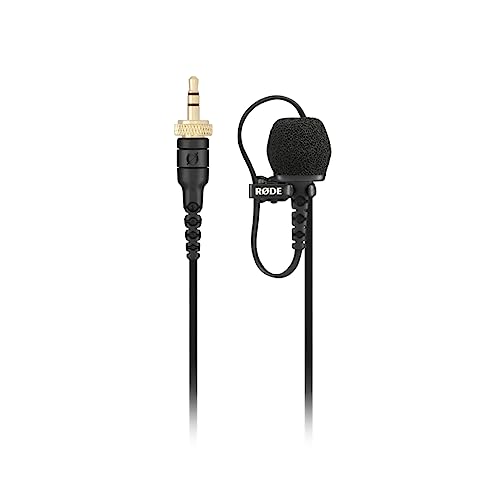
- Ultra-low-profile design for concealed placement
- Flat-response omnidirectional broadcast sound
- Includes wind protection and professional accessories
Best For: Filmmakers using compatible wireless or audio systems
Mobile Wireless Value

- Two transmitters for interviews and dual-speaker shoots
- Supports Lightning, USB-C, and USB-A connections
- Charging case offers up to 24 hours of stated use
Best For: Mobile creators recording interviews and vlogs
Reliable Wired Classic

- Standard 3.5mm TRS connector
- Discreet capsule with omnidirectional pickup
- Kevlar-reinforced cable and included pop shield
Best For: Camera and wireless-transmitter setups needing a durable wired lav
Long-Range Recording Kit

- Two transmitters with 4GB onboard recording each
- 48kHz/16-bit WAV capture and one-click noise cancellation
- Includes mobile and camera connection accessories
Best For: Interviews and outdoor shoots needing wireless and backup recording
Best Integrated-System Pick

- Rotating design enables flexible positioning
- Compact and easy to conceal
- Designed for DJI Mic and Mic 2
Best For: DJI users recording interviews, vlogs, and livestreams
Best XLR Wired Option
Movo LV4-O Phantom Power Lavalier
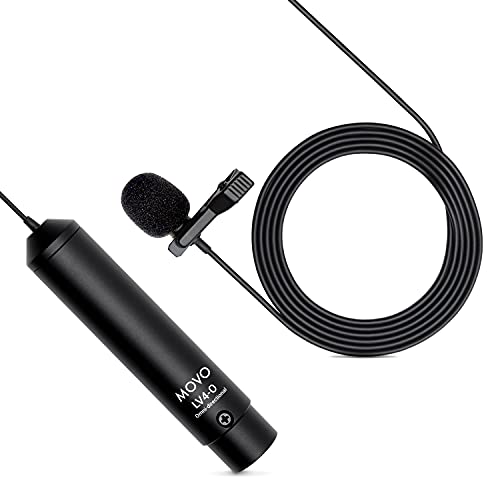
- Uses three-pin XLR and 48V phantom power
- Includes six-foot cable and metal clip
- Omnidirectional pickup for broad sound capture
Best For: Film crews using phantom-powered cameras, recorders, or mixers
Best Wired Value
NEEWER LM5 Mini Lavalier Microphone
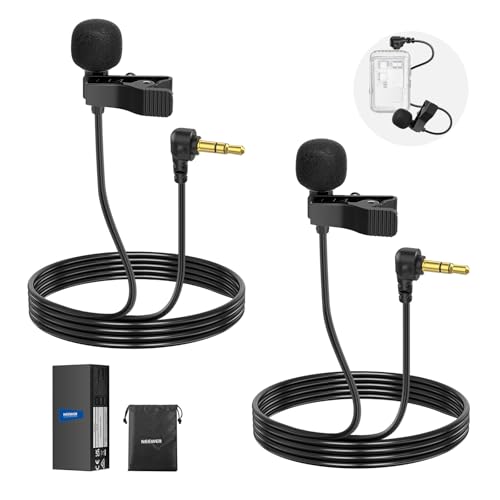
- Two-mic package for backup or dual-subject recording
- Compact omnidirectional design with lightweight clips
- Works with cameras and select wireless transmitters
Best For: Camera crews needing affordable wired lavaliers
Best Plug-and-Play Kit
Mini Mic Pro Wireless Lavalier

- USB-C and Lightning adapters included
- No app or Bluetooth pairing required
- Includes wind protection and a charging case
Best For: Mobile filmmakers and interview creators
Best Feature-Rich Wireless
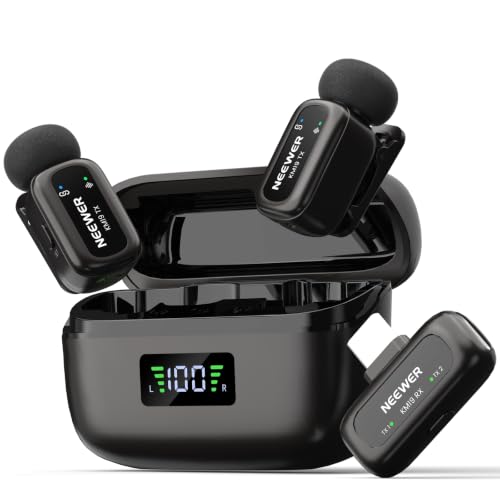
- Two transmitters with noise cancellation and mute control
- Stereo or mono output with 48kHz/24-bit pickup
- Up to 100m range and 30 hours with charging case
Best For: Two-person mobile interviews and wireless filming
Premium Discreet Pick – RØDE Lavalier II
For filmmakers who need polished dialogue capture without a conspicuous mic, the RØDE Lavalier II is a strong wired option. Its ultra-low-profile design, flat cable, omnidirectional pattern, and locking connector make it well suited to discreet placement and professional wireless systems.
Best For: Broadcast, filmmaking, and content creation setups using compatible wireless systems or audio devices.
Pros:
- Low-profile design and flat cable are easy to conceal.
- Broadcast-grade sound with a flat frequency response and omnidirectional pickup.
- Includes a pop filter, furry windshield, clip, ID rings, and zip case.
- Locking connector supports professional wireless microphone systems.
Cons:
- It may not work directly with phones and cameras.
- As a corded microphone, it requires a separate compatible audio device or wireless system.
The Lavalier II is a refined choice among lavalier microphones for film when concealment and accessory support matter. Confirm connector and device compatibility before purchasing.
Mobile Wireless Value – APOMOV 2-Pack Lavalier Mics
This APOMOV kit offers a convenient entry point for mobile filmmaking, with two wireless transmitters, multiple device connectors, and a charging case. Low-cut and environmental noise reduction help make dialogue more usable for interviews, vlogs, and quick video shoots.
Best For: Smartphone, tablet, and laptop creators who need two clip-on microphones with plug-and-play operation.
Pros:
- Includes two microphones for interviews or two-person recordings.
- Compatible with iOS, USB-C Android devices, iPads, and laptops.
- Charging case provides up to 24 hours of stated total operation and has an LCD battery display.
- Offers low-cut and ENC noise reduction plus a claimed 65-foot transmission range.
Cons:
- The plastic enclosure may be less rugged than professional filmmaking hardware.
- Compatibility depends on using the appropriate Lightning, USB-C, or USB-A connection.
For creators seeking flexible lavalier microphones for film on mobile devices, this kit prioritizes convenience and two-person coverage. Its automatic pairing and charging case are particularly useful for lightweight productions.
Reliable Wired Classic – RØDE Lavalier GO
The RØDE Lavalier GO is a straightforward wired microphone for filmmakers who value broad 3.5mm TRS compatibility. Its discreet capsule, omnidirectional pickup, reinforced cable, and supplied pop shield make it practical for camera, interface, and wireless-transmitter setups.
Best For: Camera operators and production teams needing a durable wired lavalier with a standard 3.5mm TRS connector.
Pros:
- Standard 3.5mm TRS connection works with many cameras, interfaces, and wireless transmitters.
- Ultra-discreet capsule provides broadcast-grade audio capture.
- Omnidirectional pattern is forgiving of placement during fast-paced shoots.
- Kevlar-reinforced 1.2m cable and supplied pop shield support regular production use.
Cons:
- Wired operation limits movement compared with a wireless system.
- It is designed for compatible 3.5mm TRS equipment rather than direct phone connectivity.
The Lavalier GO remains a sensible option among lavalier microphones for film when you want a familiar connector and durable construction. It is especially useful for crews already working with compatible cameras or wireless transmitters.
Long-Range Recording Kit – NEEWER CM28 Wireless Lavalier
The NEEWER CM28 combines two wireless transmitters, a receiver, onboard recording, and broad device compatibility in one production kit. Its 48kHz/16-bit recording, 4GB storage per transmitter, noise cancellation, and included camera and mobile adapters give filmmakers several ways to capture dialogue.
Best For: Interviews, outdoor shoots, and creators who want wireless flexibility with backup recording built into the transmitters.
Pros:
- Two transmitters support dual-person recording.
- Each transmitter includes 4GB storage for up to 9 hours of uncompressed 48kHz WAV audio.
- One-click noise cancellation, windshields, magnets, and an LCD display add practical production controls.
- Includes USB-C, USB-A, and camera audio accessories, with a claimed 200m unobstructed transmission range.
Cons:
- Transmission range varies by location despite the stated 200m unobstructed range.
- The kit has more components and setup considerations than a simple wired lavalier.
- Its wireless and recording features may be more than needed for basic single-person shoots.
Among lavalier microphones for film, the CM28 stands out for combining wireless transmission with standalone recording backup. It is a versatile choice when shoot distance, two-person coverage, and file recovery are important.
Best Integrated-System Pick – DJI Lavalier Microphone
For creators already using DJI Mic or DJI Mic 2, this compact wired lavalier is a practical choice among lavalier microphones for film. Its unidirectional pickup, 3.5 mm TRS connection, and concealable design suit interviews, vlogs, and other close-mic recording setups.
Best For: DJI Mic users who want a small, flexible backup or wired lavalier for interviews and video production.
Pros:
- Rotating design supports flexible microphone positioning.
- Cable-routing design helps prevent accidental unplugging.
- Compact, concealable form works well for interviews, livestreams, and vlogs.
- 20 Hz–20 kHz frequency range and unidirectional pickup are suited to spoken recording.
Cons:
- Compatibility is specifically listed for DJI Mic 2 and DJI Mic systems.
- Uses a 3.5 mm TRS connector rather than XLR.
This is a focused accessory rather than a standalone wireless kit. It makes the most sense when you already have compatible DJI equipment and value discreet placement and cable security.
Best XLR Wired Option – Movo LV4-O Phantom Power Lavalier
The Movo LV4-O is a straightforward wired option for film crews using equipment with 48V phantom power. As lavalier microphones for film go, its omnidirectional pickup, six-foot cable, XLR connection, and included windscreen make it suitable for camera, recorder, mixer, and wireless-transmitter setups that support phantom power.
Best For: Film, interview, podcast, and live-production setups built around compatible 48V phantom-powered XLR equipment.
Pros:
- Connects through a three-pin XLR plug to compatible phantom-powered equipment.
- Omnidirectional pickup offers broad sound capture and sensitivity.
- Includes a six-foot attached cable, metal lapel clip, and detachable windscreen.
- Metal clip and shielded XLR plug support practical on-set handling.
Cons:
- Requires 48V phantom power and is not a self-contained wireless system.
- Omnidirectional pickup may capture sound from around the wearer.
Choose this model when your production workflow already provides phantom power. Its included accessories and long attached cable make it a useful, uncomplicated choice for wired dialogue capture.
Best Wireless Camera Kit – Movo WMX-2 Wireless Lavalier System
The Movo WMX-2 provides a portable wireless approach to lavalier microphones for film, combining a wearable transmitter, receiver, lavalier microphone, and charging case. Its 2.4GHz connection, automatic pairing, noise reduction, and compatibility with DSLR cameras make it suited to mobile filmmaking and content creation.
Best For: Filmmakers, vloggers, and creators who need a portable wireless system for DSLR cameras and compatible Android devices.
Pros:
- Includes transmitter, receiver, lavalier microphone, charging case, and accessories.
- 2.4GHz wireless transmission with Adaptive Frequency Hopping is rated for distances up to 328 feet.
- Up to seven hours of battery life, plus an additional charge from the case.
- Compatible with Canon, Sony, Nikon, and other DSLR cameras through the listed camera connection.
Cons:
- Wireless operation requires charging its included lithium-polymer batteries.
- Uses omnidirectional microphones, which can capture surrounding sound.
- Android compatibility is specified for devices with a USB-C port.
This is the most complete option here for creators who want to avoid a long cable. The charging case and compact design are particularly useful for mobile shoots, while the stated range supports flexible camera placement.
Best Wired Value – NEEWER LM5 Mini Lavalier Microphone
For filmmakers who need simple, discreet audio, the NEEWER LM5 is a practical wired option among lavalier microphones for film. This two-pack uses 3.5mm TRS connections and works with compatible cameras, camcorders, and wireless transmitters.
Best For: Interviews, vlogging, and camera-based productions using 3.5mm TRS equipment.
Pros:
- Two microphones provide a useful backup or dual-subject setup.
- Small omnidirectional capsules are easy to hide and capture sound from all directions.
- Compatible with select DJI, RØDE, and NEEWER wireless transmitters, plus cameras and camcorders.
- Lightweight clips are designed to stay attached without sagging clothing.
Cons:
- It is wired rather than a standalone wireless system.
- Not compatible with computers, smartphones, or tablets.
- Requires equipment with a 3.5mm female audio input or compatible transmitter.
The LM5 makes the most sense when your film setup already includes a camera or supported wireless transmitter with a 3.5mm input. Its two-mic package and compact design add flexibility without adding a separate receiver system.
Best Plug-and-Play Kit – Mini Mic Pro Wireless Lavalier
The Mini Mic Pro is a convenient choice for creators who record on phones, tablets, or laptops. As lavalier microphones for film, it emphasizes easy setup, wireless operation, noise reduction, and included wind protection for interviews and outdoor content.
Best For: Smartphone interviews, social video, voiceovers, and portable filming where quick setup matters.
Pros:
- Includes USB-C and Lightning adapters for compatible iPhone, Android, tablet, and laptop setups.
- Plug-and-play connection requires no app or Bluetooth pairing.
- Includes foam and deadcat wind protection for outdoor recording.
- Rechargeable system provides up to 6 hours of recording per charge and supports simultaneous device charging.
Cons:
- The receiver is stored in the charging case, so the case is part of the kit workflow.
- Its supplied compatibility is centered on mobile and computer devices rather than traditional camera inputs.
- The listed warranty coverage is shorter than the one-year coverage supplied with some alternatives.
This kit is a strong fit for lightweight, mobile productions that prioritize convenience. The charging case, dual microphones, adapters, and wind covers make it ready for interviews and creator work with minimal setup.
Best Feature-Rich Wireless – NEEWER KM19 Mini Lav Mic
The NEEWER KM19 is a compact two-transmitter wireless system for phone, tablet, and computer recording. For lavalier microphones for film, it stands out with selectable noise cancellation, mute control, stereo or mono output, and a long stated battery runtime.
Best For: Two-person interviews, mobile filmmaking, and creators who want wireless range and onboard recording controls.
Pros:
- Two transmitters support interviews and other two-person recordings.
- Offers three noise-cancellation levels plus mute and unmute controls.
- Supports stereo or mono output and 48kHz/24-bit voice pickup.
- Provides up to 100m range and up to 30 hours of total runtime with the charging case.
Cons:
- Not compatible with GoPro cameras.
- Some Android phones require OTG activation, and app interaction is limited on iOS.
- Its USB-C receiver setup is aimed at compatible phones, tablets, and computers rather than conventional 3.5mm camera inputs.
The KM19 is the most configurable option here for mobile productions with multiple speakers. Its range, charging-case endurance, and adjustable audio controls are useful when filming interviews or live content away from a fixed setup.
How We Picked the Best Lavalier Microphones for Film
We focused on practical production requirements rather than specifications alone. The selection includes wired lavalier microphones for dependable, low-latency recording; wireless systems for movement and fast setups; and compact smartphone models for mobile filmmaking. We considered connector compatibility, microphone placement, recording quality, operating range, battery life, onboard storage, noise-control features, included accessories, and overall ease of use.
Because film sets vary widely, no single microphone is ideal for every crew. A discreet wired lav may be the safest option for a controlled interview, while a wireless system can be more useful for actors moving through a scene. Product claims such as transmission distance and battery life should be treated as best-case figures, since walls, interference, body blocking, and recording settings can affect real-world performance.
Quick Comparison
| Type | Best For | Main Advantage | Watch For |
|---|---|---|---|
| Wired 3.5mm lav | Interviews and controlled scenes | Simple, reliable signal | Visible or restrictive cable |
| Wireless camera system | Moving subjects and narrative work | Freedom of movement | Battery and interference management |
| Wireless phone lav | Smartphone filmmaking and social video | Fast plug-and-play setup | Connector and app compatibility |
| XLR lav | Professional cameras and mixers | Integrates with balanced audio gear | May require phantom power |
| Onboard-recording wireless lav | Backup or remote recording | Added protection against dropouts | Files must be transferred and synced |
Key Buying Factors for Lavalier Microphones for Film
Compatibility and Connections
Check whether the microphone connects through 3.5mm TRS, 3.5mm TRRS, USB-C, Lightning, or XLR. Camera and phone wiring standards differ, and some wireless kits require a dedicated receiver or adapter. Verify compatibility before buying, especially if you switch between devices.
Sound Quality and Noise Control
Look for a natural vocal response, low self-noise, and a secure clip that keeps the capsule positioned near the speaker’s chest. Omnidirectional lavs are forgiving when placement shifts, while noise reduction can help with steady background sound but may make voices sound processed. Use a windscreen outdoors and conceal the microphone carefully to reduce clothing rustle.
Wireless Range, Battery Life, and Backup Recording
For wireless Lavalier Microphones for Film, consider realistic range rather than the headline maximum. Longer battery life reduces interruptions, and onboard recording can preserve dialogue if the wireless signal drops. A charging case is particularly useful for small crews and location work.
Workflow and Concealment
A low-profile capsule is easier to hide under clothing, but concealed placement requires careful testing for rubbing and muffled sound. For documentary or interview work, fast pairing and simple controls may matter more than advanced settings. Keep spare batteries, adapters, clips, and wind protection in the kit.
Who Should Buy Which Lavalier Microphones for Film?
- Choose a wired lavalier if you want dependable operation for interviews, seated scenes, or short cable runs.
- Choose a wireless camera system if subjects move, the camera is positioned far away, or you need a cleaner set without long cables.
- Choose a smartphone wireless lav for phone-based filmmaking, run-and-gun content, livestreams, and quick two-person recordings.
- Choose an XLR lavalier if your camera, recorder, or mixer uses professional balanced inputs and phantom power.
- Choose onboard recording when a backup track is valuable or wireless interference is difficult to control.
Whatever you choose, record a short test before filming. Listen with headphones, check for clothing noise and distortion, confirm both channels are captured, and monitor battery and storage status before each take.