If you want studio headphones with detachable cable, you’re probably looking for two things at once: dependable sound for production work and the freedom to replace or swap a cable when needed.
This roundup focuses on models that make sense for recording, mixing, editing, and everyday studio use, with an eye on comfort, build quality, and real-world value.
Best 10 Studio Headphones with Detachable Cable Picks for 2026
Flagship Closed-Back Choice

- Detachable cable with 3 included cables
- 45 mm drivers with deep, accurate bass
- Closed-back design with good isolation
Best For: Mixing, tracking, and all-purpose studio monitoring
Reliable Studio Standard

- Detailed 40 mm driver sound
- Foldable design with soft case
- Cable is fixed, not detachable
Best For: Monitoring and travel when detachable cable is not required
Modern Monitoring Pick

- Detachable locking cable
- Balanced, detailed studio sound
- Lightweight collapsible design
Best For: Recording and monitoring with portable comfort
Budget Studio Monitor Pick

- Detachable cables included
- 40 mm drivers for studio monitoring
- Closed-back isolation with swiveling cups
Best For: Budget-conscious studio and DJ monitoring
Classic Open-Back Value
AKG K240STUDIO Semi-Open Studio Headphones

- Detachable cable with 1/8" connector and 1/4" adapter
- Semi-open design with clear, detailed monitoring
- Self-adjusting headband for long-session comfort
Best For: Mixing, mastering, podcasts, and casual studio playback
Reference Monitoring Pick
Sony MDR-M1 Professional Reference Closed Monitor Headphones

- Two detachable cable lengths included
- Closed-back isolation for precise monitoring
- Lightweight 216 g design with soft earpads
Best For: Creators needing accurate closed-back monitoring and easy cable replacement
Portable DJ Standard
Sennheiser HD 25 On-Ear DJ Headphones
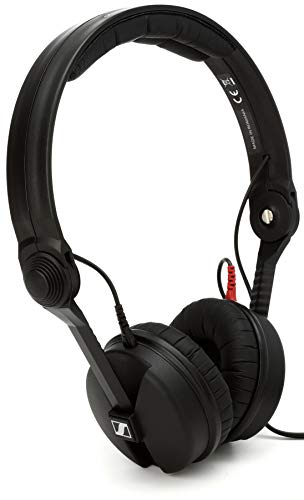
- Detachable single-sided cable for easy replacement
- Ultra-light 140 g build for portability
- High sensitivity with strong sound isolation
Best For: DJs and monitoring users who need a compact, durable headphone
Open-Back Precision Pick

- Wide open-back soundstage for detailed monitoring
- 48 ohm tuning works across interfaces and amps
- Detachable 3 m locking mini-XLR cable
Best For: Mixing and critical listening in quiet spaces
Isolation-Focused Studio Pick

- Closed-back design for recording and monitoring
- Detachable 3 m locking mini-XLR cable
- 48 ohm driver works with many devices
Best For: Tracking and monitoring in louder studio environments
Flagship Closed-Back Choice – Audio-Technica ATH-M50x
If you want studio headphones with detachable cable that are already well known in tracking and monitoring setups, the Audio-Technica ATH-M50x is a strong all-around pick. Its 45 mm drivers, extended frequency response, and circumaural closed-back design are built for clear monitoring with solid isolation.
Best For: Mixing, tracking, and everyday studio monitoring when you want a proven closed-back headphone with multiple cables included.
Pros:
- Detachable cable design with 3 included cables
- 45 mm drivers deliver extended, detailed sound with deep bass response
- Closed-back over-ear build helps isolate you in loud environments
- 90-degree swiveling earcups support one-ear monitoring
Cons:
- Wired-only design
- Not water resistant
- Studio-first tuning may be less ideal if you want a more casual listening sound
Overall, the ATH-M50x stands out for buyers who want a dependable studio monitor with a detachable cable and a long track record in pro audio. It’s a practical choice if comfort, isolation, and accessory flexibility matter in daily use.
Reliable Studio Standard – Sony MDR7506
The Sony MDR7506 is a classic studio option, but it is not the best fit if your main search is studio headphones with detachable cable. Its 9.8-foot cord is fixed rather than detachable, though the closed-ear design, foldable build, and detailed sound keep it popular for monitoring tasks.
Best For: Engineers and creators who want a foldable closed-back monitoring headphone and do not require a detachable cable.
Pros:
- 40 mm drivers provide detailed sound for monitoring
- Closed ear design helps reduce outside noise
- Folds up for storage and travel
- Includes a 1/4 inch adapter and soft case
Cons:
- Cord is not detachable
- 90-day warranty is shorter than some rivals
- Passive isolation is good, but it is not a detachable-cable model
As a studio staple, the MDR7506 makes sense when durability and portability matter more than cable modularity. If detachable cables are a must-have, though, you’ll want to consider the other options in this roundup.
Modern Monitoring Pick – Shure SRH440A
For shoppers comparing studio headphones with detachable cable, the Shure SRH440A is an appealing closed-back option. It combines a balanced, detailed sound signature with a collapsible design and a detachable locking cable for studio and on-the-go use.
Best For: Recording, mixing, and critical listening when you want a lightweight, portable studio headphone with a detachable cable.
Pros:
- Detachable locking cable for added reliability
- Balanced, detailed tuning for monitoring and critical listening
- Lightweight, cushioned, and collapsible for easier transport
- Closed-back build helps reduce ambient noise
Cons:
- Wired-only setup
- Optimized for professional audio devices rather than broad consumer use
- Not water resistant
The SRH440A is a smart choice if you want a more modern studio monitor with cable security and portability. Its mix of accurate sound and detachable cable support makes it especially practical for recording workflows.
Budget Studio Monitor Pick – Audio-Technica ATH-M40x
The Audio-Technica ATH-M40x is a practical answer if you want studio headphones with detachable cable and a more affordable monitor-focused design. It uses 40 mm drivers, a closed circumaural shape, and swiveling earcups to support everyday studio work.
Best For: Budget-minded recording, DJ, and studio monitoring use where a detachable cable and strong isolation matter.
Pros:
- Detachable cables are included
- 40 mm drivers with clear studio-oriented sound
- Closed circumaural design helps with sound isolation
- 90-degree swiveling earcups support one-ear monitoring
Cons:
- Wired-only headphones
- Not water resistant
- Sound is tuned for professional use rather than casual bass-heavy listening
For buyers who want a reliable detachable-cable studio headphone without stepping up to a higher-priced flagship, the ATH-M40x is an easy model to shortlist. It focuses on the essentials: isolation, durability, and monitor-friendly features.
Classic Open-Back Value – AKG K240STUDIO Semi-Open Studio Headphones
If you want studio headphones with detachable cable support for mixing, podcasting, or relaxed Hi‑Fi listening, the AKG K240STUDIO is a practical, time-tested option. Its semi-open design, 55 ohm impedance, and 30 mm XXL transducers are built for clear, balanced monitoring without getting overly complicated.
Best For: Mixing, mastering, podcast recording, and long listening sessions where comfort and clarity matter.
Pros:
- Detachable cable with both 1/8" connector and screw-on 1/4" adapter included
- Wide, detailed sound from Varimotion diaphragms and XXL transducers
- Self-adjusting headband and over-ear pads support long sessions
- Light 240 g build with a durable studio-focused design
Cons:
- Semi-open design may not isolate as much as closed studio models
- Wired only, so it is not suited to wireless workflows
The K240STUDIO makes sense if you want a dependable, comfortable monitoring headphone with a detachable cable and a straightforward studio-friendly feature set. It is especially appealing for users who value clarity and all-day wear over heavy isolation.
Reference Monitoring Pick – Sony MDR-M1 Professional Reference Closed Monitor Headphones
The Sony MDR-M1 is a strong choice if you need studio headphones with detachable cable connections for precise monitoring. Its closed acoustic structure, high sound isolation, and ultra-wide playback from 5 Hz to 80 kHz are aimed at detailed audio work where accuracy and easy cable replacement matter.
Best For: Audio production, reference monitoring, and creators who want closed-back isolation with replaceable cables.
Pros:
- Includes two detachable cable lengths for flexible setup
- Closed design with effective sound isolation for monitoring
- Wide 5 Hz to 80 kHz frequency range and low-distortion playback
- Light 216 g build with soft, thick earpads for long sessions
Cons:
- Wired design only
- Detachable cable system relies on a screw-in connection
For buyers who want a modern reference headphone that stays focused on studio accuracy, the MDR-M1 is compelling. The combination of closed-back isolation, replaceable cables, and lightweight comfort makes it a practical tool for everyday production work.
Portable DJ Standard – Sennheiser HD 25 On-Ear DJ Headphones
The Sennheiser HD 25 is a classic option if you need studio headphones with detachable cable handling in a compact, high-output design. Its closed-back, on-ear fit, lightweight build, and high sensitivity are tailored to DJ use, studio monitoring, and sound reinforcement.
Best For: DJs and monitoring users who want a lightweight, tough headphone with a detachable single-sided cable.
Pros:
- Tough, detachable, single-sided cable for easier replacement
- Very lightweight 140 g design for extended wear
- High sensitivity and support for very high sound pressure levels
- Closed-back sound isolation suits DJ and monitoring work
Cons:
- On-ear fit may not suit everyone for long sessions
- Includes only a basic jack adapter in the standard package
The HD 25 stands out for portability and durability more than plush comfort. If you want a proven monitoring headphone that can take regular use and keep cable maintenance simple, it remains a very sensible pick.
Open-Back Precision Pick – beyerdynamic DT 990 Pro X
If you want studio headphones with detachable cable for mixing, editing, or critical listening, the DT 990 Pro X is built to expose detail fast. Its open-back design creates a wide, natural soundstage, while the 48 ohm tuning and STELLAR.45 driver aim to keep the sound clear and low in distortion across interfaces, amps, DACs, and even portable setups.
Best For: Mixing, editing, and critical listening when you want an open, spacious presentation and easy driveability.
Pros:
- Open-back soundstage helps reveal mix flaws, clipping, and subtle artifacts.
- 48 ohm driver is designed to work well with interfaces, headphone amps, DACs, and hi-fi systems.
- 3 m detachable cable with locking mini-XLR connector adds security and convenience.
- Velour pads and lightweight build are made for long sessions.
Cons:
- Open-back design offers no isolation for noisy rooms.
- Not ideal if you need privacy or strong bass-focused isolation.
- Long cable may feel bulky for very mobile use.
Overall, this is a strong pick if your priority is accurate monitoring over isolation. It suits studios and home setups where hearing the room and the full stereo image matters more than blocking outside noise.
Comfortable Open-Back All-Rounder – Philips Fidelio X2HR
The Philips Fidelio X2HR is a practical choice if you want studio headphones with detachable cable and a more relaxed, listen-for-hours feel. Its open-back acoustic design, 50 mm drivers, and Hi-Res Audio certification make it a versatile pick for music production, gaming, and general wired listening where a broad, airy presentation is useful.
Best For: Listeners who want an open-back headphone with a comfortable fit and easy cable swapping for mixed-use sessions.
Pros:
- Detachable 3.5 mm oxygen-free cable makes replacement and storage easier.
- Open-back architecture with 50 mm drivers supports a spacious sound.
- Replaceable memory foam ear pads and self-adjusting hammock headband improve comfort.
- Includes a 3.5 mm to 6.3 mm adapter and cable management clip.
Cons:
- Open-back design does not isolate noise.
- At 30 ohms, it is easy to drive but still best used in quieter environments.
- Bulky over-ear form may not suit compact travel setups.
In practical terms, the X2HR is appealing if comfort and a detachable cable matter as much as sound quality. It is especially useful when you want one wired headphone for home listening, production, and casual monitoring.
Isolation-Focused Studio Pick – beyerdynamic DT 770 Pro X
The DT 770 Pro X is a strong option if you need studio headphones with detachable cable and prefer closed-back isolation. Its 48 ohm design, STELLAR.45 driver, and 5-40,000 Hz range are aimed at clear monitoring for recording, sound checks, and detailed listening on interfaces, laptops, DACs, and amps.
Best For: Recording and monitoring when you want more isolation and a secure detachable cable connection.
Pros:
- Closed-back design helps with isolation during recording and monitoring.
- Detachable 3 m straight cable uses a locking mini-XLR connector.
- 48 ohm tuning is intended to work with many devices, from interfaces to laptops.
- Velour ear pads and ergonomic headband are built for longer sessions.
Cons:
- Closed-back soundstage is less open than an open-back model.
- Not designed to provide active noise control.
- Long cable may be less convenient for very mobile use.
If isolation is the priority, this model makes a lot of sense. It keeps the detachable cable feature while offering the sealed construction many recording setups need.
How We Picked the Best Studio Headphones with Detachable Cable
We focused on Studio Headphones with Detachable Cable options that offer a practical mix of sound accuracy, durability, and comfort. Priority went to models commonly used for tracking, mixing, editing, and reference listening, along with designs that are easy to service and less frustrating to live with over time.
We also looked at driver size, impedance, open-back versus closed-back design, and whether the cable system supports different studio setups without adding unnecessary complexity.
Quick Comparison
For tracking and isolation, closed-back models are usually the safest choice. For mixing and more spacious imaging, open-back and semi-open designs often provide a more natural sense of detail. If you need a versatile all-rounder, look for a balanced tuning, comfortable clamping force, and a detachable cable that locks in securely.
Key Buying Factors for Studio Headphones with Detachable Cable
Sound Signature
Neutral or slightly detailed tuning is usually preferred in the studio. If you record vocals or instruments, isolation matters more; if you mix, a more open presentation may help with stereo placement and tonal balance.
Build and Cable System
A detachable cable is most useful when it is easy to replace, widely available, and securely connected. Check whether the headphone uses a twist-lock, mini-XLR, or standard 3.5mm-style connection, and make sure replacement cables are easy to source.
Comfort and Fit
Long sessions demand lightweight construction, padded earcups, and a headband that does not create pressure points. On-ear models can be useful for mobility, while over-ear designs generally suit longer studio work.
Impedance and Source Matching
Lower-impedance models are easier to drive from laptops, interfaces, and portable gear. Higher-impedance designs may benefit from a stronger headphone amp for best performance.
Open-Back Vs. Closed-Back
Closed-back headphones help reduce bleed during recording. Open-back models usually sound more spacious but leak sound, making them better for critical listening in quiet spaces.
Who Should Buy Which Studio Headphones with Detachable Cable?
If you need one pair for tracking and general studio use, choose a closed-back option with solid isolation and a durable detachable cable. If your main priority is mixing, consider an open-back or semi-open model for better imaging and less boxed-in sound. If you work in multiple locations, focus on portability, cable replacement options, and easy drivability from standard audio interfaces.
Ultimately, the best choice depends on your workflow: recording-heavy users should prioritize isolation, mix engineers should prioritize tonal balance, and all-around creators should look for comfort, serviceability, and a cable system that fits everyday use.