Choosing the right recorder can make your podcast sound cleaner, simpler to produce, and much more professional. The best multitrack podcast recorders give you individual control over each voice, so editing, leveling, and fixing mistakes becomes easier.
In this roundup, we focused on practical features that matter most for podcasters: mic inputs, headphone outputs, portability, battery life, and ease of use. Whether you record solo episodes, remote interviews, or full roundtable shows, there’s a strong option here for your workflow.
Best 10 Multitrack Podcast Recorders Picks for 2026
Studio-Ready Multi-Input Podcaster
Zoom PodTrak P4 Podcast Recorder

- 4 XLR inputs with phantom power
- 4 headphone outputs with individual volume control
- Automatic mix-minus for phone/USB guests
Best For: Small podcast teams needing easy multitrack recording and remote interviews
Portable 4-Track Workhorse
Zoom H4 Essential Handheld Recorder

- Built-in stereo mics plus 2 XLR/TRS inputs
- Records to USB-connected devices and SD card
- Spoken menu guidance for easier operation
Best For: Portable podcast and interview recording with simple guided controls
AI-Assisted Podcast Mixer

- 4 XLR inputs with multitrack support
- AI noise reduction, Tone Enhancement, and COMP
- 4 headphone outputs with separate volume controls
Best For: Podcast hosts who want built-in AI help and simple four-mic recording
Expandable Pro Multitrack Recorder
Zoom H6 6-Track Portable Recorder

- Six-track design with four XLR/TRS inputs
- Interchangeable stereo capsules included
- Direct SD recording plus USB audio interface
Best For: Users who need more tracks and more input flexibility for podcasts
Portable AI Podcast Upgrade
Zoom PodTrak P4next Podcast Recorder Bundle

- AI noise reduction and compression for cleaner speech
- Four XLR inputs with multitrack recording support
- Handles local mics plus USB, Bluetooth, or TRRS guests
Best For: Portable podcasting with built-in cleanup tools
Touchscreen Multitrack Studio
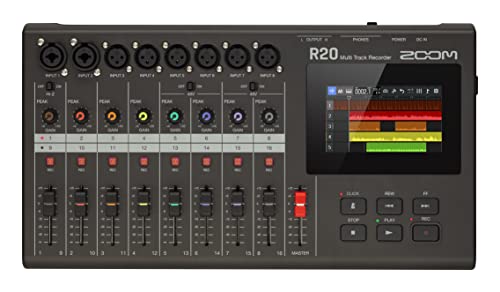
- Records up to 16 tracks with 8 simultaneous inputs
- Touchscreen editing works without a computer
- Built-in effects, rhythms, and onboard synth
Best For: Hands-on recording and editing on a tabletop unit
Ready-to-Go Interview Kit
Zoom PodTrak P4 with ZDM-1 Pack

- Bundle includes four ZDM-1 podcast mics
- Four XLR inputs with +48V phantom power
- TRRS and USB call-ins for remote guests
Best For: Starter podcast setups for group interviews and call-ins
Portable Studio Powerhouse
Zoom PodTrak P8 Battery Powered Bundle

- Records up to 13 tracks directly to SD card
- Handles six mics and two call-ins at once
- Onboard editing plus 6 headphone outputs
Best For: Portable podcasting setups with panels, interviews, and on-device editing
Portable Interview Kit

- Four XLR inputs with phantom power
- AI noise reduction and voice compression
- Includes mics, headphones, stands, and cables
Best For: Small podcasts and mobile interviews with a simple bundled setup
Full-Feature Podcast Console
Zoom PodTrak P8 Card Reader Bundle

- Records up to 13 tracks without a computer
- Six mic inputs and six headphone outputs
- Mix-minus, touchscreen editing, and sound pads
Best For: Larger podcasts that need multitrack capture and fast onboard workflow
Studio-Ready Multi-Input Podcaster – Zoom PodTrak P4 Podcast Recorder
If you want a straightforward multitrack podcast recorder for small-panel shows, the Zoom PodTrak P4 is built around exactly that job. It gives you four XLR mic inputs, four headphone outputs, and multitrack recording, plus practical extras like sound pads and easy remote-call support through TRRS and USB.
Best For: Podcasters who need four mic channels, separate headphone monitoring, and simple call-in or remote interview support.
Pros:
- Four XLR mic inputs with phantom power for multi-host recording
- Four headphone outputs with individual volume control
- Automatic mix-minus for phone and remote interviews
- Programmable sound pads for show cues and effects
Cons:
- Battery life is limited to up to 3.5 hours on two AA batteries
- Uses a small 2-inch screen, so navigation is more utilitarian than expansive
For portable podcast production, the P4 focuses on workflow basics that matter: input count, monitoring, and guest connectivity. It is a compact choice when you want a dedicated recorder rather than a general-purpose audio device.
Portable 4-Track Workhorse – Zoom H4 Essential Handheld Recorder
The Zoom H4 Essential is a flexible multitrack podcast recorder for creators who want portability without giving up input options. It combines built-in stereo microphones with two XLR/TRS inputs, records to both USB-connected devices and SD card, and is designed to handle interviews, dialogue, and live audio with a guided menu experience.
Best For: Creators who need a handheld recorder for podcasts, interviews, video audio, and field recording.
Pros:
- Built-in stereo mics plus two XLR/TRS inputs for flexible setups
- Records to a connected device and to SD card at the same time
- 4-track design suits podcasts, interviews, and other small projects
- Spoken menu guidance can make operation easier to follow
Cons:
- Only two XLR/TRS inputs, so it is less suited to larger multi-host shows
- Digital recording time is listed at 10 hours
If you need a compact recorder that can move from podcast work to video audio and field capture, the H4 Essential covers a lot of ground. Its strength is versatility, not high channel count.
AI-Assisted Podcast Mixer – Zoom PodTrak P4next Recorder
The Zoom PodTrak P4next is a multitrack podcast recorder aimed at creators who want more help from onboard processing. It supports four XLR inputs, adds AI noise reduction and tone enhancement, and includes features like four headphone outputs and phone connectivity for quick guest recording.
Best For: Podcasters who want four mic inputs plus built-in AI tools to simplify cleanup and balancing.
Pros:
- Four XLR inputs with multitrack recording support for up to four people
- AI noise reduction, Tone Enhancement, and COMP for easier cleanup
- Four headphone outputs with separate volume controls
- Up to +70dB of gain for more demanding podcast mics
Cons:
- Battery details are unspecified in the provided notes
- Best suited to podcast workflows rather than broader recording needs
This is a strong fit if you want the P4-style layout but would rather rely on built-in processing to speed up setup and editing. It is especially appealing for spoken-word production where clarity matters more than complex routing.
Expandable Pro Multitrack Recorder – Zoom H6 6-Track Portable Recorder
The Zoom H6 is a more expandable multitrack podcast recorder for users who want extra input capacity and more hands-on control. With four XLR/TRS inputs, interchangeable mic capsules, and direct SD recording, it works well for podcasting, video audio, and music capture when you need more routing options than a basic handheld unit.
Best For: Podcasters and creators who need up to six tracks, interchangeable capsules, and strong input flexibility.
Pros:
- Six-track design with four XLR/TRS inputs
- Includes stereo microphone capsules for more recording options
- Gain knobs, pads, and phantom power on each input
- Records directly to SD card and can function as a USB audio interface
Cons:
- Requires four AA batteries, so it is less minimalist than smaller recorders
- 2.5mm headphone jack is less common than the standard 3.5mm size
If you want a recorder that can grow with more elaborate sessions, the H6 offers useful depth without moving into a full studio interface. It is a strong choice when flexibility and track count matter more than size.
Portable AI Podcast Upgrade – Zoom PodTrak P4next Podcast Recorder Bundle
If you want one of the more flexible multitrack podcast recorders for mobile shows, the Zoom PodTrak P4next bundle is built for fast, polished voice recording. It combines four XLR inputs, local and guest call-in support, and onboard processing like AI noise reduction and compression to help speech sound clearer with less postwork.
Best For: Podcasters who want portable multitrack capture, easy guest handling, and built-in cleanup tools for interviews or on-location episodes.
Pros:
- AI noise reduction helps reduce hums, buzzes, and other distractions.
- Four XLR inputs with up to +70 dB of gain support dynamic and condenser mics.
- Can handle three local microphones plus up to two guests through USB, Bluetooth, or TRRS.
- Records stereo mix and individual tracks, with four headphone outputs for monitoring.
Cons:
- Designed around podcasting rather than broad music-production workflows.
- Best suited to creators who will use its built-in processing and routing features.
This is a strong pick if you need a compact recorder that stays useful in both studio and travel setups. The bundle extras are modest, but the core hardware offers the kind of recording flexibility podcasters usually need.
Touchscreen Multitrack Studio – Zoom R20 Tabletop Recorder
The Zoom R20 stands out among multitrack podcast recorders if you want a tabletop unit that works without a computer. Its DAW-style touchscreen lets you record, edit, and mix directly on the device, and the 16-track design with multiple XLR and combo inputs gives you room for larger sessions.
Best For: Creators who want hands-on, computer-free multitrack recording and editing for music or project-based audio work.
Pros:
- Records up to 16 tracks, with 8 tracks available simultaneously.
- Six XLR inputs plus two XLR/TRS combo inputs support bigger setups.
- Touchscreen editing makes arranging audio simple with drag, drop, swipe, and pinch controls.
- Built-in EQ, compression, rhythm patterns, and onboard synth add creative tools.
Cons:
- Larger and heavier than portable podcast recorders.
- Maximum sample rate is listed at 44.1 kHz.
If your priority is direct control over recording and editing on the device itself, the R20 is a versatile choice. It leans more toward music production than interview podcasting, but its multitrack workflow is strong and practical.
Ready-to-Go Interview Kit – Zoom PodTrak P4 with ZDM-1 Pack
Zoom PodTrak P4 Portable Multitrack Podcast Recorder Bundle with 4X Zoom ZDM-1 Podcast Pack
Check Price On AmazonFor buyers comparing multitrack podcast recorders, this Zoom PodTrak P4 bundle is appealing because it pairs the recorder with four ZDM-1 podcast mics. You get four high-gain XLR inputs, independent headphone outputs, and simultaneous TRRS plus USB call-ins, so it is set up for group conversations and remote guests.
Best For: Podcasters who want an all-in-one starter bundle for multi-person interviews and call-in shows.
Pros:
- Includes four ZDM-1 podcast packs, so the mic setup is ready out of the box.
- Four XLR inputs with +48V phantom power support multiple microphones.
- Simultaneous TRRS and USB call-ins make remote guests easier to manage.
- Four independent headphone outputs help everyone monitor clearly.
Cons:
- Listed digital recording time is 4 hours, so storage planning matters.
- Runs on 2 AA batteries, which may be limiting for longer portable sessions.
This bundle is especially useful if you want to minimize extra shopping and start recording quickly. It focuses on practical podcast essentials rather than advanced production features, which is a plus for straightforward interview workflows.
Portable Studio Powerhouse – Zoom PodTrak P8 Battery Powered Bundle
If you want multitrack podcast recorders that can handle bigger interviews and remote call-ins, the Zoom PodTrak P8 is built for exactly that. It records up to 13 tracks straight to SD card, works without a computer, and gives you a touchscreen workflow that keeps setup and editing straightforward whether you’re at home or on the road.
Best For: Podcasters who need a portable, feature-rich recorder for panels, interviews, and location work.
Pros:
- Records up to six mics plus two call-ins without a computer.
- 6 high-gain mic inputs, 6 headphone outputs, and 9 sound pads.
- Onboard editing tools let you trim, split, combine, and fade clips on-device.
- Flexible power options with AA batteries, AC adapter, or USB.
Cons:
- Heavier than smaller portable podcast recorders.
- Requires batteries, AC power, or USB depending on the recording setup.
The P8 is a strong pick if you want a self-contained recorder that can cover a full cast and still stay portable. Its mix-minus support, touchscreen controls, and built-in processing make it especially practical for creators who want to record and polish episodes in one device.
Portable Interview Kit – Zoom PodTrak P4next Bundle
Among multitrack podcast recorders, the Zoom PodTrak P4next is aimed at creators who want a compact setup with enough inputs for small shows and interviews. It offers four XLR inputs, AI noise reduction, voice compression, and flexible power options, so you can record in more places without dragging along a full studio.
Best For: Small podcast teams, mobile interviewers, and creators who want an all-in-one starter bundle.
Pros:
- Four XLR inputs with up to +70 dB of gain and 48 V phantom power.
- AI noise reduction and built-in voice compression help keep vocals clear.
- Four independent headphone outputs with individual volume control.
- Runs on AA batteries, USB/bus power, or an AC adapter.
Cons:
- Battery runtime is limited to about 3.5 hours.
- Supports fewer inputs than larger podcast recorders like the P8.
The P4next makes sense if portability matters as much as recording quality. It gives you the core tools needed for a polished multi-host or interview session, while the included mic and headphone bundle helps simplify the first setup.
Full-Feature Podcast Console – Zoom PodTrak P8 Card Reader Bundle
If you’re comparing multitrack podcast recorders for a larger show, this Zoom PodTrak P8 bundle stands out for its direct-to-SD workflow and built-in production tools. It can capture up to six microphones, support two call-ins, and record up to 13 tracks without a computer, making it a practical choice for structured podcasts and panel discussions.
Best For: Podcasters who want a capable tabletop recorder for multi-mic sessions, remote guests, and quick turnaround editing.
Pros:
- Records up to six microphones and up to 13 tracks simultaneously.
- Independent headphone mixes across six outputs with color-coded jacks.
- Mix-minus support for echo-free phone, USB, or Bluetooth call-ins.
- Touchscreen editing and nine assignable sound pads streamline production.
Cons:
- Less compact than smaller multitrack recorders.
- Bluetooth calling requires the separate BTA-2 receiver.
This bundle is a good fit if you want the P8’s full podcasting feature set and some included accessories to get started faster. Its combination of multitrack recording, monitoring flexibility, and onboard editing makes it one of the more complete all-in-one options in this group.
How We Picked the Best Multitrack Podcast Recorders
We selected models based on real-world podcast needs first: enough inputs for your show format, dependable track recording, straightforward monitoring, and useful extras like phone/USB connectivity or built-in sound pads. We also favored recorders that are easy to carry, set up quickly, and integrate smoothly with SD cards or computer recording.
Quick Comparison
If you record one or two hosts, a compact unit with two to four mic inputs may be all you need. For panel shows or growing podcasts, choose one of the Multitrack Podcast Recorders with four or more XLR inputs, multiple headphone outs, and stronger routing flexibility. If you want an all-in-one studio hub, larger tabletop models are better suited to complex sessions.
Key Buying Factors for Multitrack Podcast Recorders
Inputs and Expansion
Start with the number of microphones you need today, then add one or two channels for growth. Four-input recorders fit many interview podcasts, while larger mixers and recorders help with live panels and co-hosted shows.
Track Separation and Monitoring
Multitrack recording matters because it lets you edit each speaker independently. Headphone outputs for each participant are also valuable, especially when guests need to hear themselves clearly during the session.
Portability and Power
Battery-powered recorders are ideal for mobile studios, live events, and remote interviews. Tabletop units can offer more control, but they may be less convenient if you travel often.
Connectivity and Workflow
Look for USB audio interface mode, phone inputs, SD card recording, and simple file transfer. These features can save time before and after the episode, especially if you publish frequently.
Who Should Buy Which Multitrack Podcast Recorders?
Solo creators and mobile interviewers should prioritize compact, easy-to-carry recorders. Small teams and independent podcasts usually do best with four-input models that balance flexibility and simplicity. Larger shows, classrooms, and production teams should consider higher-channel options for more room to scale. For most buyers, the best choice among Multitrack Podcast Recorders is the one that matches your current setup without limiting your next stage of growth.