Choosing the right rackmount audio snake system can simplify setup, reduce cable clutter, and make your signal path easier to manage.
Below, we focus on options for live sound, recording, and permanent installs so you can match the right format to your workflow.
Best 10 Rackmount Audio Snake Systems Picks for 2026
Analog Rack Splitter
PRORECK 16-Channel Rack Mount Snake

- 16-channel XLR/TRS combo jacks
- Numbered box and fantail for quick setup
- Heavy-duty steel stage box
Best For: Live, recording, stage, and studio analog routing
Digital Snake Interface
Behringer S16 16-Channel Digital Snake

- 16 MIDAS-designed programmable mic preamps
- AES50 networking with low-latency transport
- 8 balanced XLR outputs plus ULTRANET
Best For: Digital live sound and networked stage setups
Passive Modular Stage Box
Sound Tools CAT Rack 12-Channel Stage Box

- 12 XLR channels in a 1U rack box
- Passive CAT-cable audio and data routing
- Reversible ears and rugged metal build
Best For: Stage production and touring with modular CAT-based routing
Send-Only Splitter Snake
Seismic Audio 16-Channel Rack Splitter

- 16-channel XLR/TRS combo-jack box end
- Individually shielded 22-gauge conductors
- Hardwired send-only design with labeled ends
Best For: Live sound and studio recording with short trunk runs
Rack Receiver
Radial Catapult Rack RX 12-channel Cat 5/6 Analog Audio Snake

- 12-channel rackmount receiver
- Cat 5/6 analog audio routing
- Standard rack-format unit
Best For: Rack-based setups needing a 12-channel Cat 5/6 receiver
Long-Run Stage Box
PRORECK 16-Channel Low Profile XLR Snake Cable

- 16-channel XLR snake cable
- 100-foot run for stage or studio
- Numbered connectors and circuit-board design
Best For: Long analog stage-to-console runs
Rack Patchbay

- 16-port balanced XLR patchbay
- Reversible male/female ports
- Metal rack-mount chassis with screws included
Best For: Centralized rack routing in studio and live setups
24-Channel Rack Splitter
Seismic Audio SARMSS-24x310 24-Channel Splitter Snake
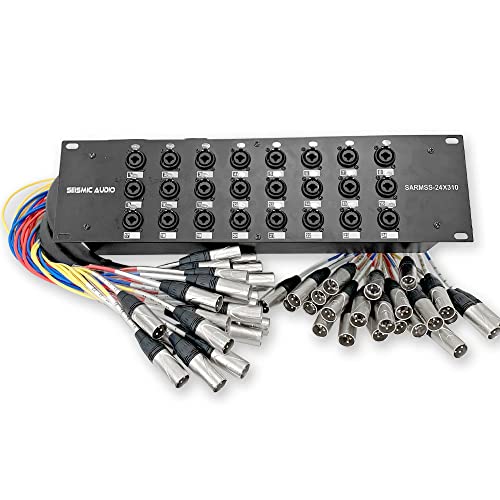
- 24-channel rack-mountable splitter snake
- XLR/TRS combo jacks with labeled box and fantail
- Send-only design with 3' and 10' trunks
Best For: Fixed-install or live sound setups needing a labeled 24-channel rack splitter
Compact 1U Feed-Through Patch Bay
AMIMA 8-Channel XLR Patch Bay 1U Rack Mount

- 1U rack-mount patch bay for 8 channels
- Color-coded ports with gold-plated contacts
- Feed-through design for studio and live setups
Best For: Small studios and live rigs needing a compact 8-channel rack patch bay
High-Count Rack Splitter
Seismic Audio SARMSS-32x515 32-Channel Splitter Snake

- 32-channel rack-mount splitter snake
- Individually shielded 22-gauge conductors
- 5' and 15' trunks with labeled steel stage box
Best For: Large pro audio setups needing a 32-channel rack splitter with long trunks
Analog Rack Splitter – PRORECK 16-Channel Rack Mount Snake
If you need rackmount audio snake systems for fast stage or studio patching, this PRORECK 16-channel splitter keeps things simple with labeled XLR/TRS combo jacks and two short trunks for flexible routing. It is a practical choice when you want direct analog connections into a console without extra converters.
Best For: Live sound, recording, stage setups, and studios that want a straightforward 16-channel rackmount splitter.
Pros:
- 16-channel XLR/TRS combo jacks support broad analog routing.
- Numerically labeled stage box and fantail help speed setup.
- Heavy-duty steel stage box adds durability for mobile use.
- Two trunk lengths, 5 ft and 15 ft, offer routing flexibility.
Cons:
- Designed for direct analog use, so it is not a digital snake system.
- Male connector trunks may not fit every stage layout.
Overall, this is a solid pick if you want a rugged, easy-to-identify rackmount splitter for live or studio workflows. Its focus is on dependable analog connectivity and quick setup rather than advanced networking features.
Digital Snake Interface – Behringer S16 16-Channel Digital Snake
For rackmount audio snake systems built around digital networking, the Behringer S16 is aimed at streamlined stage-to-console connectivity. It combines 16 MIDAS-designed preamps, 8 balanced XLR outputs, and AES50 networking, making it a fit for modern digital rigs that want low-latency signal transport.
Best For: Digital live sound setups that need remote mic preamps and networked stage connectivity.
Pros:
- 16 fully programmable MIDAS-designed mic preamps.
- AES50 network ports with SuperMAC capability for low jitter and latency.
- 8 servo-balanced XLR outputs for analog output needs.
- ULTRANET support adds personal monitoring integration.
Cons:
- More specialized than passive stage-box-style snake options.
- Best suited to digital workflows and compatible systems.
This is the strongest fit if your rackmount snake needs are centered on digital stage networking rather than simple hardwired splits. It brings preamps, outputs, and monitoring features into one compact unit.
Passive Modular Stage Box – Sound Tools CAT Rack 12-Channel Stage Box
If you are comparing rackmount audio snake systems for modular stage or touring use, the Sound Tools CAT Rack stands out as a fully passive 1U stage box with 12 XLR connections and etherCON pass-through. It is built for analog audio and compatible data applications, giving you a flexible rack-mounted routing option.
Best For: Touring, stage production, and studio setups that need a passive, modular rackmount box over shielded CAT cable.
Pros:
- 12-channel XLR layout supports audio and data routing.
- Fully passive design works with analog, AES3, DMX, and intercom signals.
- Reversible rack ears make installation more flexible.
- Durable Neutrik connectors and anodized aluminum construction.
Cons:
- Requires shielded Cat5e or better cable for intended operation.
- Passive design may not suit users wanting onboard preamps or conversion.
This is a smart option when flexibility matters more than active electronics. Its modular layout makes it useful as a stage box, splitter, or signal-handling hub in a rack.
Send-Only Splitter Snake – Seismic Audio 16-Channel Rack Splitter
Seismic Audio - SARMSS-16x310-16 Channel XLR TRS Combo Splitter Snake Cable - 3' and 10' XLR Trunks
Check Price On AmazonFor buyers seeking rackmount audio snake systems with a simple, hardwired layout, the Seismic Audio SARMSS-16×310 uses 16-channel XLR/TRS combo jacks and two short trunks to keep stage wiring organized. It is aimed at professional audio applications where quick labeling and sturdy construction matter.
Best For: Live sound and studio recording teams that want a rugged 16-channel rackmount splitter with short trunk runs.
Pros:
- 16-channel XLR/TRS combo jacks on the box end.
- Clearly labeled stage box and fantail for faster setup.
- 100% individually shielded pairs with 22-gauge conductors.
- Heavy-duty steel stage box supports demanding use.
Cons:
- Hardwired send-only design means no returns.
- Short trunk lengths may be less flexible for larger stages.
This model is a straightforward, rugged choice when you want dependable rack-mounted channel splitting without added complexity. Its emphasis on shielding, labeling, and steel construction makes it practical for frequent use.
Rack Receiver – Radial Catapult Rack RX 12-channel Cat 5/6 Analog Audio Snake
If you need rackmount audio snake systems for a compact analog setup, the Radial Catapult Rack RX gives you a 12-channel Cat 5/6 receiver in a standard rack format. It’s built to sit at the rack end of a run, helping organize multi-channel audio over Cat 5/6 while keeping the hardware straightforward.
Best For: Rack-based studios, stage racks, and install setups that need a 12-channel Cat 5/6 analog audio snake receiver.
Pros:
- 12-channel rackmount receiver for analog audio distribution.
- Uses Cat 5/6 cabling, which can simplify multi-channel runs.
- Standard rack format fits neatly into a rack system.
Cons:
- This is a receiver unit, so it’s only one side of a full snake system.
- Product notes do not list included cabling or companion transmitter hardware.
For buyers building around rackmount audio snake systems, this is a focused receiver solution rather than an all-in-one kit. It makes the most sense when you already have the rest of the routing infrastructure in place and want a tidy 12-channel rack endpoint.
Long-Run Stage Box – PRORECK 16-Channel Low Profile XLR Snake Cable
For rackmount audio snake systems that need a long analog run, this PRORECK 16-channel XLR snake cable gives you a 100-foot multicore layout with clearly numbered connectors. It’s designed for stage, live, recording, and studio use, and the built-in circuit board is intended to support a solid connection while reducing external noise.
Best For: Live stages, recording rigs, and studio setups that need a 16-channel, 100-foot XLR snake.
Pros:
- 16 channels with numbered connectors for easier setup and tracking.
- 100-foot length suits long stage-to-console runs.
- Circuit-board construction is designed for a solid connection and clearer sound.
- Can feed directly into analog or digital consoles without converters.
Cons:
- It’s a cable snake, not a rackmount patchbay or rack chassis.
- Bulk and length may be more than needed for smaller setups.
This is a practical option if your rackmount audio snake systems need a straightforward analog XLR run rather than a fixed rack panel. The numbered ends and 16-channel layout make it easier to manage on busy stages or in mobile recording work.
Rack Patchbay – DIYTECH 16 Port XLR Patchbay
If you’re assembling rackmount audio snake systems around a clean front-panel connection point, this DIYTECH 16-port XLR patchbay is built for that job. It uses reversible male/female XLR ports, a metal rack-mount chassis, and balanced 3-pin wiring to simplify routing in studios, live sound rigs, theaters, houses of worship, and broadcast carts.
Best For: Studios, live sound racks, and install environments that need a 16-port balanced XLR patchbay.
Pros:
- 16-port XLR patchbay for centralized audio routing.
- Reversible male/female ports add flexibility for different setups.
- Metal rack-mount chassis is built for pro use.
- Mounting screws are included for standard 19-inch installation.
Cons:
- It is a patchbay, so it does not replace a full snake cable run.
- Best suited to users who already have XLR infrastructure in place.
As part of rackmount audio snake systems, this patchbay works best as the clean routing hub that ties everything together. The reversible connectors and balanced wiring make it a flexible choice when you want a durable rack-panel solution with minimal signal clutter.
24-Channel Rack Splitter – Seismic Audio SARMSS-24×310 24-Channel Splitter Snake
Seismic Audio SARMSS-24x310-24 Channel XLR TRS Combo Splitter Snake Cable - 3' and 10' XLR Trunks
Check Price On AmazonIf you need rackmount audio snake systems for a 24-channel setup, the Seismic Audio SARMSS-24×310 is built for straightforward signal splitting with clear labeling and a rack-mountable steel stage box. It uses XLR/TRS combo jacks on the box end, 3-foot and 10-foot XLR trunks, and individually shielded 22-gauge conductors for a clean, organized signal path.
Best For: Fixed-install or live sound users who want a 24-channel rack-mount splitter snake with labeled send-only routing.
Pros:
- 24-channel rack-mountable splitter with XLR/TRS combo jacks on the stage box
- Clearly labeled stage box and fantail for faster setup
- Individually shielded 22-gauge conductors for cleaner signal transmission
- Includes 3′ and 10′ trunks for flexible rack-to-stage routing
Cons:
- Send cable only, with no returns
- No transformers, ground-lift switches, or multi-pin disconnects
This model is a practical choice when you need a simple, rack-mounted splitter snake rather than a more complex system with returns or switching features. The labeled steel box and combo jacks make it especially suited to organized professional setups.
Compact 1U Feed-Through Patch Bay – AMIMA 8-Channel XLR Patch Bay 1U Rack Mount
For smaller rackmount audio snake systems, this AMIMA 8-channel XLR patch bay keeps routing simple by consolidating eight channels into a 1U rack space. It is aimed at studio, live sound, and broadcast use, with color-coded ports and gold-plated contacts to help keep connections organized.
Best For: Smaller studios and live setups that want a compact 1U XLR feed-through patch bay for eight channels.
Pros:
- 1U rack-mount format saves space
- Consolidates 8 XLR channels for cleaner organization
- Color-coded ports make routing easier to track
- Gold-plated contacts support reliable signal handling
Cons:
- Limited to 8 channels
- Designed as a feed-through patch bay rather than a full splitter snake
This is a good fit when you need a tidy front-of-rack connection point more than a larger channel-count snake. Its compact design makes it useful in setups where space and quick identification matter.
High-Count Rack Splitter – Seismic Audio SARMSS-32×515 32-Channel Splitter Snake
If your rackmount audio snake systems need more channel capacity, the Seismic Audio SARMSS-32×515 offers a 32-channel rack-mount splitter design with 5-foot and 15-foot trunks. The steel stage box is labeled for easier setup, and the 22-gauge conductors are individually shielded to help keep the signal clean in professional audio environments.
Best For: Larger live performance or recording setups that need a 32-channel rack-mount splitter snake with long trunk options.
Pros:
- 32-channel splitter with rack-mountable steel stage box
- Individually shielded 22-gauge conductors for cleaner audio
- Labeled fantail and stage box speed up setup
- Includes 5′ and 15′ trunks for flexible placement
Cons:
- Send-only snake with no returns
- No transformers, ground-lift switches, or multi-pin disconnects
Compared with smaller rack solutions, this model is better suited to higher-channel professional work where organization and capacity matter most. It stays focused on straightforward hardwired splitting, which can be an advantage in dependable fixed routing.
How We Picked These Rackmount Audio Snake Systems
We looked for Rackmount Audio Snake Systems that balance channel count, connector quality, build durability, and real-world flexibility. That means choosing products that suit both mobile rigs and fixed installations, while covering analog splitters, patchbay-style panels, and digital snake options.
We also favored designs that make setup simpler: clear channel labeling, rack-friendly form factors, and connectivity that fits common studio and stage workflows.
Quick Comparison
If you want the simplest path for a compact rack, 8- to 16-channel panels are usually the easiest fit. For larger stages or multi-source recording, 24- and 32-channel systems offer more headroom. Digital snake units are best when you want fewer long analog runs, while CAT-based and patchbay-style systems are strong choices for flexible routing and cleaner rack integration.
Key Buying Factors for Rackmount Audio Snake Systems
Channel Count
Start with the number of sources and returns you actually need, then add a little room for growth. A smaller rackmount audio snake system may be enough for a podcast or rehearsal room, while a larger stage rig benefits from extra channels for drum mics, monitor sends, and spare inputs.
Connector Type and Signal Path
Look at whether the system uses XLR, TRS, combo connectors, or CAT cable transport. XLR and TRS are common for balanced analog audio, while CAT-based systems can reduce cable bulk in longer runs. If you need to split signals, make sure the layout supports your workflow without creating confusion at the rack.
Rack Format and Installation
Pay attention to rack height, chassis depth, and front-panel accessibility. A good rackmount audio snake system should be easy to patch, label, and service without forcing you to pull the whole rack apart.
Durability and Labeling
Metal chassis, secure jacks, and clear port identification matter more than flashy extras. In busy environments, color-coded ports and readable channel numbers save time and reduce mistakes.
Who Should Buy Which Rackmount Audio Snake Systems?
Choose a compact 8-channel or patchbay-style unit if you need a simple studio feed-through or a small live rig. Go with a 12- or 16-channel system if you want a practical middle ground for clubs, rehearsal spaces, and project studios. Pick 24- or 32-channel Rackmount Audio Snake Systems when you need broader stage coverage, more submixing flexibility, or a cleaner way to manage larger input lists.
If your priority is minimizing long analog runs, a digital or CAT-based snake may be the better investment. If you want the most straightforward, hands-on routing, analog splitter and rack patch solutions remain the most direct and dependable option.