The best VCA audio compressors can add punch, cohesion, and predictable dynamic control without overwhelming the character of a mix. From 500-series modules to stereo bus compressors and affordable rack units, the right choice depends on your workflow and signal chain.
We’ve compared 10 notable options for studio mixing, mastering, tracking, live sound, and streaming, focusing on control, connectivity, format, flexibility, and value.
Best 10 Vca Audio Compressors Picks for 2026
Warm Audio
Bus-Comp Stereo VCA Bus Compressor

- Two-channel stereo VCA design
- Five ratios and sidechain input filter
- CineMag transformers for mixing and recording
Best For: Stereo bus compression in a studio setup
SSL 500 Series

- Recreates SL 4000 B console dynamics
- Peak-sensing feedback design
- Compression, limiting, gating, and expansion
Best For: 500 Series console-style dynamics processing
7721

- Peak/RMS detection for stereo processing
- Sidechain high-pass filter
- Soft/hard knee and dry/wet blend controls
Best For: Flexible stereo and parallel compression
SSL BusPlus

- 2181 THAT VCA-based SSL circuit
- Stereo, dual-mono, and mid-side modes
- Expanded timing and coloration options
Best For: Flexible professional bus compression
Analog Recall Specialist
- Analog 500-Series bus compressor
- Stereo processing format
- Digital recall for repeatable settings
Best For: Recallable stereo bus processing
Versatile Rack Workhorse

- Two-channel compressor, limiter, and gate
- Includes de-esser functionality
- Designed for production, mixing, and mastering
Best For: Flexible two-channel studio dynamics control
Character-to-Transparent 500-Series Comp
Harrison 500 Series Compressor

- THAT 2180 VCA chip
- Release control from fast to slow
- Works from transparent to character compression
Best For: Flexible 500-Series analog compression
Analogue Glue Specialist

- 2181 THAT VCA circuitry
- Four modes and three coloration options
- Dynamic Analogue Equalizer included
Best For: Mix-bus glue and detailed analogue-style processing
500-Series Dynamics Choice
- Mono 500 Series VCA compressor
- Designed for audio and vocal processing
- Portable with a two-year warranty
Best For: 500 Series racks and mono vocal processing
Dual-Channel Rack Utility
Professional Dual-Channel Audio Compressor

- Two-channel classic VCA compression
- Noise gate and LED monitoring
- Sidechain insert with XLR/TRS I/O
Best For: Studio, live, and streaming setups needing flexible routing
Warm Audio – Bus-Comp Stereo VCA Bus Compressor
The Warm Audio Bus-Comp is a practical choice among VCA audio compressors for stereo bus mixing and recording. Its two-channel design, five ratios, sidechain input filter, and CineMag transformers provide useful control over stereo program material.
Best For: Stereo bus compression in mixing and recording setups.
Pros:
- Two-channel stereo VCA bus compressor design.
- Five compression ratios for flexible control.
- Sidechain input filter and CineMag transformers included.
Cons:
- Large, heavy hardware unit at 9.7 pounds.
- Corded electric operation requires dedicated rack or studio space.
Choose this model if you want a straightforward stereo VCA compressor with transformer-equipped circuitry and sidechain filtering for a dedicated recording or mixing rig.
SSL 500 Series – B-Series Dynamics
The Solid State Logic B-Series Dynamics is a compact 500 Series option for buyers comparing VCA audio compressors with classic console-style behavior. It recreates the SL 4000 B console dynamics section and combines compression, limiting, gating, and expansion in one analog module.
Best For: 500 Series users seeking aggressive console-style dynamics processing.
Pros:
- Authentic recreation of the SL 4000 B console dynamics processing.
- Peak-sensing feedback design for an aggressive, grabby character.
- Includes compressor/limiter and gate/expander functions.
Cons:
- Requires a compatible 500 Series rack or chassis.
- Fixed ratios and release times limit continuously variable adjustment.
This module suits engineers who value a defined set of classic SSL-style controls and want compression, limiting, gating, and expansion without using a larger standalone unit.
7721 – Stereo VCA Compressor
The 7721 Stereo VCA Compressor offers flexible stereo control for buyers comparing VCA audio compressors. Peak/RMS detection, a sidechain high-pass filter, soft/hard knee switching, ratio controls, and a dry/wet blend make it suitable for shaping both dynamics and parallel-compression textures.
Best For: Stereo compression with detection, knee, filtering, and blend controls.
Pros:
- Two-channel stereo compressor with Peak/RMS detection.
- Sidechain high-pass filter helps tailor detector response.
- Soft/hard knee switch and dry/wet blend support flexible processing.
Cons:
- At 13.5 pounds, it is relatively heavy for a two-channel unit.
- Requires corded electric power and dedicated hardware space.
The 7721 is a strong fit when hands-on stereo compression flexibility matters, especially if you want both conventional dynamics control and a blend control for parallel-style processing.
SSL BusPlus – Versatile SSL Bus Compressor
The Solid State Logic BusPlus expands the classic bus-compressor concept for buyers evaluating VCA audio compressors. Its SSL circuit uses high-performance 2181 THAT VCAs and adds stereo, dual-mono, mid-side, attack/release, and coloration options for detailed bus-shaping work.
Best For: Engineers needing versatile stereo, dual-mono, or mid-side bus compression.
Pros:
- Authentic SSL Bus Compressor circuit with 2181 THAT VCAs.
- Four operating modes: Classic Stereo, S/C Stereo, Dual Mono, and Mid-Side.
- Additional attack/release settings and three compression coloration options.
Cons:
- Its broad feature set may be more than a simple bus-compression setup requires.
- The supplied specifications list a substantial 7.03 kg item weight.
Choose BusPlus when you want the SSL bus-compressor foundation but need more routing, timing, and tonal options than a conventional stereo-only design provides.
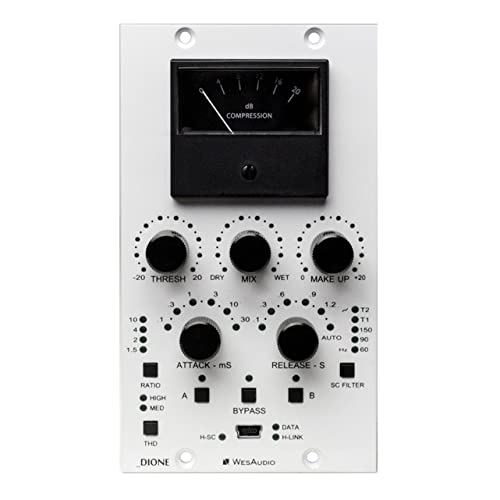
Analog Recall Specialist – Dione 500 Stereo Compressor
For producers seeking VCA audio compressors in a compact 500-Series format, the WesAudio _Dione combines analog compression with digital recall. Its stereo design makes it a practical candidate for mix-bus and other two-channel applications.
Best For: Stereo bus processing in a 500-Series chassis where analog operation and digital recall are priorities.
Pros:
- Analog 500-Series bus compressor design
- Stereo format for two-channel processing
- Digital recall can help maintain repeatable settings
Cons:
- Requires a compatible 500-Series chassis
- Its stereo bus focus may be less suitable for single-channel duties
The _Dione stands out for combining an analog signal path with digital recall in a space-efficient module. It is a focused option for engineers building a recallable stereo processing setup.
Versatile Rack Workhorse – Composer Pro-XL MDX2600
The Behringer Composer Pro-XL MDX2600 is a practical choice among VCA audio compressors for audio production, mixing, and mastering. Its two-channel compressor, limiter, and gate layout adds useful dynamics control in a portable rack-style unit.
Best For: Home studios and project setups needing two-channel compression, limiting, and gating in one unit.
Pros:
- Two-channel compressor, limiter, and gate
- Suitable for audio production, mixing, and mastering
- Portable corded-electric design
- Includes a de-esser function
Cons:
- Requires access to mains power
- The supplied listing details do not specify advanced recall or 500-Series compatibility
With two channels and several dynamics-processing functions, the MDX2600 is designed as an all-purpose utility unit. It makes the most sense when flexibility and broad studio use matter more than a specialized format.
Character-to-Transparent 500-Series Comp – Harrison 500 Series Compressor
The Harrison Audio 500 Series Harrison Compressor offers a flexible VCA audio compressor design built around a THAT 2180 VCA chip. Its continuously variable release control supports anything from transparent leveling to more characterful compression.
Best For: Engineers wanting a 500-Series compressor that can move between subtle leveling and more noticeable character compression.
Pros:
- THAT 2180 VCA chip for analog performance
- Continuously variable release from fast to slow
- Compatible with 500-Series chassis formats
- Flexible range from transparent leveling to character compression
Cons:
- Requires a compatible 500-Series chassis
- The supplied details do not mention digital recall
The Harrison compressor is a strong fit for users who want one module to cover restrained and more colored compression styles. Its release control and flexible voicing make it adaptable across different analog processing tasks.
Analogue Glue Specialist – THE BUS+ Compressor
For producers seeking versatile VCA audio compressors, the SSL THE BUS+ combines 2181 THAT VCA circuitry with multiple operating modes and analogue-style coloration. Its advanced controls, including the Dynamic Analogue Equalizer, make it suited to detailed mix-bus shaping.
Best For: Mix-bus processing, analogue-style glue, and producers who want expanded compression control.
Pros:
- Uses 2181 THAT VCAs for analogue performance.
- Offers four operating modes and three compression coloration options.
- Includes the Dynamic Analogue Equalizer for additional tonal shaping.
Cons:
- Its broad feature set may be more than needed for simple compression tasks.
- Listed connectivity is limited to XLR and USB.
Choose THE BUS+ when mix-bus character and flexible analogue-style processing matter more than a basic, streamlined compressor design.
500-Series Dynamics Choice – Rupert Neve Designs 543
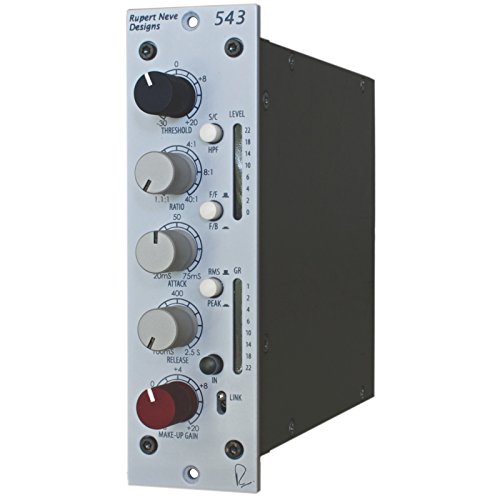
The Rupert Neve Designs 543 is a mono 500 Series VCA compressor/limiter for compact modular setups. Its stated uses include audio processing and vocal effects, making it a focused option for engineers who prefer a single-channel hardware format.
Best For: 500 Series users, mono signal processing, and vocal-focused applications.
Pros:
- Built as a 500 Series mono VCA compressor.
- Suitable for audio processing and vocal effects.
- Portable format with a listed two-year warranty.
Cons:
- Mono operation is less suitable for stereo processing without an additional unit.
- Requires a compatible 500 Series setup rather than functioning as a standalone rack unit.
The 543 is a sensible pick for a modular hardware rack where single-channel VCA compression and vocal processing are priorities.
Dual-Channel Rack Utility – Professional Dual-Channel Audio Compressor
This 1U rackmount unit is a practical choice among VCA audio compressors when you need two channels, flexible routing, and visible metering. It combines classic VCA circuitry with OverEasy compression, a noise gate, auto attack/release, and sidechain inserts for studio, live, and streaming use.
Best For: Dual-channel vocal, instrument, live-sound, and streaming setups requiring sidechain and gate functions.
Pros:
- Provides two channels with OverEasy compression and auto attack/release.
- Includes XLR and 1/4-inch TRS inputs and outputs.
- Adds a noise gate, LED monitoring, and sidechain insert.
Cons:
- The listed 110-volt AC power requirement may limit plug-and-play use in some regions.
- Its 1U rackmount format is less convenient for users seeking a compact desktop unit.
Consider this model when channel count and routing features are more important than a minimal control layout, particularly for vocals, low-end ducking, or live signal management.
How We Picked These Vca Audio Compressors
We selected compressors that represent the main ways engineers use VCA-style dynamics processing: stereo bus compression, mono tracking, 500-series rack systems, mastering, live sound, and budget-conscious studio setups. We considered control layout, channel configuration, sidechain features, metering, connectivity, build format, and suitability for different experience levels.
Because compressor character and workflow are highly subjective, this list includes both straightforward utility processors and feature-rich designs. The goal is to make it easier to match a compressor to your equipment and mixing habits rather than identify one universal winner.
Quick Comparison
- For mix bus cohesion: Choose a dedicated stereo bus compressor such as the Warm Audio Bus-Comp, SSL BusPlus, or THE BUS+.
- For a modular setup: Consider a 500-series option, including the SSL B-Series Dynamics, WesAudio _Dione, Harrison Compressor, or Rupert Neve Designs 543.
- For flexible channel processing: Look at the Behringer Composer Pro-XL MDX2600 or a dual-channel rack processor.
- For mastering-oriented control: Prioritize precise metering, stereo-link options, transparent operation, and low-noise circuitry.
- For live or streaming systems: A rackmount unit with accessible controls, sidechain connectivity, and noise-gate functions may be more practical.
Key Buying Factors for Vca Audio Compressors
Format and Channel Count
A stereo compressor is usually the most convenient choice for mix buses and full program material. Mono 500-series modules are better suited to vocals, bass, drums, and individual instruments, although two matched modules can handle stereo sources. Rackmount dual-channel units offer more routing flexibility when space and budget allow.
Controls and Compression Character
Check whether the unit provides threshold, ratio, attack, release, and makeup-gain controls, along with useful options such as auto release, hard or soft knee, and stereo linking. Fast attack and release settings can add density and aggression, while slower timing often preserves punch and groove.
Sidechain and Metering
External sidechain inputs, high-pass filters, and sidechain inserts help prevent low-frequency energy from causing excessive gain reduction. Clear gain-reduction and output metering is especially important when working on a stereo bus or making subtle mastering adjustments.
Connectivity, Noise, and Headroom
Confirm the required I/O before buying. 500-series modules need a compatible powered chassis, while rack units may offer balanced connections and more installation flexibility. Also consider operating level, maximum headroom, bypass behavior, and noise performance for your studio or live rig.
Who Should Buy Which Vca Audio Compressors?
Mix engineers should start with a stereo VCA compressor that offers reliable stereo linking and broad timing controls. Tracking engineers may prefer a responsive mono module or dual-channel design for vocals, bass, and drums. Home-studio owners can gain substantial flexibility from an affordable rack unit, especially when it includes gating, de-essing, or external sidechain options.
500-series users should choose the module that best complements their existing chassis and other dynamics processors. Mastering engineers should prioritize low noise, accurate metering, fine control, and transparent gain reduction over a large feature list. For live sound and streaming, accessible controls, dependable construction, straightforward routing, and easy recall may matter more than boutique coloration.