Finding a capable welder on a limited budget is easier when you focus on the jobs you actually plan to tackle. The best welding machines under $300 can cover home repairs, light fabrication, automotive projects, and maintenance without the cost or complexity of professional equipment.
This roundup compares compact MIG, flux-core, TIG, stick, and spot welders, with attention to power requirements, portability, controls, duty cycle, and the materials each machine is best suited to handle.
Best 10 Welding Machines Under 300 Picks for 2026
Best Versatile Pick

- MIG, flux-core, stick, and lift TIG modes
- 110V/220V dual voltage with 160A output
- Synergic controls and portable 19.4-pound design
Best For: Beginners and DIY users needing multiple welding processes
Best Stick-Welding Specialist

- Dual-voltage stick-welding system
- 6010 mode with adjustable hot start and arc force
- Power-factor correction for stable operation
Best For: Portable stick welding at shops and job sites
Best Simple Flux-Core Pick
Lincoln Electric Weld-Pak 90i FC

- User-friendly 120V flux-core operation
- 15-pound inverter with shoulder strap
- Protective case and basic accessories included
Best For: Beginners and home users doing small repairs
Best High-Output Multiprocess Pick

- MIG, flux-core, TIG, and stick functions
- 120V/230V input with 200A output
- Inductance adjustment and 2T/4T settings
Best For: Experienced users wanting versatile higher-output welding
Portable Spot Welding Pick
Compact Sheet-Metal Spot Welder
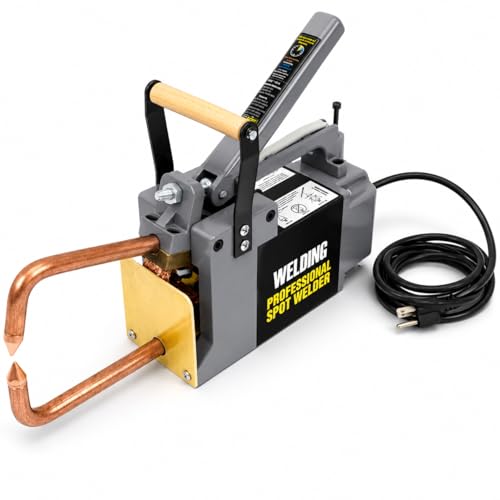
- 110V handheld spot-welding design
- 5,500A maximum output
- Copper tips and 1/8-inch capacity
Best For: Sheet metal, automotive repair, and light fabrication
Dual-Voltage Stick Pick

- 10–225A output range
- 120V/230V dual-voltage operation
- Touch Start TIG-ready design
Best For: Portable stick welding and flexible power setups
Beginner Multiprocess Pick

- Flux Core MIG, Lift TIG, and stick modes
- Synergic control with LED display
- Includes solar helmet and starter accessories
Best For: DIYers and garage projects on 110V power
Best Portable Pick

- 120V MIG and flux-core operation
- 15-pound portable inverter design
- Includes case, gun, cables, and accessories
Best For: Small repairs, hobby projects, and mobile maintenance
Best Dual-Voltage Value

- Automatic 110V/220V operation
- 250A output for common stick electrodes
- Hot start, arc force, and anti-stick
Best For: Farm repairs, job sites, and versatile stick welding
Best Versatile Pick – YESWELDER 160A 4-in-1 Welder
For shoppers comparing welding machines under 300, the YESWELDER 160A stands out for combining MIG, flux-core, stick, and lift TIG modes in a compact package. Its dual-voltage input, synergic controls, and portable design make it practical for varied repair, fabrication, and DIY work.
Best For: Beginners and DIY users who want multiple welding processes in one portable machine.
Pros:
- Supports gas MIG, flux-core MIG, stick, and lift TIG welding.
- 110V/220V input and 160A output suit a range of projects.
- Synergic controls automatically recommend voltage and wire speed.
- Compact 19.4-pound design includes a carrying handle and LED display.
Cons:
- A lift TIG torch must be purchased separately.
- Aluminum welding is not listed among its supported applications.
The YESWELDER is a strong all-around option when flexibility matters more than specialized performance. Manual adjustments also give experienced users additional control, while built-in overload, over-current, and overheat protection add useful safeguards.
Best Stick-Welding Specialist – ESAB MiniArc Rogue ES 130i
Among welding machines under 300, the ESAB MiniArc Rogue ES 130i is a focused stick-welding system built for portability and dependable arc performance. Dual-voltage operation, power-factor correction, and a dedicated 6010 mode make it suitable for shop and job-site work.
Best For: Stick welders who prioritize a stable arc, portability, and operation from variable power sources.
Pros:
- Dual-voltage input supports flexible setup locations.
- Special 6010 mode and adjustable hot start and arc force improve control.
- Power-factor correction helps resist power fluctuations and supports long extension cables.
- IP23S-designed housing and a practical portable form suit fabrication sites.
Cons:
- It is a stick-only welding system rather than a multiprocess machine.
- Electrodes are supported up to 1/8 inch.
The ESAB makes the most sense for buyers who already know they want stick welding. Its generator-compliant design and stated compatibility with cables up to 300 feet add flexibility for remote work, though a 7kW generator is recommended.
Best Simple Flux-Core Pick – Lincoln Electric Weld-Pak 90i FC
If you want one of the simpler welding machines under 300 for home repairs, the Lincoln Electric Weld-Pak 90i FC focuses on accessible flux-core operation. Its 120V plug, two-knob controls, protective metal case, and 15-pound inverter design make it easy to move and set up for small jobs.
Best For: Beginners, hobbyists, and residential users handling small repairs and DIY projects.
Pros:
- Simple voltage and wire-speed controls are easy to learn.
- Portable 15-pound design includes a shoulder strap.
- Protective metal case helps shield the machine from the elements.
- Includes the welding gun, nozzle, contact tip, work cable, and clamp.
Cons:
- It is a flux-core welder rather than a multiprocess machine.
- Its stated welding capacity is up to 1/4 inch, making it better suited to smaller jobs.
- Operation requires a 120V power source.
The Weld-Pak 90i FC is a practical choice when ease of use and portability matter most. Infinite voltage adjustment allows fine-tuning, while the included accessories reduce the need to assemble a basic setup separately.
Best High-Output Multiprocess Pick – Klutch 200A 4-in-1 Welder
For buyers evaluating welding machines under 300 who want higher output and broad process coverage, the Klutch 200A combines MIG, flux-core, TIG, and stick functions. Its 120V/230V input, inductance adjustment, and overload and thermal protection provide useful flexibility for varied metalwork.
Best For: Experienced DIYers and fabricators who need a higher-output multiprocess machine.
Pros:
- Four welding modes cover MIG, flux-core, TIG, and stick work.
- 200A output and dual-voltage input support demanding projects.
- Inductance adjustment can help refine welding performance.
- Includes MIG and TIG torches, grounding cable, regulator, gas hose, and electrode holder.
Cons:
- At 42.2 pounds, it is less portable than the lighter options here.
- A spool gun for aluminum is sold separately.
- The supplied notes do not specify a detailed material thickness capacity.
The Klutch is appealing when output and process versatility take priority over minimal weight. Its 2T/4T settings can make longer welds more convenient, while the included cables and accessories help provide a broad starting setup.
Portable Spot Welding Pick – Compact Sheet-Metal Spot Welder
For shoppers comparing welding machines under 300, the Stark USA Portable Spot Welder is a focused option for joining sheet metal with a 110V outlet. Its 1.5KVA rated input, 5,500A maximum output, copper tips, and handheld design suit repair and fabrication tasks where portability and quick spot welds matter.
Best For: Sheet-metal fabrication, automotive repair, electronics assembly, and home or light-industrial spot welding.
Pros:
- Portable 110V design with a 6-inch throat depth.
- Rated 1.5KVA input and maximum 5,500A output for efficient spot welding.
- Copper welding tips are designed for durable, reliable performance.
- Simple lever-operated controls are approachable for beginners.
Cons:
- It is a dedicated spot welder rather than a general-purpose MIG, TIG, or stick machine.
- The listed capacity is up to 1/8 inch, so thicker materials may be outside its intended range.
This machine makes the most sense when your projects center on repeatable sheet-metal spot welds. Its compact format and straightforward operation are useful for garage and repair work, but buyers needing broader welding processes should consider a multiprocess model.
Dual-Voltage Stick Pick – Weld-Pak 225i Stick Welder
Among welding machines under 300, the Lincoln Electric Weld-Pak 225i stands out for users who want dual-voltage stick welding with room for heavier work. It operates from 120V or 230V power, provides a 10–225 amp range, and includes Touch Start TIG capability when paired with the required accessories.
Best For: Portable stick welding, maintenance work, and users who want optional Touch Start TIG capability.
Pros:
- Dual-voltage operation supports both 120V and 230V inputs.
- 10–225 amp output range handles light work through welding up to 5/16-inch steel in one pass.
- 20-pound inverter design is easy to transport and includes built-in accessory storage.
- Includes electrode and work cables, holders, shoulder strap, and input adapters.
Cons:
- Touch Start TIG requires additional accessories.
- It is primarily a stick welder, so it does not provide the listed MIG process options of a multiprocess machine.
- The 30% duty cycle is specified at 225 amps on 230V input.
The Weld-Pak 225i is a practical choice for buyers who value portability and electrical flexibility more than an all-in-one process package. Its included cables and broad amperage range make it ready for stick work, while the TIG-ready feature adds an upgrade path.
Beginner Multiprocess Pick – 135A 3-in-1 Inverter Welder
For shoppers seeking welding machines under 300 with multiple processes, the BILT HARD 135A model combines Flux Core MIG, Lift TIG, and stick welding on a standard 110V outlet. Its synergic control, LED display, trigger modes, and included helmet and accessories make it geared toward DIY and garage projects.
Best For: Beginners and DIY users who want Flux Core MIG, Lift TIG, and stick capabilities from a 110V machine.
Pros:
- Three welding modes cover Flux Core MIG, Lift TIG, and stick work.
- Synergic control automatically adjusts voltage and wire speed based on amperage.
- LED display and 2T, 4T, and spot modes support accessible operation and varied tasks.
- Includes a solar-powered helmet, MIG gun, ground clamp, flux-core wire, spare tip, and brush/hammer.
Cons:
- The Lift TIG torch is not included.
- Its 135A rating is lower than the 225A output of the Lincoln model in this roundup.
- The listed product weight is 76 pounds, which may be less convenient for frequent transport.
This BILT HARD welder offers strong versatility for a 110V setup and reduces adjustment work through synergic controls. It is especially appealing for new welders who want a ready-to-weld package, though TIG users will need to purchase the required torch separately.
Best Portable Pick – Lincoln Electric Weld-Pak 90i
For welding machines under 300, the Lincoln Electric Weld-Pak 90i is a compact option for small repairs and DIY projects. Its 120V plug-in design, protective metal case, and 15-pound inverter body make it practical for home workshops or mobile work.
Best For: Small home repairs, hobby projects, maintenance work, and beginners who want a straightforward MIG or flux-core setup.
Pros:
- Supports flux-cored wire up to 1/4-inch material and solid MIG wire up to 3/16-inch.
- Lightweight design includes a shoulder strap and protective metal case.
- Includes welding gun, cables, clamp, contact tips, nozzles, drive rolls, and a gas regulator.
- Simple two-knob control with infinite voltage adjustment.
Cons:
- Limited to 120V input power.
- Designed primarily for small jobs rather than heavier fabrication.
- Solid MIG welding requires shielding gas equipment.
The Weld-Pak 90i stands out when portability and simple operation matter more than maximum output. Its included accessories and metal case make it a convenient ready-to-use choice for lighter work.
Best Dual-Voltage Value – 250A Portable Stick Welder
Among welding machines under 300, this dual-voltage stick welder offers flexible power options for home workshops, farms, and job sites. Its automatic 110V/220V switching, LED display, and portable 8.56-pound design make it easy to move between locations.
Best For: Stick welding on carbon steel, stainless steel, cast iron, and sheet metal, especially where power sources vary.
Pros:
- Automatically adapts to 110V household or 220V jobsite power.
- 250A output supports 3/32- to 1/8-inch electrodes.
- Hot start, arc force, and anti-stick features help simplify operation.
- Includes electrode holder, ground clamp, brush, and 10 welding rods.
Cons:
- 220V adapter is sold separately.
- Stick-welding focused rather than a MIG or flux-core machine.
- Supplied notes do not specify a manufacturer warranty.
This model is a strong fit for users who need broad material compatibility and the convenience of dual-voltage operation. The digital display and arc-assist features add control for both newer and experienced welders.
Best Beginner Kit – BESTMIG FLUX-135 3-in-1 Welder
For shoppers comparing welding machines under 300, the BESTMIG FLUX-135 combines MIG, lift TIG, and stick functions in a compact 110V machine. Its digital controls and included helmet and gloves make it an approachable package for home and DIY welding.
Best For: Beginners who want a versatile 3-in-1 welder for flux-core projects and materials up to 1/8 inch thick.
Pros:
- Provides MIG, lift TIG, and stick welding modes with 135A output.
- Digital technology automatically adjusts voltage and wire-feed speed.
- Includes flux-core wire, torch, electrode holder, earth clamp, gloves, and auto-darkening helmet.
- Compact 10.71-pound design with a full-color LED display.
Cons:
- TIG torch is not included.
- Uses 110V power rather than dual-voltage input.
- Flux-core wire compatibility is listed from 0.030 to 0.040 inch.
The FLUX-135 is particularly convenient for first-time welders because it includes key safety gear and automates several settings. It offers useful mode flexibility, though TIG users will need to purchase the torch separately.
How We Picked the Best Welding Machines Under 300
We selected machines based on welding process, output range, input-voltage flexibility, portability, control features, and overall usefulness for common DIY and home-shop jobs. Multi-process models receive attention because they can adapt as your skills and project requirements grow, while dedicated stick, flux-core, and spot welders may be better choices for specific tasks.
At this price, advertised amperage is only part of the picture. We also considered practical features such as inverter construction, lift-TIG compatibility, hot start, arc-force control, synergic settings, included accessories, and protective cases. Always verify the seller’s current specifications and included equipment before purchasing.
Quick Comparison
| Welder Type | Best For | Main Advantage | Common Limitation |
|---|---|---|---|
| Multi-process | DIY users who want flexibility | Handles several welding methods | May require more setup and accessories |
| Flux-core/MIG | Repairs and light fabrication | Fast, approachable wire feeding | Flux-core creates smoke and slag |
| Stick | Outdoor work and thicker steel | Simple and tolerant of imperfect surfaces | Less convenient for thin sheet metal |
| Spot | Sheet-metal joining | Quick repeatable welds | Limited to compatible overlapping panels |
Key Buying Factors for Welding Machines Under 300
Process and Material
Flux-core and MIG-style machines are generally the easiest starting point for brackets, repairs, and mild-steel fabrication. Stick welders are useful outdoors and on heavier steel, while lift TIG is better suited to cleaner, more controlled welds when you have the right torch and gas setup. A spot welder is a specialized choice rather than a general replacement for an arc welder.
Power and Output
Check whether the machine runs on 120V, 240V, or both. A dual-voltage model offers more flexibility, but its maximum output may depend on a 240V circuit. Confirm circuit requirements, extension-cord limits, duty cycle, and realistic material thickness instead of relying only on the headline amp rating.
Controls, Portability, and Accessories
Hot start can make stick ignition easier, arc-force control can help reduce sticking, and synergic controls may simplify setup for beginners. A compact case or shoulder strap is useful for mobile repairs. Helmets, clamps, torches, regulators, and wire may be included, but accessory quality varies and some processes require separate purchases.
Who Should Buy Which Welding Machines Under 300?
For Beginners and General DIY Repairs
Choose a compact MIG, flux-core, or multi-process unit with straightforward controls. These models offer a practical learning path and are suitable for common household and light automotive repairs.
For Outdoor or Heavier Steel Work
A dual-voltage stick welder is often the better fit. Stick equipment works without shielding gas and is less sensitive to wind, surface contamination, and remote job-site conditions.
For Sheet Metal
Consider a spot welder when your work involves overlapping thin panels and repeatable attachment points. For varied repairs, a MIG or flux-core machine is more versatile.
For Maximum Flexibility
A multi-process welder makes sense if you want one machine for MIG, flux-core, stick, and occasional lift-TIG work. Budget for consumables, proper ventilation, protective clothing, and process-specific accessories.