A dependable monitor mix can help drummers stay locked to the band without relying on loud stage wedges. The best wireless in-ear monitor systems balance clear sound, reliable transmission, comfortable bodypacks, and enough operating range for rehearsals, worship spaces, clubs, and larger stages.
This roundup compares 10 systems across UHF, 2.4GHz, and 5.8GHz platforms, including single-receiver kits and multi-channel options. Use the guide below to match system capacity and features to your setup.
Best 10 Wireless in Ear Monitor System for Drummers Picks for 2026
Best Compact Choice

- Under 5ms latency
- Up to five-hour rechargeable battery
- Balanced XLR and 1/4-inch inputs
Best For: Simple mono monitoring for rehearsals, studios, and small live setups
Best for Multi-Musician Monitoring
Phenyx Pro PTM-33-4B Wireless IEM

- Four independent monitor mixes
- Four UHF receivers included
- Rack-mountable transmitter with IR sync
Best For: Bands and worship teams needing separate mono mixes
Best Simple Touring Setup
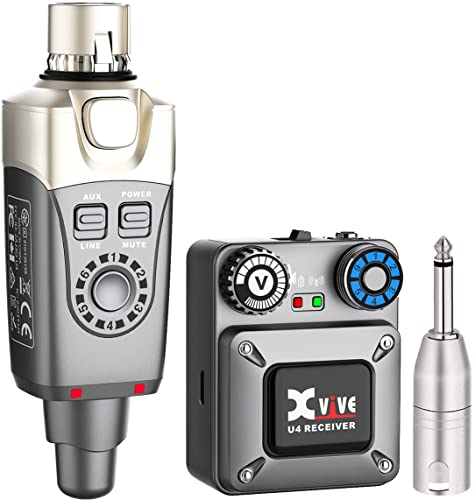
- Over 90 feet of working range
- Under 5ms latency
- Bag and adapter included
Best For: Portable personal monitoring at small venues and rehearsals
Best Stereo Flexibility

- Selectable stereo or mono operation
- 89 tunable UHF frequencies
- EQ, limiter, balance, and PAD controls
Best For: Drummers needing adjustable stereo monitoring for stage or studio use
Best Plug-and-Play Pick

- 5.8GHz wireless with auto channel scan
- Less than 5ms latency
- 100-foot range and 5-hour battery
Best For: Drummers wanting simple, low-latency monitoring for rehearsals and gigs
Best Long-Range Band System
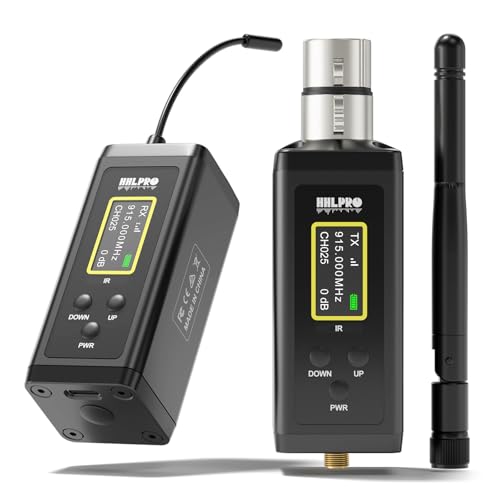
- 300-foot range with 50 channels
- Auto-scan and one-touch sync
- Metal build with 5–8-hour battery
Best For: Gigging drummers and bands needing long range and flexible channel selection
Best Sound-Focused U45 Option

- 24-bit/48kHz audio with 110dB SNR
- True-diversity 5.8GHz connection
- 100-foot range and less than 5ms latency
Best For: Drummers seeking detailed audio for mixers, interfaces, rehearsals, and live shows
Clean 5.8GHz Pick

- 5.8GHz wireless transmission
- 48kHz/24-bit stereo audio
- Under-5ms latency
Best For: Drummers and bands prioritizing stable, low-latency stereo monitoring
Band-Friendly Value
LEKATO MS-20 Multi-Receiver IEM

- Up to 30 hours with charging case
- Two receivers included
- 150-foot open-area range
Best For: Bands needing portable multi-receiver monitoring and extended battery life
Best Interface Flexibility

- Color-screen beltpack receiver
- Under-6ms latency
- 1/4-inch, 1/8-inch, and XLR connectivity
Best For: Drummers needing flexible connections and an easy-to-read receiver
Best Compact Choice – Xvive U4 Wireless IEM System
The Xvive U4 is a practical wireless in ear monitor system for drummers who want a compact, quick-to-use setup for rehearsals, studio sessions, or live performances. Its 2.4GHz connection delivers under 5ms latency, while the metal transmitter and receiver are built for regular stage use.
Best For: Drummers and performers needing a simple single-channel monitoring system with rechargeable power and low latency.
Pros:
- Under 5ms latency helps keep monitoring responsive.
- Rechargeable batteries provide up to five hours of use.
- Supports balanced XLR or unbalanced 1/4-inch TS input.
- Six channels can broadcast simultaneously without interference.
Cons:
- Provides mono monitoring rather than stereo.
- Operating range and battery life may be limiting for longer or larger shows.
The U4 is a straightforward choice when ease of setup matters more than advanced mixing features. Its limiter, broad frequency response, and simple channel pairing make it well suited to personal monitoring in smaller venues.
Best for Multi-Musician Monitoring – Phenyx Pro PTM-33-4B Wireless IEM
The Phenyx Pro PTM-33-4B is a wireless in ear monitor system for drummers and bands that need several independent monitor feeds. Its transmitter accepts four left/right input groups and provides four receivers, allowing a four-member group to use separate mixes without adding multiple transmitter units.
Best For: Four-member bands, worship teams, and stage crews that need separate mono monitoring channels.
Pros:
- Four standalone mixes support individualized monitoring.
- Includes four UHF bodypack receivers and four in-ear earphones.
- Offers 4 x 25 selectable UHF frequencies to help avoid interference.
- IR sync and included rack-mount hardware simplify setup.
Cons:
- Mono monitoring only.
- Line-of-sight range is approximately 140 to 164 feet and can be reduced by walls or metal obstructions.
- Receivers use AA batteries rather than rechargeable batteries.
For a drummer sharing a monitoring system with several performers, the PTM-33-4B offers strong value through its four-receiver design. It is particularly useful when the mixer has enough auxiliary outputs for separate mixes.
Best Simple Touring Setup – Xvive U4 Single-Receiver Set
The Xvive U4 single-receiver set is a compact wireless in ear monitor system for drummers who need a portable personal monitor without a complicated rack setup. It operates on the 2.4GHz band, offers under 5ms latency, and includes a transmitter, receiver, adapter, and carrying bag.
Best For: Drummers playing small clubs, rehearsals, and mobile performances who need one personal monitor feed.
Pros:
- Compact metal transmitter and receiver are easy to transport.
- Over 90 feet of stated working range suits small venues.
- Up to five hours of rechargeable battery life.
- Six channels and under 5ms latency support responsive monitoring.
Cons:
- Includes only one receiver.
- Mono monitoring may not provide the spaciousness of a stereo system.
- 2.4GHz operation can be more dependent on the local wireless environment.
This version makes sense for a drummer who wants a grab-and-go monitor system rather than a multi-performer package. The included bag and adapter improve portability, while the short latency keeps the monitor feed usable onstage.
Best Stereo Flexibility – Phenyx Pro PTM-10 UHF IEM
The Phenyx Pro PTM-10 is a versatile wireless in ear monitor system for drummers who want selectable stereo or mono operation. Its 900MHz UHF design provides up to 89 tunable frequencies, while EQ, balance, limiter, and PAD controls help tailor the monitor feed for stage, studio, worship, or presentation use.
Best For: Performers who want stereo monitoring, frequency flexibility, and more control over their monitor sound.
Pros:
- Stereo/mono switching accommodates different monitoring needs.
- 89 selectable frequencies support multi-system operation.
- Up to 160 feet of stated operating coverage.
- EQ, balance, limiter, PAD, and lock functions add useful control.
Cons:
- Only one bodypack receiver is included.
- More controls and rack hardware may be unnecessary for a basic personal setup.
- Receivers use AA batteries.
The PTM-10 is the strongest fit here for drummers who want more than a basic mono feed. Its stereo mode, tunable UHF frequencies, and signal-management controls make it a flexible option for professional stage environments.
Best Plug-and-Play Pick – Xvive U45 5.8GHz IEM System
The Xvive U45 is a practical wireless in ear monitor system for drummers who want a straightforward setup, low latency, and dependable short-to-medium-range stage mobility. Its 5.8GHz connection, automatic channel scanning, and less-than-5ms latency support clear monitoring during rehearsals and performances.
Best For: Drummers needing a compact system for gigs, rehearsals, or home performance setups within roughly 100 feet.
Pros:
- 5.8GHz wireless connection with automatic channel scanning
- Less than 5ms latency helps preserve timing and feel
- Up to 100 feet of wireless range and approximately 5 hours of battery life
Cons:
- Battery life is limited to about 5 hours
- Includes one transmitter and one receiver, so additional receivers may be needed for a full band
For drummers who value simple operation and low latency over extended battery life, the U45 offers a balanced feature set in a portable package.
Best Long-Range Band System – HHLPRO F10P UHF IEM
The HHLPRO F10P is a wireless in ear monitor system for drummers who need extra range and flexible channel management in busy live environments. Its 902–927MHz UHF operation, 50 channels, auto-scan, and less-than-5ms latency are suited to bands working across varied venues.
Best For: Gigging drummers and full bands that need up to 300 feet of range, multiple channels, and a rugged travel-ready system.
Pros:
- Up to 300 feet of range with 50 selectable channels
- Auto-scan and one-touch syncing simplify setup
- 5–8 hours of battery life, metal construction, and included hard case
- Dual volume controls allow adjustment from the transmitter and receiver
Cons:
- Mono design may offer less flexibility than a stereo monitoring system
- The larger UHF setup may be more than needed for small home rigs
This is the strongest option here for drummers who move around larger venues or share a wireless setup with multiple band members. Its range and rugged accessories add practical value for frequent gigging.
Best Sound-Focused U45 Option – Xvive U45 Black IEM System
The Xvive U45 Black combines a 5.8GHz true-diversity connection with 24-bit/48kHz audio and a 20Hz–20kHz frequency response. For drummers comparing a wireless in ear monitor system for drummers, it offers low latency, channel scanning, and a familiar setup for studio work, rehearsals, and live performance.
Best For: Drummers who prioritize detailed audio and a stable 100-foot connection for mixers, interfaces, and stage use.
Pros:
- True-diversity 5.8GHz wireless connection over up to 100 feet
- 24-bit/48kHz audio, 20Hz–20kHz response, and 110dB signal-to-noise ratio
- Less than 5ms latency with channel scan mode
- USB-C charging and approximately 5 hours of battery life
Cons:
- Battery life is limited to about 5 hours
- Channel scanning requires manually matching the transmitter to the receiver
The Black U45 is a compelling choice when sound detail matters as much as wireless convenience. Its audio specifications and true-diversity design make it particularly suitable for players monitoring a mixer or audio interface.
Clean 5.8GHz Pick – High-Resolution Stereo IEM
For drummers comparing a wireless in ear monitor system for drummers, this 5.8GHz model emphasizes stable stereo transmission, low latency, and a straightforward rechargeable setup. Its under-5ms latency and 100-foot range are practical for rehearsals, stage work, and other situations where timing matters.
Best For: Drummers and bands wanting low-latency stereo monitoring with 5.8GHz wireless transmission.
Pros:
- 5.8GHz transmission is designed to reduce interference compared with crowded 2.4GHz systems.
- 48kHz/24-bit digital audio supports detailed stereo monitoring.
- Under-5ms latency helps keep monitoring closely synchronized with live playing.
- Automatic one-to-many pairing supports multiple receivers and includes a rechargeable design.
Cons:
- Battery life is listed at over 5 hours, which may require recharging for longer events.
- The package includes a transmitter and receiver, but earphones are not specifically listed among the included items.
This is a strong fit when clean wireless performance and minimal monitoring delay are higher priorities than extended battery life. The stated 100-foot range and multi-receiver pairing also make it practical for group rehearsals and stage setups.
Band-Friendly Value – LEKATO MS-20 Multi-Receiver IEM
The LEKATO MS-20 is a practical wireless in ear monitor system for drummers who need portable gear for rehearsals, gigs, or band monitoring. Its charging case provides up to 30 hours of stated usage, while one transmitter can support multiple receivers for shared monitoring setups.
Best For: Bands and drummers who need long battery life, multiple receivers, and flexible mono/stereo routing.
Pros:
- Charging case supports up to 30 hours of use and charges one transmitter plus two receivers.
- One transmitter can send to up to 10 pairs of devices, according to the supplied notes.
- 150-foot open-area transmission range gives performers room to move on stage.
- Supports OTG input, 24-bit/48kHz audio, and a one-touch mono/stereo switch.
Cons:
- The system uses the more crowded 2.4GHz wireless band.
- Earphones are not included.
- It is not water resistant, so it needs care around moisture.
With two receivers included and a generous charging-case runtime, the MS-20 is especially appealing for band practice and shared monitoring. It offers useful routing flexibility, though buyers should plan to supply compatible earphones separately.
Best Interface Flexibility – Donner CV-3 Screen Receiver
For drummers choosing a wireless in ear monitor system for drummers, the Donner CV-3 stands out for its beltpack color screen and broad connection options. It combines under-6ms latency, mono/stereo switching, and compatibility with drum, mixer, PA, phone, and computer setups.
Best For: Drummers who value a visible receiver interface and flexible connections across rehearsal and live-performance gear.
Pros:
- Less-than-6ms latency is designed for responsive real-time monitoring.
- Color screen provides real-time audio visualization and clearer function information.
- Includes 1/4-inch, 1/8-inch, and XLR connection options through the supplied cables.
- Lightweight zinc-alloy receiver offers up to 10 hours of stated battery life.
Cons:
- Its wireless range is listed at 100 feet, shorter than the LEKATO MS-20’s stated open-area range.
- The 2.4GHz band may be more exposed to congestion than a 5.8GHz alternative.
- The package includes one transmitter and one receiver, rather than a multi-receiver setup.
The CV-3 is a versatile choice for players moving between electronic drums, mixers, PA systems, and recording equipment. Its screen and included adapter cables make setup easier to monitor, while the 10-hour battery rating suits many rehearsals and shows.
How We Picked the Best Wireless in Ear Monitor System for Drummers
We focused on features that matter during real rehearsals and performances: transmission stability, usable range, stereo or mono operation, receiver capacity, battery runtime, setup simplicity, and portability. We also considered whether each system suits a solo drummer, a full band, or a venue that needs multiple independent monitor mixes.
Frequency band alone does not determine performance. UHF systems can offer strong range and wall penetration, while 2.4GHz and 5.8GHz models may be compact and easy to deploy. Local regulations, nearby wireless equipment, venue congestion, and line of sight can affect results.
Quick Comparison
| System type | Best suited to | Typical advantage | Potential trade-off |
|---|---|---|---|
| Single-channel UHF | Individual monitor mixes | Longer range and robust coverage | May require frequency coordination |
| Multi-channel UHF | Bands and larger setups | Several receivers or mixes from one rack unit | More planning and higher cost |
| 2.4GHz | Rehearsals and compact live rigs | Simple pairing and portable hardware | Can face Wi-Fi and Bluetooth congestion |
| 5.8GHz | Low-latency stereo monitoring | Clean digital operation in suitable environments | Range can be more sensitive to obstacles |
Key Buying Factors for a Wireless In-Ear Monitor System for Drummers
Mono or Stereo Monitoring
Mono is often sufficient for a click, cues, and a balanced band mix. Stereo can make panning, ambience, and instrument separation easier, but it may require a stereo console output and more careful mixing.
Range and Stage Layout
Check the manufacturer’s range claims, but plan for less in crowded venues or through walls. A drummer who stays near the transmitter may need less range than a performer moving between a stage and side room.
Receiver and Transmitter Capacity
Some kits support one bodypack, while multi-channel models can serve several performers. Confirm whether additional receivers are compatible and whether each musician needs a separate transmitter or monitor mix.
Battery Life and Charging
Look for runtime that comfortably exceeds a rehearsal or show, plus clear battery indicators. Charging cases are convenient for compact systems; replaceable or rechargeable packs may be preferable for frequent touring.
Connectivity and Latency
Verify the transmitter’s input connectors and whether your mixer provides the required output. Low latency is particularly important for drummers using clicks, cue tracks, or tightly synchronized loops.
Who Should Buy Which Wireless in Ear Monitor System for Drummers?
Choose a straightforward single-channel system if you mainly need a personal monitor feed for rehearsals, small gigs, or a fixed drum position. A stereo model is a better fit when you rely on panning or want a more natural full-band mix.
Bands with multiple in-ear users should consider a multi-channel UHF system or a platform that supports additional receivers. For portable setups with minimal frequency coordination, a 2.4GHz or 5.8GHz kit can be convenient, provided the venue’s wireless environment is manageable.
Before buying, confirm connector compatibility, available mixer outputs, frequency rules in your area, and the number of independent mixes you need. The best wireless in-ear monitor system for drummers is the one that delivers stable coverage and the right monitor workflow without adding unnecessary complexity.