Choosing between four-channel microphone preamps can change everything from noise floor and headroom to how easily you route signals in the studio or on stage.
Below, we’ve grouped standout options for recording, podcasting, and hybrid setups so you can quickly find the right balance of clean gain, character, and features.
Best 10 Four Channel Microphone Preamps Picks for 2026
4-Channel Studio Preamp Rack

- 4 mic preamp channels plus instrument DI
- Fully discrete, transformer-coupled design
- 65 dB of gain with rackmount format
Best For: tracking with transformer color and DI support
Compact Mixer with 16 Preamps

- 16 Onyx mic preamps in a compact mixer
- 60 dB gain range with high-headroom design
- Improved RF rejection for broadcast use
Best For: users needing many mic inputs and mixer routing
Preamp and Compressor Channel Strip
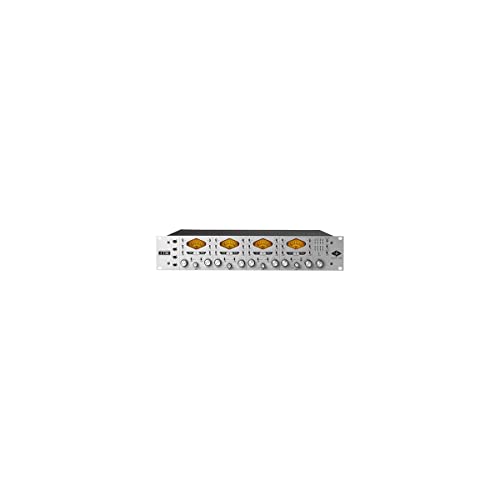
- 4-channel tube/FET preamp and DI
- Tone blending knob plus compression
- 8-channel 24-bit/192 kHz A/D conversion
Best For: capture chains that need preamp, compression, and conversion
High-Headroom Quad Preamp

- 4 PureDrive mic preamps with Hi-Z/DI inputs
- 31-step trim control in 1 dB increments
- Impedance options for tonal shaping
Best For: precise gain staging and tonal flexibility across four channels
Studio-grade control
Focusrite ISA428 MkII 4-Channel Microphone Preamplifier

- Four-channel preamp with ultra-low noise performance
- Wide gain range plus 20dB variable trim
- Variable impedance and insert points for flexibility
Best For: engineers needing transparent four-channel recording control
Clean gain helper
Cloud Microphones Cloudlifter CL-4 Mic Activator

- Adds up to +25dB of clean gain
- Keeps passive mic signals clear and natural
- Works with studio, broadcast, and live setups
Best For: users needing cleaner gain for passive microphones
Compact interface option
Blackstar Polar 4 USB-C Audio Interface

- Four high-headroom FET input channels
- Includes phantom power and balanced outputs
- Two headphone outputs and visual meters
Best For: home-studio guitarists needing an all-in-one interface
Ultra-Color Four-Channel Preamps
Black Lion Audio Auteur Quad2 four-channel mic preamp

- Ultra-high-speed input stage with Cinemag output transformers
- 66 dB of gain and 4 DI jacks
- Per-channel phantom power, pad, and polarity reverse
Best For: Engineers who want four-channel gain with transformer character
Compact Mixer Preamps
Mackie 1202VLZ4 bundle with 4 Onyx preamps

- 4 boutique-quality Onyx mic preamps in a 12-channel mixer
- 60 dB gain range and 128.5 dB dynamic range
- Phantom power, EQ, aux sends, and rack-mountable chassis
Best For: Users who want four preamps inside a compact analog mixer
Portable Recording Hub
Zoom PodTrak P4 with 4 XLR inputs

- 4 XLR mic inputs with phantom power
- 4 headphone outputs with individual volume control
- Multi-track recording, sound pads, and mix-minus
Best For: Podcasters needing portable four-input recording and monitoring
4-Channel Studio Preamp Rack – Warm Audio WA-412
If you want four channel microphone preamps in a rackmount format, the Warm Audio WA-412 is built around a fully discrete, transformer-coupled design. It pairs four mic preamp channels with instrument DI support, making it a straightforward option for tracking multiple sources with a classic hardware-style signal path.
Best For: Engineers who want a 4-channel preamp with transformer color, DI inputs, and a rack-ready layout.
Pros:
- 4-channel microphone preamplifier with instrument DI
- Custom Altran USA transformers
- Fully discrete, transformer-coupled, through-hole component topology
- 65 dB of gain per channel
Cons:
- Rackmount unit, so it is not a portable desktop preamp
- Focused on four channels, not a larger input count
This is a good fit if your priority is a dedicated four channel microphone preamps setup with a more characterful analog design. The WA-412 keeps the feature set focused and practical for multitrack tracking.
Compact Mixer with 16 Preamps – Mackie 1604VLZ4
If you are shopping for four channel microphone preamps, this Mackie mixer goes well beyond that with 16 Onyx mic preamps built into a compact 16-channel, 4-bus design. It is better suited to users who need a small mixer with lots of mic inputs, high headroom, and broad routing rather than a dedicated standalone preamp box.
Best For: Live sound, broadcast, or studio users who need many mic inputs in a compact mixer.
Pros:
- 16 boutique-quality Onyx mic preamps
- Ultra-wide 60 dB gain range
- High-headroom, low-noise mixer design
- Improved RF rejection for broadcast applications
Cons:
- Not a dedicated 4-channel microphone preamp unit
- Larger and heavier than a typical preamp-only box
This model makes sense when you need more than a simple four channel microphone preamps setup and want the added flexibility of a full compact mixer. The tradeoff is size and complexity, but the channel count and preamps are the main draw.
Preamp and Compressor Channel Strip – Universal Audio 4-710d
The Universal Audio 4-710d is a four channel microphone preamps option that combines preamp and compressor functionality in one unit. Its tube/FET preamp DI design and built-in 24-bit/192 kHz A/D conversion make it a strong choice if you want front-end flexibility and digital capture in the same box.
Best For: Users who want four channels of preamp control plus compression and built-in conversion.
Pros:
- 4-channel tube/FET preamp with DI
- Tone blending knob for shaping the front end
- 8-channel 24-bit/192 kHz A/D conversion
- Combines preamp and compressor functions
Cons:
- More complex than a basic preamp-only unit
- Heavier than simpler desktop or rack preamps
If you want four channel microphone preamps with extra processing built in, this is the most feature-rich option in the group. It is especially useful when you want to capture and shape the signal before it reaches the interface.
High-Headroom Quad Preamp – SSL PureDrive Quad
The SSL PureDrive Quad is a modern take on four channel microphone preamps, with high-performance mic pres, front-panel Hi-Z/DI inputs, and multiple input impedance options. It is designed for users who want detailed control over gain staging and tonal shaping while keeping the workflow centered on four matched channels.
Best For: Engineers who want flexible mic impedance choices and precise gain control across four channels.
Pros:
- 4-channel PureDrive mic preamps
- +48V phantom power, polarity invert, and 3rd order hi-pass filter
- 31-step Trim control with 1 dB increments
- 4 front-panel Hi-Z/DI inputs with automatic input detection
Cons:
- Premium, feature-dense design may be more than basic setups need
- Focused on four channels rather than higher channel counts
This is the most control-oriented option here for four channel microphone preamps, especially if you like adjusting trim, impedance, and input type from the front panel. It stands out for tonal flexibility rather than sheer simplicity.
Studio-grade control – Focusrite ISA428 MkII 4-Channel Microphone Preamplifier
If you’re shopping for four channel microphone preamps for a serious recording setup, the Focusrite ISA428 MkII is built for clean capture, flexible routing, and precise control. Its ultra-low noise design, wide gain range, variable impedance, and insert points make it a strong fit when you need four channels that can adapt to different mics and sources.
Best For: Studio engineers and recordists who want transparent four-channel mic preamps with detailed tone-shaping control.
Pros:
- Ultra-low noise performance with THD+N as low as 0.0009%.
- Wide gain range from 0dB to +60dB, plus 20dB variable trim.
- Variable impedance options help match different microphones.
- Includes XLR mic inputs, 1/4" line/instrument inputs, and insert points.
Cons:
- Rack-mount format is best suited to permanent studio installs.
- Feature set is more focused on recording flexibility than simplicity.
Overall, the ISA428 MkII is a practical choice when you want four channel microphone preamps that prioritize clarity, routing options, and consistent studio performance. It offers the kind of control that helps you dial in different sources without sacrificing transparency.
Clean gain helper – Cloud Microphones Cloudlifter CL-4 Mic Activator
The Cloudlifter CL-4 is a different kind of option in the four channel microphone preamps conversation: it boosts passive mic signals before they hit your main preamp. If you work with quiet vocal, percussion, or acoustic sources, it can help add up to +25dB while keeping the mic’s natural sound intact and avoiding phantom power transfer to the microphone.
Best For: Podcasters, streamers, and recording setups that need clean gain for passive microphones.
Pros:
- Adds up to +25dB of clean gain.
- Helps reduce feedback while improving microphone clarity.
- Compatible with passive ribbons and other passive mics.
- Designed for studio, live sound, radio, and voiceover use.
Cons:
- Does not power the mic itself.
- Functions as a mic activator rather than a full preamp channel strip.
- Requires phantom power from the host preamp or mixer.
In practice, the CL-4 is best viewed as a gain helper rather than a traditional four-channel interface preamp. It makes sense when your current preamp needs a cleaner front end for low-output microphones.
Compact interface option – Blackstar Polar 4 USB-C Audio Interface
The Blackstar Polar 4 is a useful pick if you want four channel microphone preamps built into a compact USB-C audio interface. It offers four high-headroom FET input channels, phantom power for condensers, balanced outputs, and visual level meters, making it a practical all-in-one option for small studios and recording musicians.
Best For: Guitarists and home-studio users who want a compact interface with four mic preamps and monitoring features.
Pros:
- Four high-headroom FET input channels for flexible recording.
- Includes +48V phantom power for condenser microphones.
- Two high-output headphone outputs support private monitoring.
- Visual level meters help with accurate input control.
Cons:
- Product details list the interface as 2-channel, so channel specs may need verification.
- Most compelling for guitar and home-studio workflows rather than large rigs.
For buyers comparing four channel microphone preamps in interface form, the Polar 4 stands out for convenience and monitoring tools. Its bundled software and bus-powered design make it appealing when you want a simple studio hub with useful features built in.
Ultra-Color Four-Channel Preamps – Black Lion Audio Auteur Quad2 four-channel mic preamp
If you want four channel microphone preamps with a more characterful studio feel, the Black Lion Audio Auteur Quad2 is built around an ultra-high-speed input stage and Cinemag output transformers. It gives you 66 dB of gain, four instrument/line DI jacks, and per-channel control options that make it useful for mics ranging from condensers to demanding dynamic and ribbon models.
Best For: Tracking four microphones at once with transformer color and enough gain for tougher sources.
Pros:
- Ultra-high-speed input stage with Cinemag output transformers
- 66 dB of gain for a wide range of microphones
- 4 instrument/line DI jacks add flexibility
- Per-channel phantom power, polarity reverse, and pad
Cons:
- Single-purpose rack unit, so it is not as flexible as a mixer
- Heavy at 13 pounds
The Auteur Quad2 stands out if your four channel microphone preamps need both strong gain and a more hands-on analog presentation. The VU metering on all four channels also makes level checking straightforward during sessions.
Compact Mixer Preamps – Mackie 1202VLZ4 bundle with 4 Onyx preamps
For buyers comparing four channel microphone preamps in a compact live or utility setup, the Mackie 1202VLZ4 brings four boutique-quality Onyx preamps inside a 12-channel analog mixer. It adds wide gain range, phantom power, inserts, EQ, and routing options, so it works well when you need preamps plus basic mixing in one chassis.
Best For: Small setups that need four mic preamps plus mixer routing and a bundled handheld mic.
Pros:
- 4 Onyx mic preamps in a compact 12-channel mixer
- Ultra-wide 60 dB gain range and 128.5 dB dynamic range
- Phantom power, 3-band EQ, and 2 aux sends
- Built-like-a-tank steel chassis with rack-mountable design
Cons:
- More of a mixer bundle than a dedicated preamp unit
- Includes extra microphone and cables you may not need
This bundle makes sense if your four channel microphone preamps need to live inside a practical all-in-one mixer rather than a standalone rack processor. The included extras are useful, but the real value is the four Onyx preamps and the flexible analog signal path.
Portable Recording Hub – Zoom PodTrak P4 with 4 XLR inputs
If you are shopping for four channel microphone preamps in a portable recording workflow, the Zoom PodTrak P4 is a practical option because it combines four XLR mic inputs with phantom power, four headphone outputs, and multi-track recording. It is aimed more at podcasting and remote interviews than traditional rack preamp duty, but it covers the basics cleanly.
Best For: Podcast hosts and interviewers who need four mic inputs, headphone monitoring, and portable recording.
Pros:
- 4 XLR microphone inputs with phantom power
- 4 headphone outputs with individual volume control
- Multi-track recording plus 4 programmable sound pads
- Automatic mix-minus and USB audio interface mode
Cons:
- Battery life is limited to up to 3.5 hours on two AA batteries
- Designed as a recorder/interface, not a dedicated preamp rack
The PodTrak P4 fits buyers who need four channel microphone preamps wrapped into a portable podcast recorder rather than a studio preamp strip. Its remote-interview features and individual headphone controls make it especially convenient for small production teams.
How We Picked the Best Four Channel Microphone Preamps
We focused on preamps and preamp-equipped units that offer four usable mic channels, strong gain performance, low noise, reliable build quality, and practical routing for real-world workflows. We also considered whether a model is better suited to clean studio capture, colored recording, podcast production, or all-in-one live and mobile use.
Quick Comparison
If you want the cleanest path, look at transparent studio-focused designs. If you want more character, transformer or drive-based circuits may suit you better. For podcasting and content creation, convenience features like built-in compression, USB connectivity, headphone monitoring, and easy gain staging can matter more than pure sonics.
Key Buying Factors for Four-Channel Microphone Preamps
Gain Range and Noise Performance
Make sure the unit can deliver enough gain for your microphones without forcing you into noisy settings. This is especially important for dynamic and ribbon mics, quiet vocalists, and distant drum or room miking.
Sound Character
Some four-channel microphone preamps are designed to sound transparent, while others add harmonic color, saturation, or transformer thickness. Choose based on whether you want accuracy or a more finished tone straight from the input stage.
Connectivity and Routing
Check for insert points, direct outs, line outputs, USB integration, headphone feeds, and expansion options. The right routing can save you from needing extra gear later.
Use Case Fit
Studio engineers may prioritize clean conversion and consistent gain structure, while podcasters may value simplicity, monitoring, and compression. Live users should pay attention to durability, footprint, and mixer-style flexibility.
Who Should Buy Which Four Channel Microphone Preamps?
Buyers building a recording chain around Four Channel Microphone Preamps should choose a transparent unit for versatility, a colored preamp if they want more vibe on vocals or instruments, and a mixer or recorder if they need additional workflow tools. For remote interviews and mobile production, convenience-first units are usually the smartest choice. For studio tracking, choose the model that best matches your microphones and the amount of sonic character you want baked in at the source.