Hybrid analog digital mixing consoles give you the hands-on feel many engineers prefer, while adding digital flexibility for routing, effects, recording, and remote control.
If you want one mixer that can adapt to live bands, podcasts, worship, rehearsal spaces, or small venues, this roundup highlights versatile options worth a close look in 2026.
Best 10 Hybrid Analog Digital Mixing Consoles Picks for 2026
Tablet-Controlled Live Mixing
Behringer X AIR XR18 18-Channel Digital Mixer
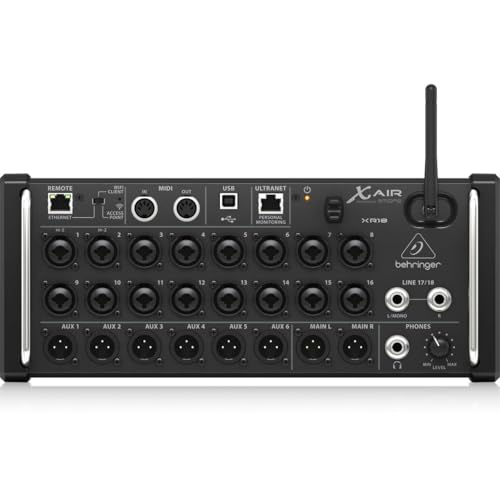
- 18-input, 12-bus digital mixer
- 16 programmable MIDAS-designed preamps
- Built-in Wi-Fi and 18x18 USB audio
Best For: Bands and studios needing compact remote-controlled digital mixing
Premium Large-Format Analog
Yamaha MGP24X Premium Mixing Console

- 24 channels with 16 mic inputs
- 6 aux sends, 2 FX sends, and matrix out
- USB connectivity for digital workflow
Best For: Live sound setups needing a large, flexible console
Recording-Focused Analog Hybrid
PreSonus StudioLive AR16c Analog Mixer

- 18-channel analog mixer with XMAX preamps
- USB-C recording and SD main-mix capture
- Bluetooth 5.0 and bundled DAW software
Best For: Home studios and musicians needing analog mixing with recording tools
Large Digital Console
Yamaha TF5 32-Channel Digital Mixing Console

- 32 combo inputs and 48 mixing channels
- 33 motor faders for hands-on control
- USB and Wi-Fi connectivity
Best For: Large live sound setups needing a full digital console
Hybrid recording mixer
PreSonus StudioLive AR12c 14-Channel

- 14-channel analog mixer with XMAX preamps
- USB-C interface records every channel at 24-bit/96 kHz
- Built-in SD recorder plus Bluetooth 5.0
Best For: Compact live and studio setups that need simple recording integration
Portable digital console
Yamaha TF1 16-Channel Digital Mixer

- 17 motor faders with 40 input mixing channels
- 20 aux buses and 8 DCA groups for live routing
- 16 combo inputs plus USB and Wi-Fi connectivity
Best For: Portable live sound where digital control and routing flexibility matter
Entry-level hybrid mixer
Phenyx Pro PTX-15 4-Channel Mixer

- Four combo inputs with independent channel controls
- USB interface, Bluetooth streaming, and 16 DSP effects
- 5-band stereo EQ plus +48V phantom power
Best For: Small gigs, karaoke, and simple portable audio setups
Live Band Recording Pick
Zoom LiveTrak L-20 20-Channel Mixer/Recorder
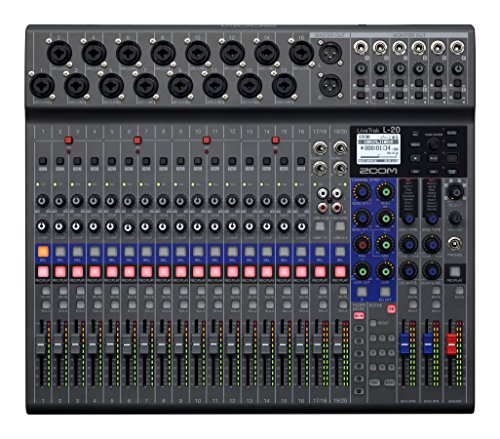
- 22-track 24-bit/96kHz SD recording
- Six independent monitor mixes
- USB interface with iPhone/iPad control
Best For: Bands, podcasters, and live rigs needing multitrack recording
Flexible Routing Pick
Phenyx Pro PTL-600 6-Channel Mixer

- 4 XLR/LINE inputs plus Bluetooth and USB-B
- 2 AUX, BUS, and SUB routing options
- 16 DSP effects with send/return support
Best For: Small live setups, home studios, and streamers
Compact Bluetooth Pick

- Bluetooth plus USB/MP3/flash reader support
- XLR and 1/4" inputs with 48V phantom power
- 10-segment meter and 3-band EQ on all channels
Best For: Karaoke, small gigs, and simple playback-driven setups
Tablet-Controlled Live Mixing – Behringer X AIR XR18 18-Channel Digital Mixer
If you want hybrid analog digital mixing consoles features without a bulky control surface, the Behringer X AIR XR18 is built for tablet-first operation in studio and live settings. It gives you 18 inputs, 16 Midas-designed mic preamps, built-in Wi-Fi, and USB recording in a compact rack-style unit.
Best For: Bands, small venues, and project studios that want remote-controlled digital mixing and multichannel recording.
Pros:
- 18-input, 12-bus digital mixer for studio and live use
- 16 fully programmable MIDAS-designed mic preamps
- Built-in tri-mode Wi-Fi router for direct operation
- 18 x 18 bidirectional USB interface for recording
Cons:
- Requires a tablet for normal operation
- No physical faders on the unit itself
Overall, the XR18 is a practical choice when you want digital routing, remote control, and multichannel USB audio in one portable box. It is especially appealing if you value compact size and built-in wireless over traditional hands-on console controls.
Premium Large-Format Analog – Yamaha MGP24X Premium Mixing Console
The Yamaha MGP24X fits buyers looking for hybrid analog digital mixing consoles style practicality with a more traditional large-format layout and USB connectivity. It provides 24 line inputs, 16 mic inputs with phantom power, and multiple aux, group, and matrix outputs for flexible live or installation use.
Best For: Live sound engineers and venues that want a large analog-style console with USB integration.
Pros:
- 24-channel mixer with 16 mic inputs and 24 line inputs
- 48V phantom power and HPF per channel
- 6 aux sends, 2 FX sends, 4 group buses, and matrix out
- USB connectivity for digital integration
Cons:
- Large and heavy compared with compact mixers
- No tablet control or built-in wireless features listed
The MGP24X is a strong fit if you want a straightforward console with plenty of channel count and routing options. Its value comes from broad input capacity and practical USB connectivity rather than advanced remote-control features.
Recording-Focused Analog Hybrid – PreSonus StudioLive AR16c Analog Mixer
The PreSonus StudioLive AR16c is a strong option if you want hybrid analog digital mixing consoles functionality in an analog mixer that also handles recording well. It combines 18-channel analog mixing, USB-C recording, SD playback and recording, Bluetooth 5.0, and bundled software for a more complete home or project studio workflow.
Best For: Musicians and home studios that want analog mixing with built-in recording features.
Pros:
- 18-channel analog mixer with 12 XMAX mic preamps
- 24-bit/96 kHz USB 2.0 recording interface over USB-C
- 2×2 SD recorder for main mix capture
- Bluetooth 5.0 plus included Capture and Studio One Artist software
Cons:
- USB recording is focused on capture and interface use, not full digital mixing
- SD recording is limited to the main mix
This mixer is best when you want a hands-on analog surface with modern recording tools built in. It offers a useful balance of channel count, onboard effects, and software support for practical recording sessions.
Large Digital Console – Yamaha TF5 32-Channel Digital Mixing Console
The Yamaha TF5 is designed for users comparing hybrid analog digital mixing consoles who need a full digital surface with serious channel capacity. It offers 32 analog XLR/TRS combo inputs, 48 mixing channels, Wi-Fi and USB connectivity, and 33 motor faders for fast hands-on control.
Best For: Larger live sound applications that need extensive digital routing and physical fader control.
Pros:
- 32 XLR/TRS combo mic/line inputs and 48 input mixing channels
- 33 motor faders for 32 channels plus master
- 20 aux sends plus stereo and sub buses
- USB and Wi-Fi connectivity for flexible operation
Cons:
- Large footprint and 20 kg weight make it less portable
- Primarily aimed at bigger setups rather than small portable rigs
For users who want a more traditional console feel with digital mixing features, the TF5 delivers depth and control. Its large channel count and motorized faders make it a better match for demanding live systems than compact portable rigs.
Hybrid recording mixer – PreSonus StudioLive AR12c 14-Channel
If you want hybrid analog digital mixing consoles that can handle both live mixing and recording, the PreSonus StudioLive AR12c is built for that workflow. It combines a 14-channel analog mixer, USB-C-connected 24-bit/96 kHz interface, and onboard SD recording so you can capture sessions without extra gear.
Best For: Small live rigs, home studios, and users who want straightforward multi-channel recording plus analog mixing.
Pros:
- 14-channel analog layout with 8 XMAX mic preamps and 12 balanced line inputs
- USB 2.0 recording interface over USB-C with record-every-channel support
- Built-in SD/SDHC recorder for main-mix capture up to 32 GB cards
- Includes Bluetooth 5.0, stereo effects, and Studio One Artist software
Cons:
- SD recording is limited to main mix capture, not full multitrack
- Smaller channel count than larger digital desks
- Best suited to compact setups rather than large productions
The AR12c is a practical choice if you want an analog-first mixer with useful digital recording features. It stands out for combining live-board simplicity with direct computer and SD recording in one compact unit.
Portable digital console – Yamaha TF1 16-Channel Digital Mixer
Among hybrid analog digital mixing consoles, the Yamaha TF1 is aimed at users who want a compact digital desk with serious routing and control. It offers 17 motor faders, 40 input mixing channels, Wi-Fi and USB connectivity, and a full set of aux and DCA group tools for organized live mixing.
Best For: Small venues, portable live sound setups, and operators who want digital recall and motorized control in a compact frame.
Pros:
- 17 motor faders for hands-on control of channels and master
- 40 input mixing channels with 20 aux buses and 8 DCA groups
- 16 XLR/TRS combo mic/line inputs plus stereo RCA inputs
- USB and Wi-Fi connectivity for flexible system integration
Cons:
- No built-in analog recording workflow like an SD recorder
- More complex than a basic analog mixer
- Designed for smaller systems rather than large-format productions
The TF1 makes sense when you need a portable digital console with structured mixing tools instead of a simple analog board. Its motorized faders and deeper bus architecture give it a clear advantage for repeatable live setups.
Entry-level hybrid mixer – Phenyx Pro PTX-15 4-Channel Mixer
If you’re comparing hybrid analog digital mixing consoles on a tighter budget, the Phenyx Pro PTX-15 keeps the essentials focused. It provides four mono combo inputs, USB audio interface support, Bluetooth streaming, and built-in 16 DSP effects for small live gigs, karaoke, and simple stage setups.
Best For: Small performance setups, karaoke, and users who need basic mixing with USB and Bluetooth convenience.
Pros:
- Four mono XLR/line combo inputs with independent channel controls
- USB audio interface plus Bluetooth streaming for flexible playback and recording
- Built-in 16 DSP effects and 5-band stereo graphic equalizer
- Each channel includes +48V phantom power support
Cons:
- Only four channels, so it is not suited to larger sessions
- Less feature-rich than bigger digital consoles
- Best for compact, entry-level use rather than complex routing
The PTX-15 is a straightforward option when you want a small mixer with modern connectivity and onboard effects. It is most attractive for simple live work where portability and easy operation matter more than channel count.
Live Band Recording Pick – Zoom LiveTrak L-20 20-Channel Mixer/Recorder
If you’re shopping for hybrid analog digital mixing consoles for larger sessions, the Zoom LiveTrak L-20 stands out for its 20 channels, onboard recording, and practical live-monitoring tools. It is built to handle band rehearsals, live shows, podcasts, and multitrack capture without forcing you to add a separate recorder.
Best For: Bands, live engineers, and podcasters who want an all-in-one mixer/recorder with independent monitor mixes.
Pros:
- Records up to 22 tracks at 24-bit/96kHz directly to SD card.
- Six independent headphone and line outputs support personalized performer mixes.
- Includes 20 onboard effects and -128dBu EIN preamps with up to +60dB gain.
- Works as a USB audio interface and supports wireless control from an iPhone or iPad.
Cons:
- Its feature set is geared more toward recording and live routing than simple grab-and-go mixing.
- Larger shows may use most of the 20 channels quickly.
The L-20 is a strong fit when you need one box to manage live sound, monitor mixes, and multitrack recording. If that combination matters more than compact size, it offers a very practical workflow.
Flexible Routing Pick – Phenyx Pro PTL-600 6-Channel Mixer
Among hybrid analog digital mixing consoles, the Phenyx Pro PTL-600 is aimed at users who want straightforward analog control plus useful streaming and routing features. Its 6-channel layout is paired with AUX, BUS, SUB, Bluetooth, USB-B recording, and DSP effects, making it a versatile choice for small stage setups and home studio work.
Best For: Small live setups, home studios, and streamers who need flexible routing and built-in effects.
Pros:
- Offers 4 XLR/LINE inputs, stereo TRS, Bluetooth, and USB-B PC recording.
- Includes 2 AUX sends, BUS routing, SUB output, and 3 XLR main outputs.
- Built-in 16 DSP effects and send/return integration for external processors.
- Independent phantom power switches and dual stereo headphone outputs add flexibility.
Cons:
- Limited to 6 channels, so it suits smaller rigs better than larger productions.
- Best results depend on users who will take advantage of its routing options.
The PTL-600 makes sense if you want a compact mixer with more routing depth than a basic board. It is especially appealing when you need separate outputs and recording without stepping up to a larger console.
Compact Bluetooth Pick – Depusheng DX8 8-Channel Mixer
If you want hybrid analog digital mixing consoles for studio, karaoke, or live music use, the Depusheng DX8 delivers a compact 8-channel setup with Bluetooth and USB/MP3 playback. It focuses on easy device connection, basic recording and mixing control, and a slim chassis that is simple to place in tighter spaces.
Best For: Karaoke setups, small live gigs, and budget-conscious users who want Bluetooth and USB playback.
Pros:
- Supports USB, flash reader, MP3, and Bluetooth device connections for easy playback and mix/record use.
- Includes XLR and 1/4" mic/line inputs with +48V phantom power.
- Has a 10-segment stereo output level meter and 3-band EQ on all channels.
- Ultra-thin, rugged chassis with sealed rotary controls helps resist dust.
Cons:
- Channel count is limited to 8, so it is better for smaller setups.
- Focuses on core mixing features rather than advanced routing.
The DX8 is a practical pick when convenience and compact size matter most. It gives you the essentials for music playback, vocal mixing, and simple live duties without overcomplicating the setup.
How We Picked These Hybrid Analog Digital Mixing Consoles
We focused on mixers that balance tactile workflow with practical digital tools. That means useful channel counts, reliable preamps, onboard processing, recording or USB connectivity, and features that make setup easier in real-world use. We also favored models that serve more than one job, such as live mixing, multitrack capture, streaming, and rehearsal recording.
Quick Comparison: Which Mixer Style Fits Your Setup?
Some Hybrid Analog Digital Mixing Consoles lean more toward traditional analog operation with digital extras like USB audio, onboard effects, and flexible routing. Others are fully digital but designed to feel approachable, with touchscreen or app control and scene recall. If you want fast hands-on control, analog-leaning models are often easier to learn. If you need recall, compact size, and deeper routing, digital models usually win.
Key Buying Factors for Hybrid Analog Digital Mixing Consoles
Channel Count and Headroom
Choose a mixer that comfortably exceeds your current input needs. Add extra channels for drums, stereo sources, talkback, and expansion so you do not outgrow the board too quickly.
Recording and USB Connectivity
For podcasts, livestreams, and music production, check whether the mixer offers simple stereo USB audio or multitrack recording. That difference can determine how much editing flexibility you have later.
Effects, Routing, and Monitoring
Built-in DSP, aux sends, subgroup routing, and monitor mixes matter more than many buyers expect. These features help you create cleaner front-of-house mixes and better performer monitor feeds without extra gear.
Control Style and Workflow
Consider whether you prefer physical faders and knobs or app-based control with presets and scene memory. The best Hybrid Analog Digital Mixing Consoles make everyday tasks quick, not complicated.
Who Should Buy Which Hybrid Analog Digital Mixing Consoles?
Live bands and venues should prioritize channel count, routing flexibility, and dependable monitors. Podcasters and streamers should look for USB integration and easy recording. Mobile DJs and small event crews may prefer compact boards with strong effects and simple connectivity. Studios and rehearsal rooms often benefit most from a mixer that feels familiar on the surface but still adds digital convenience underneath.
In short, the best choice depends on whether you value hands-on speed, recording flexibility, or maximum routing control. Match the mixer to your workflow first, then choose the feature set that gives you room to grow.