Choosing the right stage monitor for a large room is about more than volume. You need enough projection to cut through a live mix, but also clarity, control, and feedback resistance so performers can hear themselves without strain.
In this roundup, we focus on practical options for bands, houses of worship, schools, and event spaces that need dependable stage coverage in bigger rooms.
Best 10 Stage Monitors for Large Rooms Picks for 2026
High-Output Party Speaker
Mackie Thump215 15" Powered Loudspeaker

- 1400W Class-D amp for strong output
- 15-inch woofer with 129 dB max SPL
- Feedback eliminator and music ducking built in
Best For: DJs and live performers needing a loud powered speaker for large rooms
Compact Powered Monitor
Behringer EUROLIVE F1320D Powered Monitor

- 12-inch woofer in a monitor speaker design
- 300W Class-D amp with limiter and processor
- Adjustable feedback filter for live use
Best For: Performers needing a lightweight powered wedge for stage monitoring
Budget Wedge Monitor Pair
Seismic Audio SA-10MT Pair of 10" Wedge Monitors
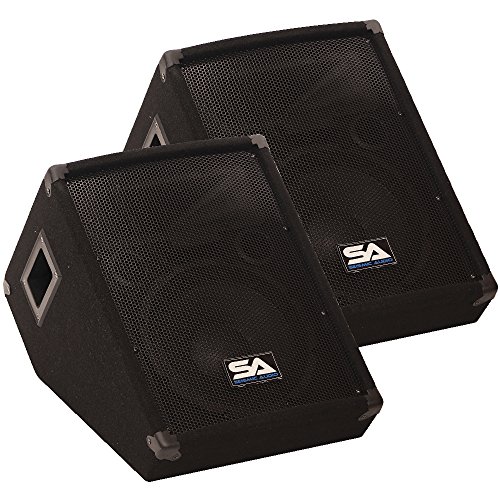
- Includes two wedge-style stage monitors
- 10-inch speakers with titanium horn drivers
- 150W RMS per cabinet for live monitoring
Best For: Bands wanting an affordable pair of stage wedges
High-Power Main or Monitor Speaker
Yamaha DBR12 12" Powered Speaker Cabinet

- 1000W clean digital power
- 131 dB SPL with FIR-X tuning
- Works as a main or monitor speaker
Best For: Crews needing a versatile powered speaker for large-room monitoring or mains
Powered Value Wedge
Behringer EUROLIVE F1220D 12" 250W

- 250W bi-amped Class-D power
- Built-in feedback filter and limiter
- XLR, TRS/TS, RCA, and Speakon inputs
Best For: Lightweight powered monitoring with flexible wired inputs
Passive Workhorse Wedge
Yamaha BR12M 12-inch Floor Monitor

- 97 dB sensitivity for efficient output
- 12-inch woofer with 1-inch compression driver
- Passive design with pole socket flexibility
Best For: Passive stage monitoring in amp-equipped setups
Big-Output Passive Wedge
Rockville RSM15P 15" Passive Stage Monitor

- 1400W peak power rating
- 15-inch woofer with 1.75-inch titanium driver
- 70° x 50° horn coverage
Best For: Loud stage monitoring with wide dispersion and rugged build
Powered Pair

- Powered pair of 10-inch wedge monitors
- XLR combo, 3.5 mm, 1/4-inch, and Speakon inputs
- Built-in 3-band EQ, gain, and volume control
Best For: bands and rehearsals needing a simple powered monitor pair
Passive Dual Pack

- Matched pair of passive 12-inch wedge monitors
- Speakon and 1/4-inch input plus thru connections
- Wide dispersion and rugged carpeted cabinets
Best For: existing amp rigs that need a durable passive monitor pair
Powered 15-Inch
Rockville RSM15A Stage Monitor

- 15-inch powered wedge with 1400W peak output
- 3-band EQ and adjustable feedback filter
- Combo XLR/1/4-inch TRS inputs for live use
Best For: performers needing a larger powered wedge with onboard control
High-Output Party Speaker – Mackie Thump215 15" Powered Loudspeaker
If you want stage monitors for large rooms that can also pull double duty as a loud main speaker, the Mackie Thump215 brings a lot of output for the price. Its 1400W Class-D amp, 15-inch woofer, and 129 dB max SPL give it the headroom needed for bigger spaces, while built-in feedback eliminator and music ducking add practical control for live use.
Best For: DJs, live sound setups, and performers who need a powerful powered speaker for large rooms.
Pros:
- 1400W Class-D amplification for high-output reinforcement
- 15-inch driver and 129 dB max SPL for bigger-room coverage
- Built-in feedback eliminator helps reduce feedback issues
- Lightweight design makes loading and setup easier
Cons:
- Not a dedicated wedge-style monitor
- Plastic enclosure is less rugged than metal
- No waterproof rating
This is a strong fit when you need volume, portability, and simple onboard controls more than a dedicated monitor format. It is especially appealing for live sound reinforcement where one speaker may need to handle both monitoring and front-of-house duties in a large room.
Compact Powered Monitor – Behringer EUROLIVE F1320D Powered Monitor
For buyers comparing stage monitors for large rooms, the Behringer EUROLIVE F1320D stands out as a powered monitor with a 12-inch woofer and a feedback filter designed for live and playback applications. Its Class-D amp keeps weight down while still offering 300 watts of power, making it a practical option when you need a straightforward floor monitor setup.
Best For: Live and playback monitoring where a lightweight powered wedge-style speaker is needed.
Pros:
- Dedicated monitor speaker design for stage use
- 300-watt Class-D amplification in a relatively lightweight package
- Adjustable feedback filter for better control
- Integrated limiter and sound processor for speaker protection
Cons:
- 300 watts is modest for very large venues
- Wired connectivity only in the listed specs
- Not water resistant
This model makes sense when portability and monitor-specific features matter more than maximum output. It is a sensible stage choice for performers who want an affordable powered wedge with feedback management built in.
Budget Wedge Monitor Pair – Seismic Audio SA-10MT Pair of 10" Wedge Monitors
Seismic Audio - SA-10MT - Pair of 10" Floor / Stage Monitors Wedge Style with Titanium Horn
Check Price On AmazonIf you are shopping for stage monitors for large rooms on a tighter budget, this Seismic Audio pair gives you two wedge-style monitors with 10-inch speakers and titanium compression horn drivers. The 150 watts RMS per cabinet is more modest than some larger powered options, but the set is built around live performances, music events, and stage monitoring.
Best For: Bands and event setups that need an affordable pair of wedge monitors for stage monitoring.
Pros:
- Sold as a pair, which is useful for stereo or multiple monitor mixes
- Wedge-style floor design suited to stage monitoring
- Titanium compression horn driver for added high-frequency presence
- XLR and auxiliary connectivity options
Cons:
- 150 watts RMS per speaker may not be enough for the biggest rooms
- Passive-style specification set is less feature-rich than powered rivals
- No built-in feedback controls listed
This is the most straightforward value pick in the group if you need two monitors instead of one. It is best viewed as a practical stage-monitor pair for smaller to mid-sized jobs or as a budget-friendly monitoring layer in larger setups.
High-Power Main or Monitor Speaker – Yamaha DBR12 12" Powered Speaker Cabinet
The Yamaha DBR12 is a strong option when you want stage monitors for large rooms that can also serve as a main speaker. With 1000 watts of clean digital power, 131 dB SPL, and FIR-X tuning, it offers serious output and tuning support for live reinforcement. The 12-inch bi-amplified design makes it flexible for performers who need a single cabinet that can handle more than one role.
Best For: Performers and sound crews needing a versatile powered speaker for large-room monitoring or mains.
Pros:
- 1000 watts of clean digital power
- 131 dB SPL for strong large-room output
- FIR-X tuning for more refined sound shaping
- Can be used as a main or monitor speaker
Cons:
- Single speaker only, so you may need multiple units
- Plastic enclosure is not as rugged as metal
- No dedicated wedge monitor form factor listed
This is the most flexible high-output choice here, especially if your monitoring setup also needs to cover broader live sound duties. It is a good fit for users who value power, tuning, and versatility in one powered cabinet.
Powered Value Wedge – Behringer EUROLIVE F1220D 12" 250W
If you want stage monitors for large rooms without dragging in a heavy rig, the Behringer EUROLIVE F1220D is a practical powered wedge to consider. Its 12-inch woofer, bi-amped Class-D design, and built-in feedback filter make it a straightforward choice for clear on-stage monitoring with solid output and easy control.
Best For: Performers and presenters who want a lightweight powered floor monitor with feedback protection and simple wired connectivity.
Pros:
- 250-watt bi-amped Class-D power keeps the cabinet light while still delivering strong output.
- Integrated feedback filter and limiter add control and speaker protection.
- 12-inch woofer and 3-inch tweeter provide a wide frequency range for live monitoring.
- XLR, 1/4-inch TRS/TS, RCA, and Speakon inputs offer flexible wired hookups.
Cons:
- Mono output may be limiting if you want a broader stereo-style monitor setup.
- At 250 watts, it is not the highest-output option in this group.
- Its tabletop-style mounting is less specialized than dedicated touring wedges.
Overall, the F1220D works well when you need a compact, powered monitor with useful protection features and broad input compatibility. It is a sensible pick for straightforward stage monitoring in practical live setups.
Passive Workhorse Wedge – Yamaha BR12M 12-inch Floor Monitor
The Yamaha BR12M is a classic passive option for stage monitors for large rooms when you already have amplification in place. With a 12-inch woofer, 1-inch compression driver, and 97 dB sensitivity, it is built for clear stage sound, punchy low end, and dependable live use.
Best For: Bands, PA setups, and venues that want a passive floor monitor with solid sensitivity and simple speaker-cable integration.
Pros:
- 97 dB sensitivity helps it play efficiently with the right amp.
- 12-inch woofer and 1-inch compression driver support clear, balanced stage monitoring.
- Built-in pole socket adds flexibility if you want to use it beyond floor monitoring.
- Integral protection circuitry and a 3-year warranty add peace of mind.
Cons:
- Passive design means you need an external amplifier.
- Single-channel speaker cable setup is less plug-and-play than powered monitors.
- It is heavier than some compact powered alternatives.
If your system already includes an amp, the BR12M is a straightforward monitor that focuses on reliability and efficient output. It is a strong fit for live sound crews that value a traditional passive wedge design.
Big-Output Passive Wedge – Rockville RSM15P 15" Passive Stage Monitor
For stage monitors for large rooms, the Rockville RSM15P stands out as the most aggressively specified option here. Its 15-inch woofer, 1.75-inch titanium compression driver, and 1400-watt peak rating are aimed at loud live music, DJ use, and wider stage coverage.
Best For: DJs, bands, and event rigs that need a rugged passive wedge with strong output and broad dispersion.
Pros:
- 1400 watts peak output gives it the highest power rating in this roundup.
- 15-inch woofer and titanium compression driver support strong, full-range stage sound.
- 70-degree by 50-degree horn coverage helps spread audio evenly.
- Dual 1/4-inch and Speakon inputs/outputs make system hookup simple.
Cons:
- At 54.9 pounds, it is the heaviest option listed.
- Passive design requires an external amplifier.
- No warranty is listed in the supplied notes.
The RSM15P makes the most sense when output, coverage, and road-ready construction matter more than portability. It is a strong large-room monitor choice if you already have the amplification to drive it.
Powered Pair – Seismic Audio SA-10MT-PW Pair
If you want stage monitors for large rooms with simple hookup and active control, this powered pair gives you a practical two-speaker solution. The 10-inch wedges include XLR combo inputs, 3.5 mm input, two 1/4-inch inputs, two Speakon inputs, and a 3-band EQ, so they can be integrated into a basic live sound setup without much fuss.
Best For: Bands, DJs, and rehearsal spaces that want a powered wedge pair with straightforward controls and flexible inputs.
Pros:
- Powered design removes the need for a separate external amp.
- Two 10-inch wedge monitors suit paired monitoring setups.
- 3-band EQ and gain/volume control help shape stage sound.
- Multiple input options make it easier to connect common gear.
Cons:
- 10-inch cabinets may not deliver the same low-end size as larger wedges.
- At 70 pounds for the pair, they are not the lightest option to move.
- Limited to corded electric use with no wireless capability.
For buyers comparing stage monitors for large rooms, this model is a useful powered option when you want a matched pair and easy signal routing. It is best suited to straightforward live sound duties where the built-in controls and active design matter more than advanced features.
Passive Dual Pack – Rockville RSM12P 12" 2-Pack
For stage monitors for large rooms when you want a passive setup with broad coverage, this matched pair is built around 12-inch wedges and a 1-inch titanium compression horn. The cabinets include Speakon and 1/4-inch input plus thru connections, so they fit well into daisy-chained monitor rigs driven by standard pro power amps or powered mixers.
Best For: Bands, houses of worship, and DJs that already have amplification and want a durable passive monitor pair.
Pros:
- 12-inch drivers and titanium horns are aimed at clear vocal and instrument monitoring.
- Wide 70° x 50° dispersion helps cover a larger listening area.
- Speakon and 1/4-inch input/thru connections support flexible wiring.
- Rugged build includes steel grilles, rubber feet, and carpeted cabinets.
Cons:
- Passive design requires an external amplifier or powered mixer.
- Each cabinet is relatively large and weighs 36.8 pounds.
- Best results depend on matching the pair to the right amp and system design.
This is a practical choice if your monitor system is already built around passive speakers and you want a matched pair that can handle common live duties. The RSM12P emphasizes usable coverage, straightforward connections, and road-ready construction.
Powered 15-Inch – Rockville RSM15A Stage Monitor
If you need stage monitors for large rooms with more cabinet size and onboard power, the RSM15A is built around a 15-inch woofer and a 1.75-inch titanium diaphragm driver. It also adds combo XLR and 1/4-inch TRS inputs, mic/line control, a 3-band EQ, and an adjustable 300Hz-5kHz feedback filter for more hands-on control during live use.
Best For: Bands, DJs, and performers who want a powered 15-inch wedge with onboard sound shaping.
Pros:
- 1400W peak output and a 15-inch woofer suit higher-output stage monitoring.
- Built-in 3-band EQ and feedback filter help fine-tune the monitor mix.
- Combo XLR and 1/4-inch TRS inputs support common live sound sources.
- Tilt-back wedge design and ergonomic handles make stage placement practical.
Cons:
- At 61.2 pounds, it is heavier than smaller wedge options.
- The single-monitor format may require buying multiple units for stereo or larger setups.
- Its size may be more than needed for compact stages.
Among stage monitors for large rooms, this model stands out when you want a larger driver and more built-in adjustment tools. It is a strong fit for users who want a powered wedge that can handle vocals, keys, or guitar monitoring without relying on external processing.
How We Picked These Stage Monitors for Large Rooms
We looked for models that can handle live performance use in wider, more reflective spaces, with an emphasis on output, vocal intelligibility, and stage-friendly dispersion. We also considered whether each option suits powered or passive setups, since the best choice often depends on your existing PA gear.
For Stage Monitors for Large Rooms, a good fit is one that stays clear at higher levels, resists feedback, and matches the size of the stage and the number of performers using it.
Quick Comparison
As a simple rule, 12-inch monitors tend to balance clarity and portability well, while 15-inch models usually bring more low-end weight and headroom for bigger stages. Powered monitors are easier to deploy, while passive monitors can be better for integrated systems where you already have amplification and processing in place.
Key Buying Factors for Stage Monitors for Large Rooms
Output and Headroom
Large rooms demand enough clean volume to reach performers without pushing the speaker into distortion. Higher wattage and stronger driver design generally help, but real-world headroom matters more than a spec sheet alone.
Coverage and Clarity
A monitor should aim sound where it is needed, not flood the room. Look for a wedge that offers clear mids and crisp highs, since vocals, keys, and acoustic instruments need definition on a busy stage.
Feedback Control
Built-in feedback filtering can be useful, especially in compact stages or rooms with multiple open microphones. Placement and EQ still matter, but feedback tools can make setup faster and safer.
Powered Vs. Passive
Powered monitors simplify setup and are often the easiest choice for mobile productions. Passive models can be more flexible in installed systems, but they require appropriate amps and proper gain matching.
Stage Size and Performers
Larger ensembles may benefit from multiple monitors, while smaller groups can often get by with fewer, stronger wedges. Think about whether the room needs front-line vocal monitoring, drum-side reinforcement, or general-purpose floor monitoring.
Who Should Buy Which Stage Monitors for Large Rooms?
If you want the easiest all-in-one setup, choose a powered monitor. If you already run external amplification and want more system control, a passive model may be the better fit. For bands and venues prioritizing vocal definition in bigger spaces, a 12-inch design is often the most balanced starting point. If you need extra low-end punch or wider stage coverage, a 15-inch option can make sense.
Ultimately, the right choice depends on your stage layout, mixer workflow, and how much clean output you need to keep performers comfortable in a large room.